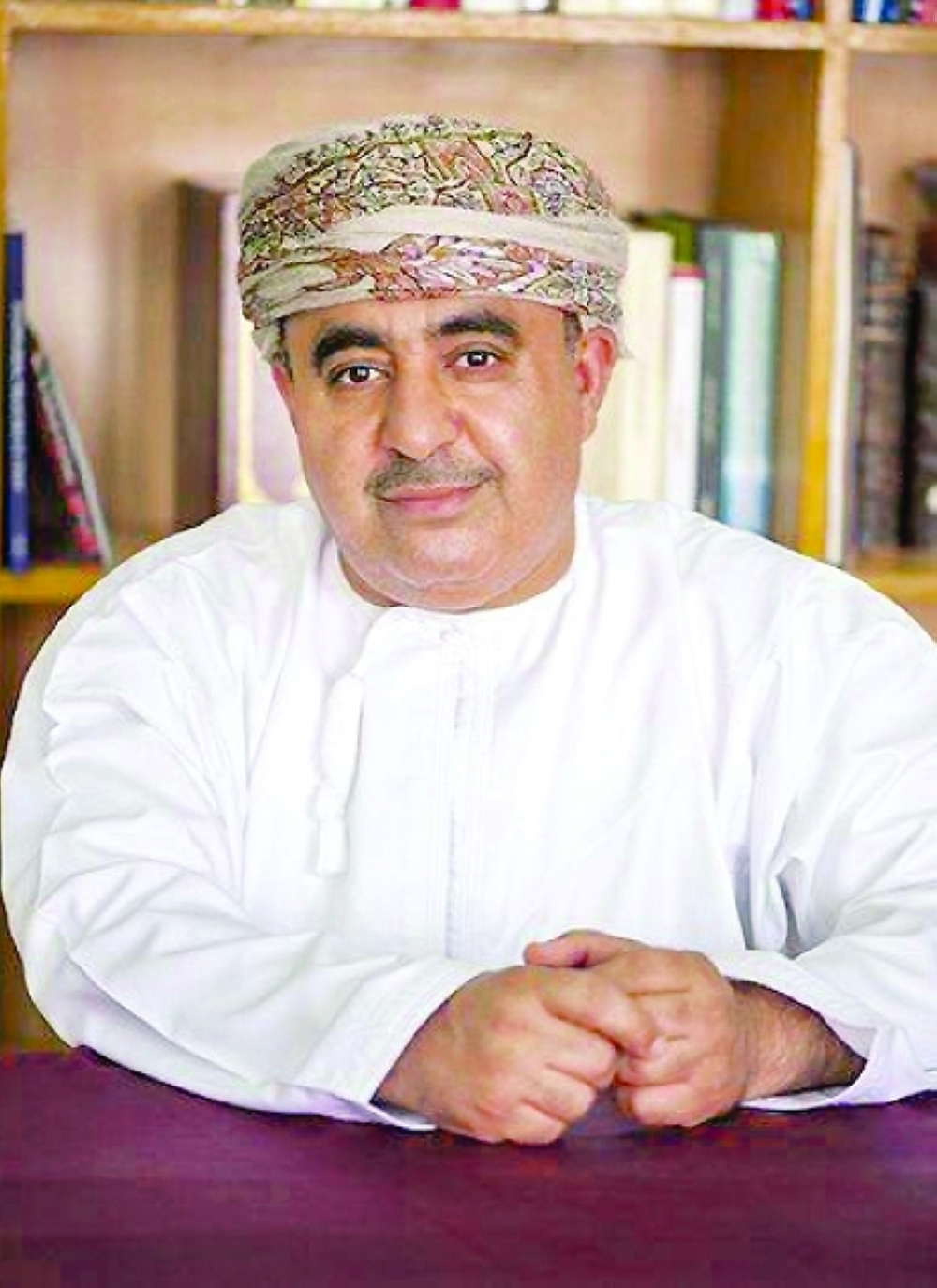





By Mohammed al Hadhrami
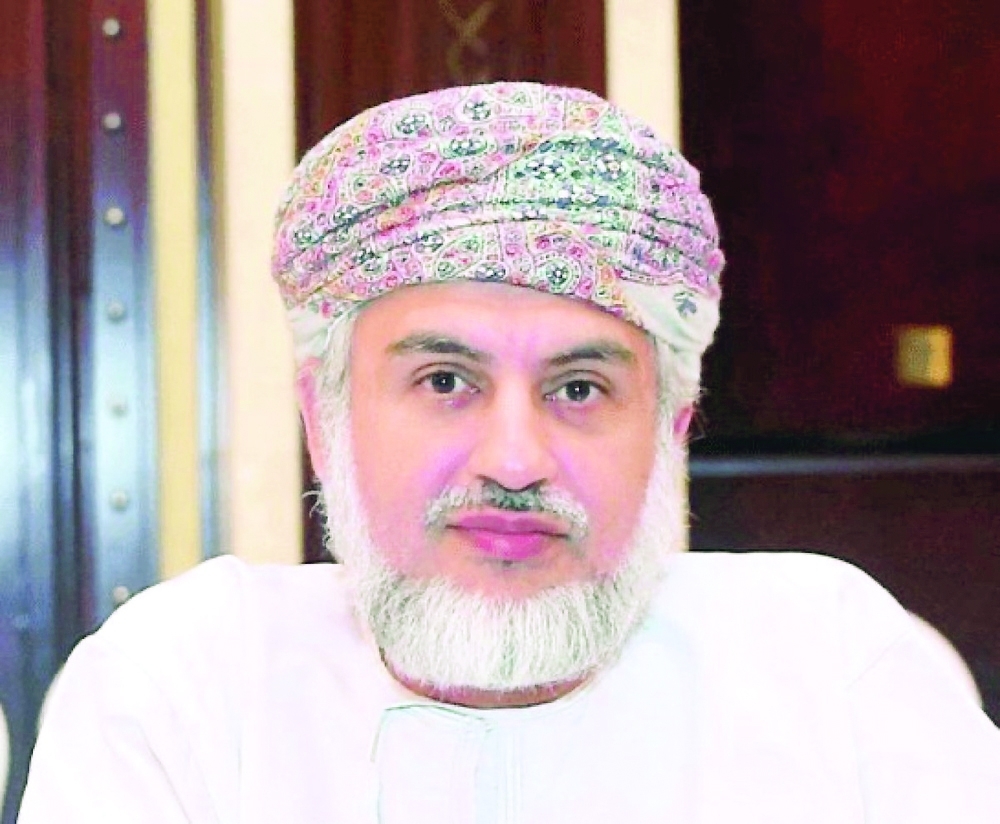
It was as though death had been waiting for him, stalking him patiently before suddenly springing its final ambush. Surrounded by those dearest to him — his children and loved ones — his soul seemed to slip quietly into the next world. He collapsed among them, bringing to a close nearly half a century of intellectual striving and leaving behind a remarkable cultural legacy. A great library in his hometown of Bahla that evolved into a vibrant cultural centre; numerous books bearing significant titles; reviews of major publications and encyclopaedias; participation in countless seminars; and research projects still underway, including his work on the civilisation of Salut and his contribution to the Encyclopaedia of Names in Bahla. Such were only some of the achievements left behind by the late Khamis al Adawi, who lived a life marked by hardship yet departed with the fruits of his intellect ripe for harvest, like dates hanging heavy from palm trees in the height of summer. Death, after all, remains the inevitable final scene in that extraordinary drama called ‘life’.
Around twenty years ago, I found myself searching for a man named Khamis bin Rashid al Adawi. I had read his newspaper articles and some of the online writings available at the time. He stood out as a writer presenting ideas shaped by intellectual independence. It was his friend in both literature and life, Dr Zakariya al Muharrami, who introduced us at a café in Muscat in 2007. Al Adawi happened to be there and meeting him unexpectedly was a delightful surprise. As I came to know him better, I felt compelled to conduct a newspaper interview with him, which was later published in Shurufat, the cultural supplement of Oman newspaper and subsequently included in my book Sailing Towards the Word.
Looking back, I realise how fortunate I was to have sought him out. Knowing him enriched my literary sensibility and became an enduring part of my memories. Meeting him expanded the horizons of my thinking. He encouraged me to write, to gather scattered essays and reflections into books; and even my poetry collection The Doves Sing on the Plain benefitted from his insight. He brought to it a grace born of his literary sensibility and wrote an elegant critical reading entitled A Flock of Doves Has More Than One Song.
Life, however, surrounded him with sorrow from an early age. As a child, he endured the loss of both parents, mourned the death of his brother and several relatives; and grew into a young man searching for his own mythology.
During the last two decades of his life, he devoted himself to writing in pursuit of the free idea — the kind of idea capable of elevating human beings beyond prejudice and the captivity of superstition. He sought a mode of thought that opened distant horizons and guided people towards intellectual clarity. Many of his articles embodied this aspiration, including The Pragmatism of Ideas and What Remains in Thought. His aim was always intellectual freedom. On the platform X, he once described himself by saying: “I practise freedom with the spirit of a prophet”. He was independent in both thought and writing, neither ideological nor partisan. His work expressed his far-reaching dreams and profound reflections; and every individual has the right to give voice to their convictions.
Life is not measured by years lived but by what one leaves behind. Some of the greatest creative minds seem destined to burn brightly and briefly, as though their ideas consume them from within. Khamis al Adawi’s life lasted only 56 years — short in comparison to the ambitions he hoped to fulfil. He worked tirelessly, making use of every spare moment, whether waiting somewhere or travelling, to review manuscripts and books. His revisions went far beyond correcting grammar. He frequently rebuilt texts linguistically and stylistically until they emerged stronger and clearer. Over the years, he reviewed and reshaped dozens of books, a skill requiring exceptional judgement and mastery of expression.
Throughout his life, he published numerous works under his own name. Among the most recent was The Age of Transformations: Observations on Contemporary Omani Society. Other notable titles included Realism and Islamic Unity, The Saved Sect, Sufism in Oman, The Philosophy and Jurisprudence of Eid, Religion and Politics: Towards Understanding the Logic of Events; and The Scientific Endowment in Bahla. Together with Dr Zakariya al Muharrami and Khalid al Wahaibi, he co-authored The Sunnah: Revelation and Wisdom, a bold attempt to renew aspects of Ibadi legal heritage. His later book Faith Between the Unseen and Superstition, written with Al Wahaibi, generated considerable discussion by exploring questions often treated as unquestionable matters of belief. The authors approached these subjects with the spirit of adventurous researchers, examining faith between what belongs to divine mystery and what is shaped by human superstition.
When the events of Al Aqsa Flood erupted, Al Adawi responded with characteristic intensity. Deeply affected by the suffering of the Arab and Islamic worlds, he turned his attention to analysing the unfolding conflict and the devastating war on Gaza. The result was Al Aqsa Flood: Recording Events and Reading Transformations, a collection of 30 essays. Readers of the book emerge with a balanced understanding of those tragic events, the suffering inflicted upon Gaza’s people and the destruction of the city’s infrastructure.
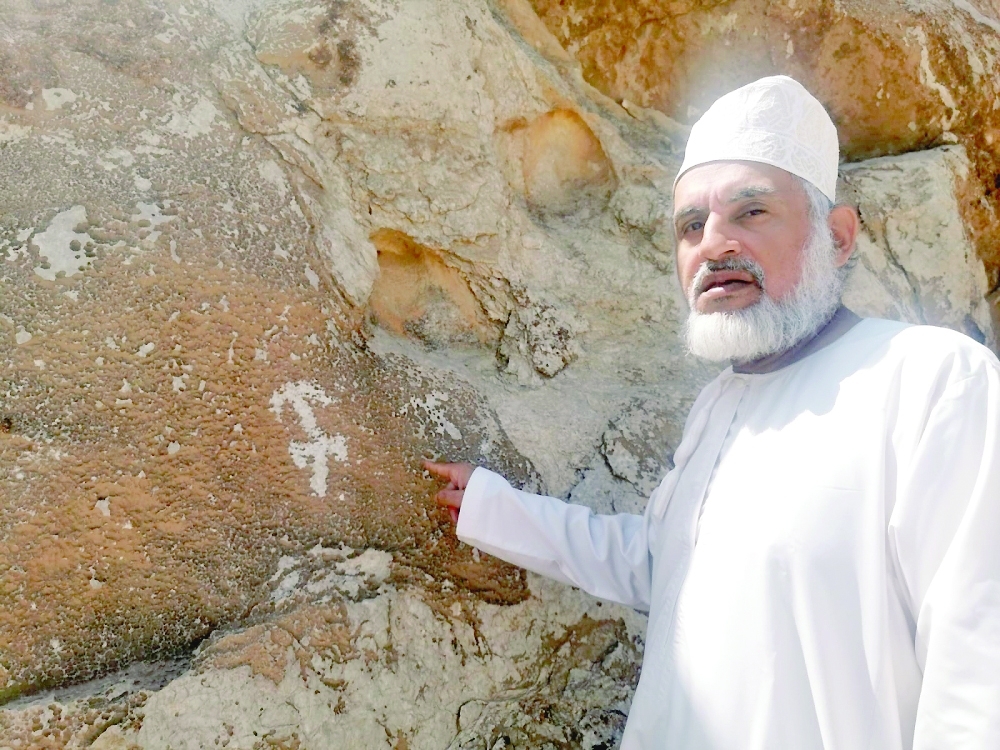
To speak fully about Al Adawi’s ideas is like trying to catch a gazelle in full flight. His intellectual curiosity also found expression in field research, particularly through his work on the ancient civilisation of Salut. Together with his son Abdulrahim, who follows his father’s path in cultural pursuits, he spent years studying inscriptions carved into mountain rocks and exploring abandoned sites hidden among the valleys and mountains between Bahla and Al Hamra. I accompanied them on three such journeys, including a visit to the slopes of Jabal Abu Suruj in Manah, an area rich in archaeological tombs.
With Khamis al Adawi’s passing, Oman has lost a thinker who devoted his life to understanding and serving his homeland. Bahla’s Cultural Symposium Centre, which he helped establish with friends in the early 1990s and nurture from a small library into a leading cultural institution, will feel his absence profoundly. So too will the roads between Bahla and Muscat, the places throughout Oman that witnessed his journeys and the pages of Oman Newspaper that he enriched with the ink of his pen, writing as though every article were drawn from the blood of his heart. We, his friends, will miss his conversations, his companionship and his generosity of spirit.
How painful it is, Abu Majid, to write about you while you rest beneath the earth in Al Farjaniyah Cemetery in Bahla, unable to read these words or send me the phrase I loved hearing from you: “Thank you, O overflowing one”. How painful to lose someone whose character was so pure. I remember the hours we spent travelling in search of traces of forgotten civilisations, our journeys beyond Oman to Russia, Tunisia and the Comoros, our meetings in small cafés and our conversations beneath the shade of acacia trees between Bahla and Manah. Together we dreamed, often extravagantly, until you would smile and say, “Do not dream too much”. For that reason, I dedicated my book Small Secrets to you with the words: Dreamers in life, dreamers in writing.
It pains me, Abu Majid, to recall entering your home on the evening of May 19, 2026 and finding your body lying in repose. Yet the desire to bid you farewell and pray for God’s mercy compelled me to come. How many times had you invited me to visit that house in Al Maamoura, Bahla, or the one you built in Muscat? Sometimes I accepted, sometimes we left it to fate. Moreover, fate finally arrived with its unavoidable decree, in that liminal hour between fading life and certain death. Friends stood around you in disbelief. We uncovered your face and took one last look. You seemed not dead at all, but smiling gently — like a jasmine flower.
Translated by Badr al Dhafri
This is an adapted translation of the original Arabic article published in the print edition of the cultural pages of the Oman Arabic newspaper on May 24
Oman Observer is now on the WhatsApp channel. Click here