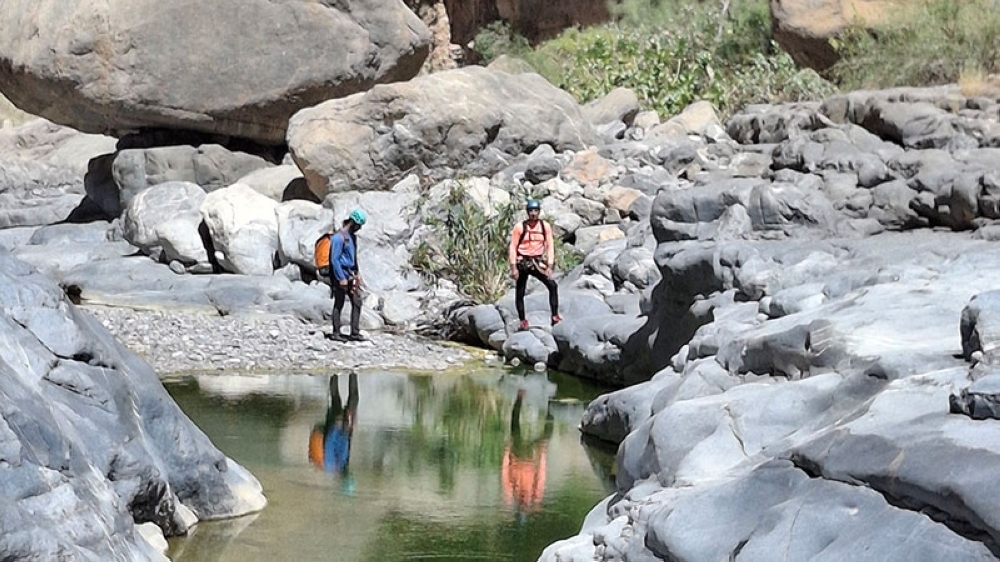





Exploring the fantastic wadis of Oman with my climbing mentors, Patrick and Nathlie Cabiro, more than 20 years ago sparked an addiction within me.
Since then, I have ventured into over 40 canyons with my family and friends, constantly seeking new terrain to explore. Just last week, my canyoning companions, Rami, Hamoud and I decided to tackle five uncharted tributaries of Wadi Qasheh, a main branch of Wadi Tanuf.
I pinpointed the start and end points of these tributaries on Google Earth and on Wednesday, May 13, we set out to open the first one, beginning at the old village of Qasheh.
Rami arrived at my place at 6:30 am and we drove in Hamoud's car to Al Faraa, the last accessible village in Wadi Tanuf.
On the way, we stopped at a coffee shop for parata bread with cheese, eggs and karak tea. By 9 am, we were equipped with all the necessary gear (drill, anchors, ropes, harnesses, etc), along with snacks and water ready for our new adventure. Our journey commenced in Al Faraa, traversing beautiful terraces adorned with date trees, bananas, limes and sweet potatoes.
On our way we met Rashid a young man I met around 16 years ago while I was exploring along with Gergory, a friend of mine who was living in Oman, Wadi Qasheh in order to cross it starting from the village of Al Khoof in Al Jabal Al Akhdhar.
Descending into the wadi bed, we followed the falaj upstream, passing through narrow sections that eventually widened. The canyon journey involved walking, bouldering and swimming through pools until we reached the spot I had identified from satellite images.
Here, we left the wadi bed, climbed the mountain and connected with the trail leading to the tributary near the old village of Qasheh.
After about two hours, we reached our starting point, descending into the tributary from the gardens of Qasheh, which were still well-maintained by the people of Al Faraa. Our adventure began in a stunning couloir that led to a pool fed by a falaj originating from five springs upstream.
As we descended further into the wadi, we encountered our first drop, utilising a tree as a natural anchor for a 7-metre abseil. We then fixed a metallic anchor for two successive drops totalling around 30 metres.
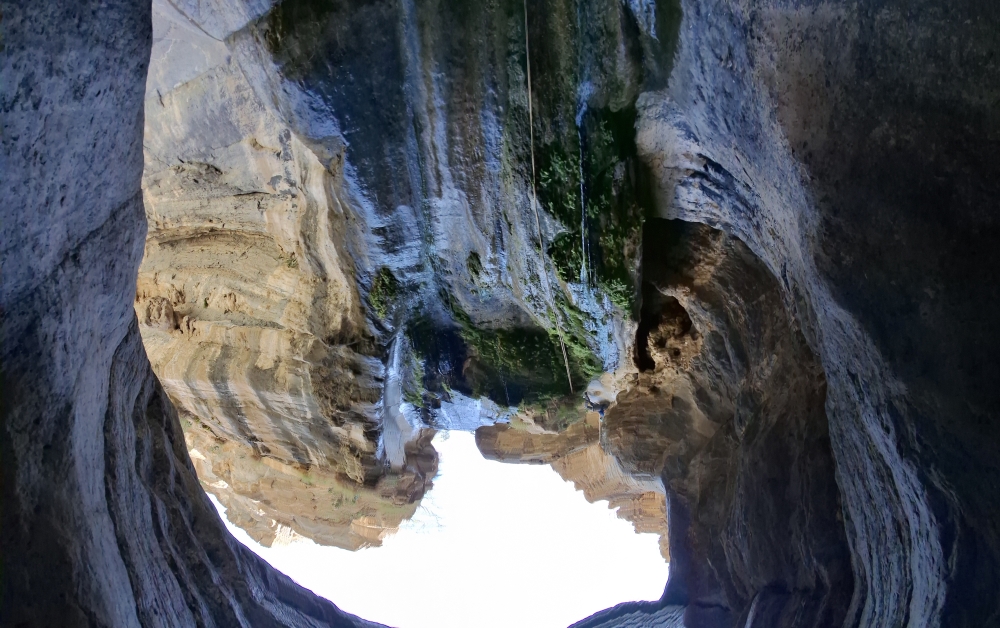
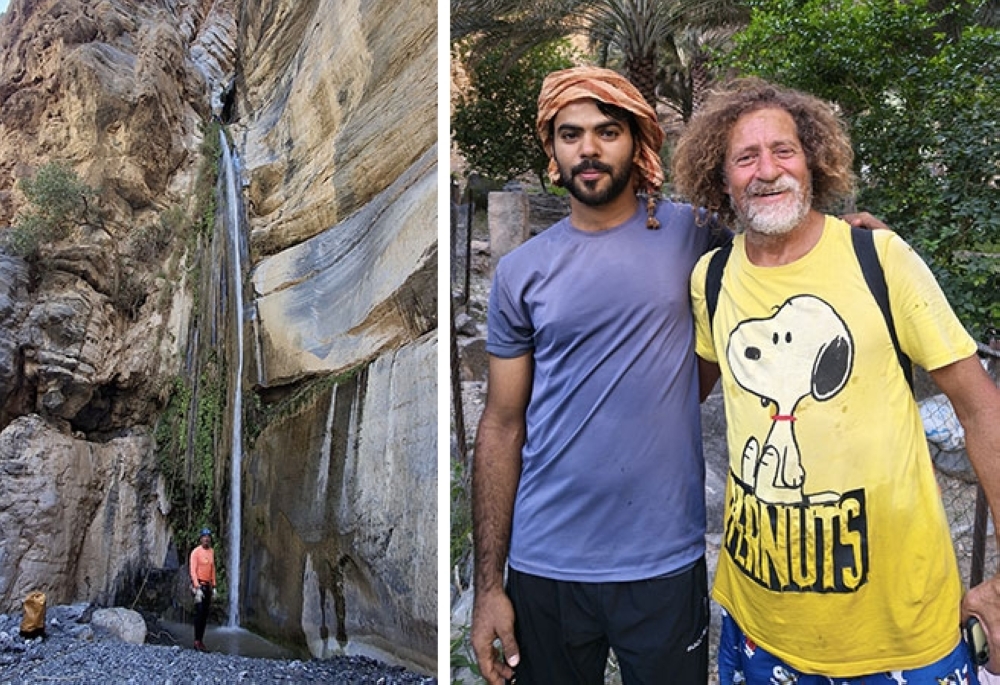
The most breathtaking part awaited us — a massive 70-metre drop split into two equal parts of 35 metres each. The first one is consisting of abseiling a superb green wall of a waterfall ending in a small pond where we had to fix a second anchor to reach the bed of Wadi Qasheh by abseiling another magnificent 35 metres green waterfall. We named this drop 'Rami’s drop' as he was the first person to do it.
Hamoud was the last to descend the final drop.
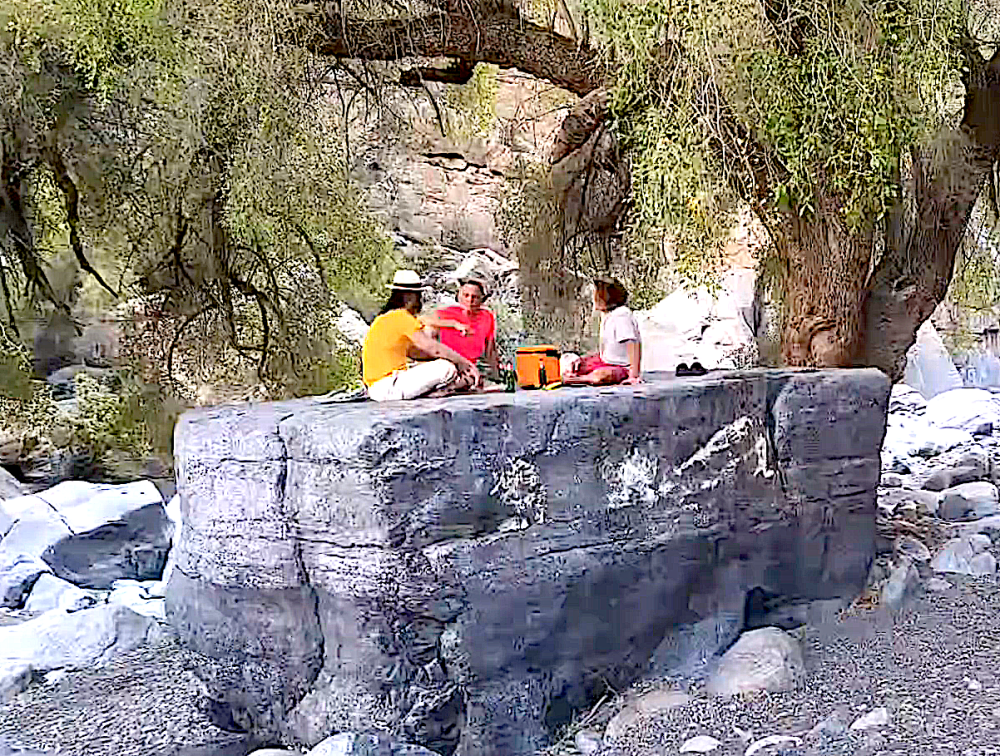
After retrieving our ropes, we packed our bags and trekked back to Al Faraa, stopping to refresh at a small pond along the way. By 4:30 pm, we reached our vehicle and drove 15 minutes to snack on the famous 'Mandoos' boulder under a massive Sidr tree in wadi Tanuf.
Returning to Muscat by 7:30 pm, we were already planning our next adventure to explore the four remaining tributaries of Wadi Qasheh in the near future.
For me, canyoning is the most complete outdoor activity that involves trekking, bouldering, climbing, abseiling and swimming.
Nevertheless one has to do it in the right way to avoid having accidents by ignoring the rules of this superb activity.
Oman Observer is now on the WhatsApp channel. Click here