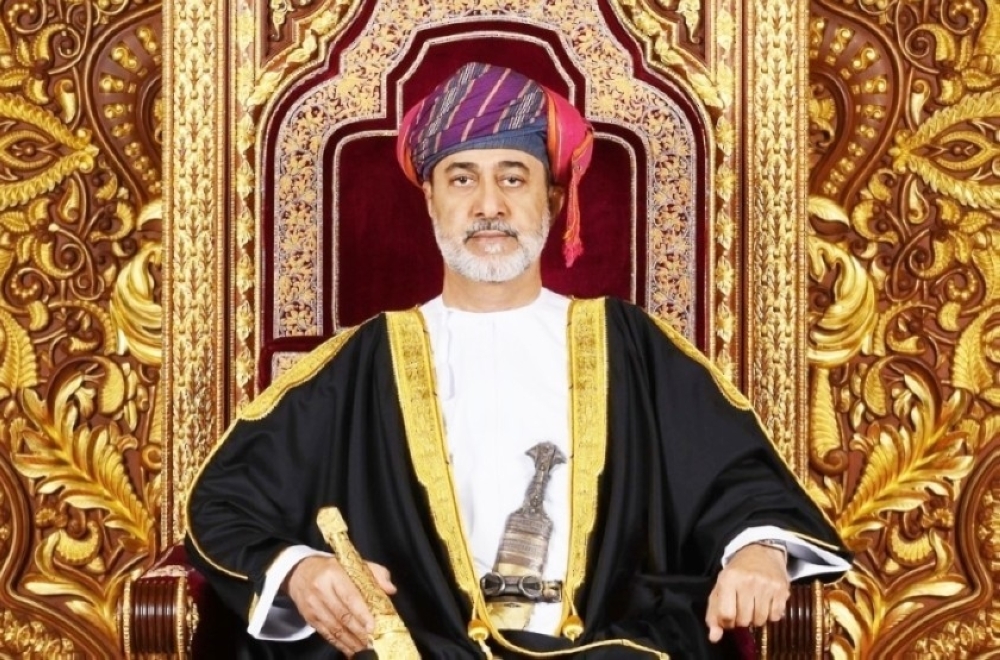
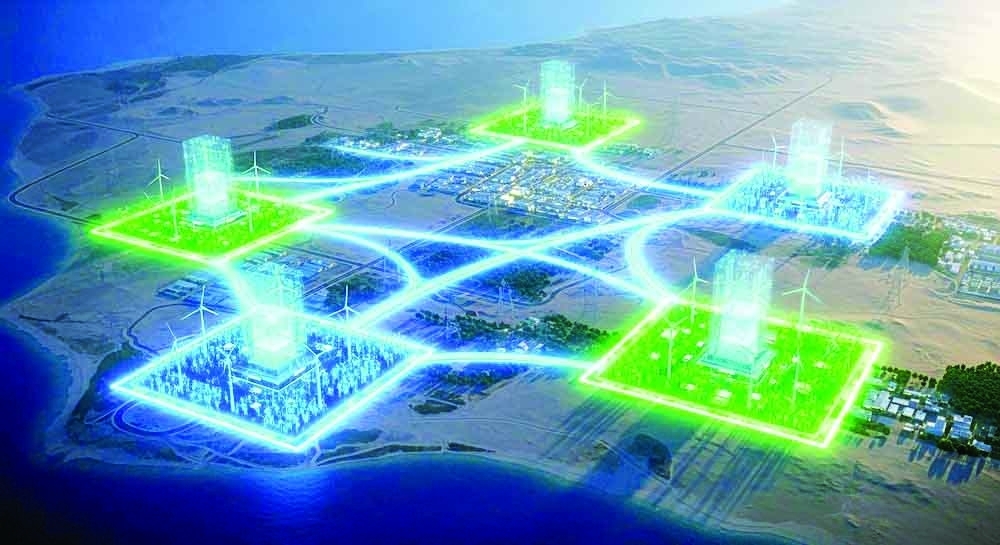
On April 30, His Majesty Sultan Haitham bin Tarik signed Royal Decree 50/2026, establishing a Special Economic Zone for artificial intelligence in the governorate of Muscat. The decree itself is spare. Its first article names the zone and fixes its boundaries; its second hands oversight to the Public Authority for Special Economic Zones and Free Zones (OPAZ), working with the Ministry of Transport, Communications and Information Technology; its third extends to tenants the incentives already set out in the 2025 special-zones law.
Brief as it is, it commits Oman, in law, to a particular reading of the next economy: that AI is not a weightless software layer but a form of strategic industrial infrastructure, and that diversification will pay only when intelligence is built into what the country already makes and moves.
The distinction matters. AI runs on semiconductors, on power measured in gigawatts, and on integration with physical processes. For a small, open economy such as Oman, the richest returns come not from chasing frontier models but from applying them to existing industry: predictive maintenance on liquefied-natural-gas trains, computer vision on food and pharmaceutical lines, optimized berth scheduling at Suhar, Salalah and Al Duqm, and digital twins for green hydrogen. Each is a productivity gain in manufacturing or industrial services. Each turns the zone from a property play into a broader instrument of economic strategy.
The mechanism is concrete. Oman’s industrial base competes in markets where margins are thin and quality variance is punished. AI narrows that variance. A vision system on a date-packing line can increase export-grade yield by a few percentage points; across national volumes, that translates into measurable gains in export earnings.
These are the line items through which a zone pays for itself, and they map onto the gains OPAZ itself lists: higher competitiveness, more technology exports, a deeper innovation base. The technology need not be invented here. It needs to be deployed, integrated, certified and ultimately embedded within the domestic economy.
This is also where Omanisation stops being a quota and becomes a market outcome. AI in industry creates a tier of work, from data engineers to automation technicians and auditors, at salaries that make the jobs worth a graduate’s while, particularly in a labour market where highly skilled talent can be drawn abroad by stronger compensation packages. The Makeen programme has already trained more than 11,000 nationals in advanced digital skills, and Omanisation in IT roles has climbed toward 70%.
The country already counts some 22 specialised AI firms and a government language model of its own. The talent exists; the zone, with its stated aim of building national capabilities and quality jobs, provides an institutional platform through which that talent can be absorbed and scaled.
The fiscal scaffolding is in place too. Under the unified framework of Royal Decree 38/2025, projects in the zone enjoy full foreign ownership, complete repatriation of profit and capital, a ten-year corporate-tax holiday extendable to 30 for activities of a special nature, customs exemptions, no minimum capital, a single window for permits, and five-day work permits for non-Omani technical staff.
That last detail is easy to underrate. In AI hardware, time-to-deployment is itself a cost; a regulator capable of approving permits in five days gains a competitive advantage over slower jurisdictions.
Anchor investors, though, look past the tax table. They want a credible co-investor base, a real demand signal and a responsive regulator, and Oman now offers all three.
Ithca and the Oman Investment Authority supply patient sovereign capital alongside global firms. The industrial base, with deepwater ports opening onto the Indian Ocean, petrochemicals and a hydrogen build-out under way, generates captive demand that justifies producing on the ground. And placing OPAZ alongside the communications ministry gives investors a single regulatory address, not a committee.
Qais bin Mohammed al Yousef, who chairs OPAZ, has called the zone a qualitative leap toward a digital economy and promised a plan to localise the industries that gather there. It is the right ambition, provided execution proves as strong as intent.
The early signals are encouraging. The government has opened the door for Omani companies to participate in the development, management and operation of the zone through partnerships with regional and international alliances specialising in artificial intelligence and advanced technologies. The first phase, valued at approximately RO 100 million ($265 million), targets sectors such as semiconductors, quantum computing and cybersecurity.
The approach itself matters: local participation alongside global expertise creates a pathway not only for capital inflows, but also for knowledge transfer, capability-building and the development of a domestic AI ecosystem.
What will decide the outcome is the harder, less photogenic infrastructure. The physical side is demanding but within Omani reach: sovereign-grade power with renewable integration, redundant fiber across the submarine cables that already land on the coast, efficient cooling and data centres certified at scale.
The soft side is harder. It means data-protection rules trusted enough to host European and East Asian data, intellectual-property protection that persuades tenants to put research in Muscat, a university pipeline producing PhDs as well as graduates, and procurement that lets ministries act as reference customers. Soft infrastructure is what separates a zone that fills with logos from one that fills with laboratories.
Oman’s edge lies less in the scale of its spending than in the specificity of its strengths, which may ultimately prove more durable: abundant gas and fast-growing solar, the energy mix that foundries and data centers now need; logistical resilience; and institutions stable enough to lower the discount rate that long-dated capital prices.
Vision 2040 wants the digital economy to grow from about 3% of GDP to 10%, with an interim 4.2% under the 2026-30 plan. The decree has done what law can do: named a place, attached a credible regime, and defined who is in charge. The rest belongs to the operators, Omani and foreign, who will treat the zone as an industrial platform rather than merely another real-estate proposition.
Oman Observer is now on the WhatsApp channel. Click here