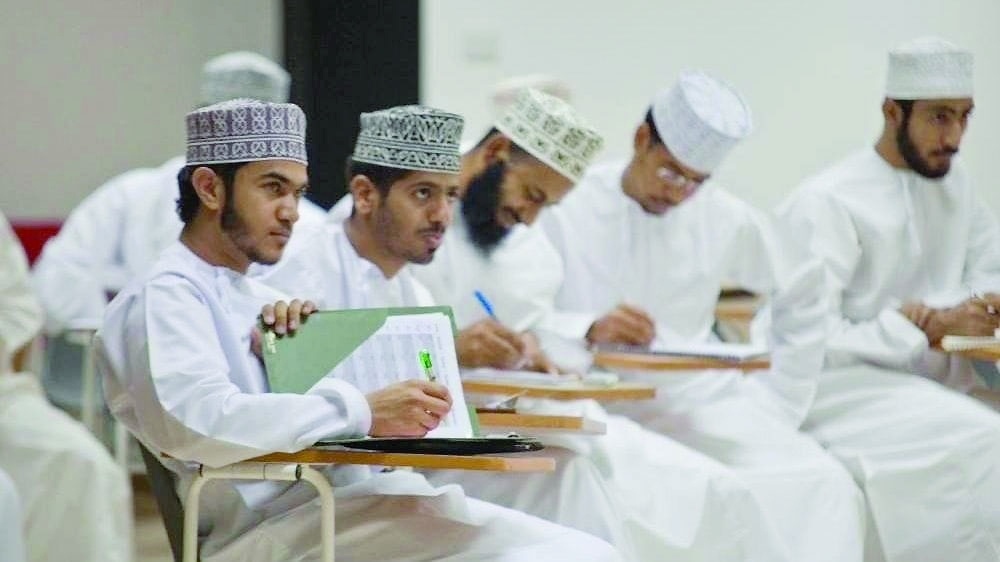
As the teaching semester comes to a close across universities in Oman, it is an opportune time to take stock of where higher education stands today.
While the composition of students has seen unrecognisable changes in terms of their exposure to information and digital media, universities still have a long way to go to make education impactful for them.
Studies have shown that Generation Z learners show a very different ability to access information, impacted by changing modes of learning. Their learning styles are characterised by nonlinear processing, effective use of technology, and preference for personalised feedback.
Traditional models of education mainly comprised lecture-based instruction and a standardised curriculum across all parent institutions.
In some ways, millennials avoided the technology trap and primarily learned through printed textbooks and hand-written notes.
Today, learners from the elementary level onwards work in a classroom full of iPads and laptops. Traditional methods are insufficient for a generation accustomed to interactivity and personalised experiences of the kind common to online platforms.
Higher education requires structural and pedagogical shifts that align with contemporary digital realities.
One of the central challenges, and even an opportunity, lies in adapting teaching methodologies. Gen Zs and younger students tend to favour active learning environments that incorporate collaboration and the use of multimedia in real time. Passive absorption of information is challenging for learners who are used to more dynamic content available across multiple platforms and a variety of media.
Tertiary institutions will benefit from prioritising student-centered approaches, such as implementing flipped classrooms, project-based learning, and the integration of digital tools that facilitate interaction.
These methods not only enhance engagement but also encourage a practical application of knowledge.
Another important dimension is the role of technology itself. While many universities have incorporated learning management systems, they are often used in ways that replicate traditional teaching rather than transform it. Lectures are in the form of PowerPoint slides at best, or as typed documents available on a platform.
A meaningful redefinition of higher education involves using technology to create adaptive learning environments. This could include creative personalised learning pathways and using AI to support tutoring and assessment. Such an approach could help a range of learners at different levels.
Another important transformation would have to include changes to the curriculum.
In a rapidly changing and uncertain global economy, digital natives require skills that extend beyond disciplinary knowledge. Competencies such as digital literacy, collaboration, and adaptability are essential. Independent learning is almost non-negotiable. Higher education institutions will benefit from designing curricula that are interdisciplinary and responsive to emerging trends, including collaboration and opportunities for experiential learning.
All this means that the role of the teacher has changed from being a source of knowledge to being a facilitator and mentor. This shift requires a cultural change within institutions, where constant experimentation and application of innovative classroom formats are encouraged.
Younger learners already feel alienated and nervous about their future prospects. Institutions would benefit from working towards assuaging these fears by embracing practices that empower students and leverage their learning styles.
SANDHYA RAO MEHTA
The writer is Associate Professor, Sultan Qaboos University
Oman Observer is now on the WhatsApp channel. Click here