TEHRAN: Iran's chief negotiator Mohammad Bagher Ghalibaf warned on Saturday of a "crushing" response if Washington resumes hostilities, after US media reports raised the prospect of new strikes. Pakistan's powerful army chief — a key mediator in diplomatic efforts to convert an April 8 ceasefire into a settlement — left Tehran after talks with Iranian officials, who have accused the US of making "excessive demands". "Our armed forces have rebuilt themselves during the ceasefire period in such a way that if Trump commits another act of folly and restarts the war, it will certainly be more crushing and bitter for the United States than on the first day of the war," Ghalibaf posted on social media. US media outlets Axios and CBS News have reported that the White House is considering renewed strikes.
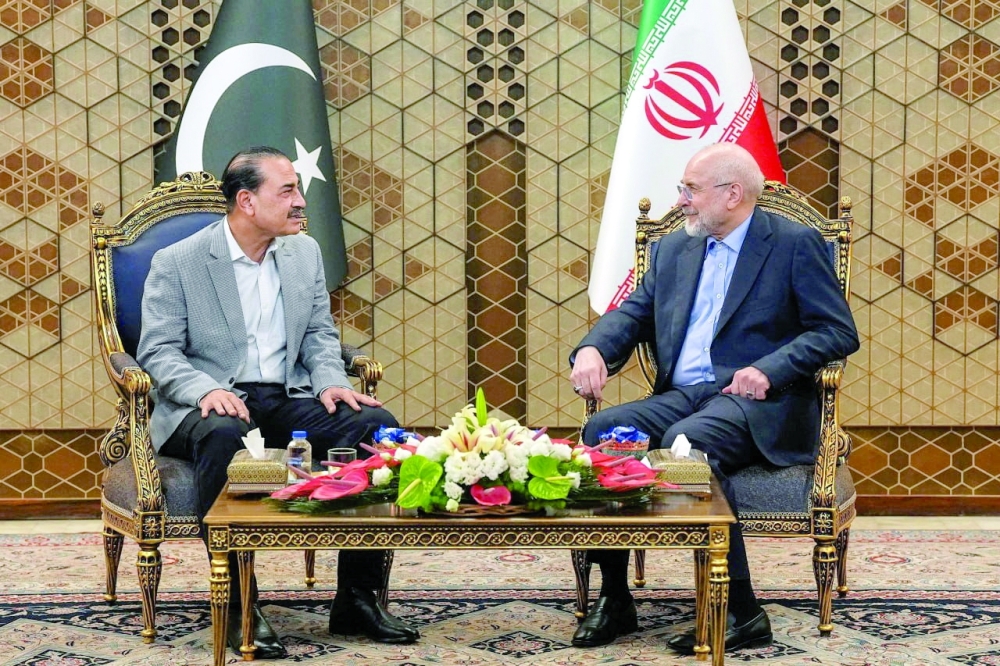
Ghalibaf made the warning after meeting in Tehran with Pakistan's army chief Field Marshal Asim Munir, a leading figure in international efforts to negotiate an end to the war, which broke out after the US and Israel attacked the Islamic republic on February 28. Munir arrived in Tehran on Friday and left the next day, Iran's official IRNA news agency said. Weeks of negotiations — including historic face-to-face talks hosted by Islamabad — have still not produced a permanent resolution or restored full access to the Strait of Hormuz, choking vast quantities of global oil supply.
US officials have repeatedly raised the prospect of renewed action against Iran if a deal is not reached. Secretary of State Marco Rubio said, on the sidelines of a Nato conference in Sweden that there had been "some progress" towards a peaceful resolution but "things were not there yet". The impasse has left ordinary Iranians in limbo. "The state of 'neither war nor peace' is far filthier than war itself," 39-year-old Tehran resident Shahrzad said. "You can't even plan something as simple as signing up for a gym, let alone bigger things... I'm about to start a new job, and I'm scared war might break out again — that I'll end up leaving the job like before, running off to another city out of fear," she said.
Iran's Foreign Minister Abbas Araghchi said in a call with UN Secretary-General Antonio Guterres that Tehran was engaged despite "repeated betrayals of diplomacy and military aggression against Iran, along with contradictory positions and repeated excessive demands" by the United States. Araghchi held a bevy of diplomatic calls, speaking with his counterparts from Turkiye, Iraq, and Qatar, IRNA said. US President Donald Trump also spoke on Saturday with the Emir of Qatar Shaikh Tamim bin Hamad al Thani, whose office said he had told Trump he supports "all initiatives aimed at containing the crisis through dialogue and diplomacy".
Iran said on Saturday it was finalising a 14-point framework for a deal with the United States, signalling a convergence of views while noting that gaps still remain. "Our intention was first to draft a memorandum of understanding, a kind of framework agreement composed of 14 clauses," foreign ministry spokesman Esmaeil Baqaei said on state television. He noted what he called "a trend towards rapprochement" with Washington but said, "it does not necessarily mean that we and the United States will reach an agreement on the important issues".
Iran said on Saturday it has included the ending of a week-long US naval blockade and arrangements on the strategic Strait of Hormuz in a draft framework for a deal with the United States. "The issue of the Strait of Hormuz is among the subjects addressed in this 14-point memorandum of understanding but more importantly, ending the piracy carried out by the United States against international navigation," said Baqaei.
Iran added that the nuclear issue was not part of an initial framework it was drafting to end the war with the United States. "At this stage, we will not discuss the details of the nuclear issue... we have decided to prioritise an urgent issue for all of us: ending the war on all fronts including Lebanon," Esmaeil Baqaei told state television. He added that the nuclear file will be "subject to separate discussions" at a later stage.
US Secretary of State Marco Rubio expressed optimism, just as Pakistan's army chief, a key go-between between the United States and Iran, left Tehran after two days of talks with senior Iranian leaders. "There is a chance that, whether it's later today, tomorrow, in a couple days, we may have something to say," Rubio told reporters Saturday during a visit to New Delhi, adding that he hoped that he would soon be able to announce "good news". — AFP
Oman Observer is now on the WhatsApp channel. Click here