




MUSCAT, MAY 23
Oman’s banks must move beyond digital transformation and build trusted, AI-enabled financial ecosystems as technology reshapes competition, customer behaviour and the delivery of financial services, the CEO of the Oman Banks Association (OBA) said last week.
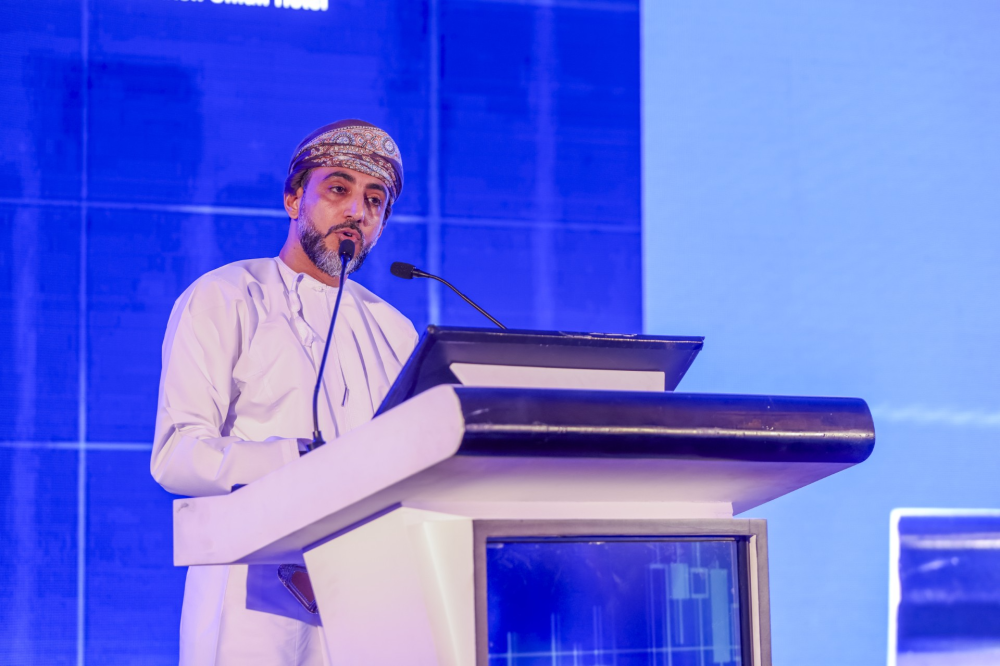
Speaking at the New Age Banking Summit Oman, Mustahil bin Ahmed al Mamari said the banking industry was entering a deeper phase of change, where the main challenge is no longer only how banks digitise services, but how the sector redefines its role in a real-time, interconnected economy.
“This is no longer just about transformation. It is about redefinition”, he said. “The role of banking itself is evolving”.
Al Mamari said financial services are increasingly being embedded into digital platforms, customer ecosystems and everyday experiences, rather than being accessed only through traditional banking channels.
The shift is already visible in Oman’s payments market. Citing Central Bank of Oman figures, he said transactions through local electronic payment gateways reached around RO 3.2 billion in 2025, reflecting rapid growth in digital financial services and rising confidence in digital banking channels.
QR-code payments recorded the fastest growth among digital payment channels last year, rising by more than 133 per cent to around RO 8 million, almost triple the previous year, he added.
“This is more than payment statistics. It reflects growing public confidence in digital payment services and changing customer behaviour at scale”, Al Mamari said.
He said artificial intelligence was becoming embedded in core banking systems, risk management and customer engagement, changing how financial institutions operate and make decisions.
“We are moving into an era where systems are not only supporting decisions, they are increasingly influencing them”, he said.
But Al Mamari said the use of more intelligent and automated systems must be matched by stronger governance and accountability.
“Efficiency alone is not enough. Accountability must remain at the centre”, he said.
He said trust was becoming the defining issue for modern banking as customers increasingly expect transparency, reliability and seamless digital experiences across all transactions.
The expansion of digital banking, he said, was also increasing pressure on cybersecurity resilience, digital identity protection and data governance.
Citing global studies, Al Mamari said more than 70 per cent of organisations had experienced increased cyber threats, underlining the need to reinforce trust continuously across financial systems.
He said the next phase of banking would also depend on deeper collaboration between banks, fintech firms, regulators, technology companies and digital platforms.
Value, he said, is no longer created only within individual institutions, but across networks, partnerships and shared platforms.
Al Mamari praised the Central Bank of Oman for supporting innovation through digital banking frameworks, open banking, regulatory sandboxes and payment modernisation initiatives, while maintaining financial stability and market confidence.
He said the Oman Banks Association would continue to support sector-wide alignment by bringing together banks, regulators and ecosystem partners to strengthen shared infrastructure, common standards, industry insight and capability building.
“The future of banking will not be defined only by who adopts the most technology, but by who builds the most trusted system, enables the most meaningful collaboration and leads with clarity and responsibility”, he said.
Oman Observer is now on the WhatsApp channel. Click here