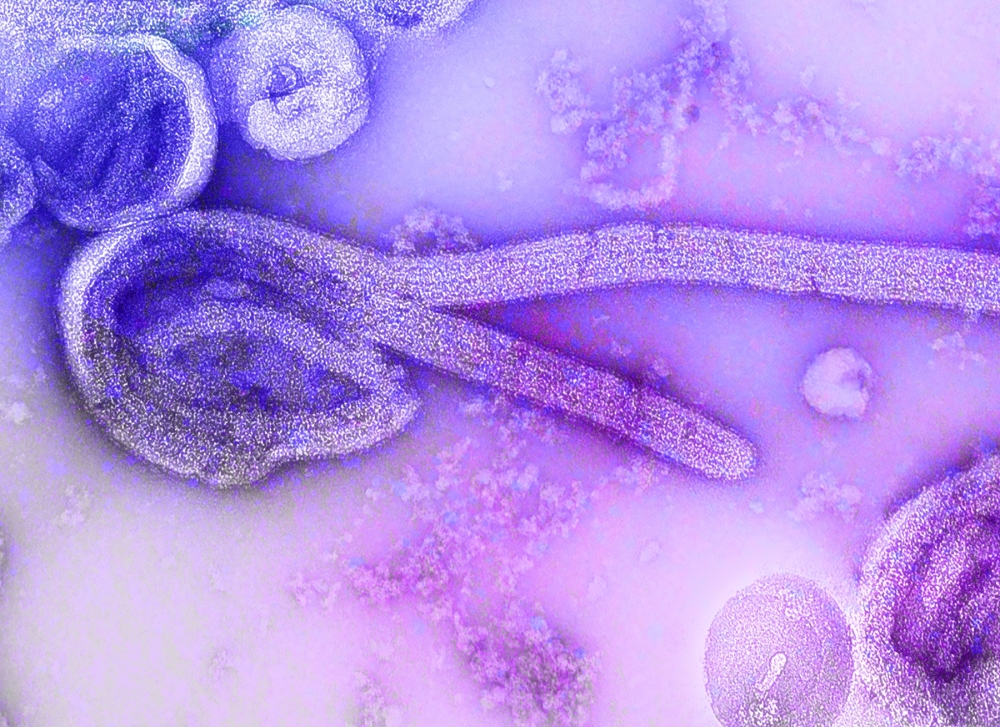





An Ebola virus outbreak in Congo and Uganda has caused over 500 suspected cases and more than 130 deaths, the World Health Organization said Tuesday.
“I’m deeply concerned about the scale and speed of the epidemic,” Tedros Adhanom Ghebreyesus, the director-general of the WHO, said at a meeting of the organization in Geneva.
The U.S. Centers for Disease Control said Monday that it was restricting entry into the United States for some travelers. The WHO has declared the outbreak “a public health emergency of international concern.”
The type of Ebola virus behind the latest outbreak, known as Bundibugyo, is rare. Fewer field tests for it are available, and this form of the virus has no targeted vaccine or treatment, making it harder to contain.
Here’s what to know.
Where did the outbreak start?
It is not yet known exactly when this outbreak started, but it was first identified in May in Congo’s northeastern Ituri province.
Laboratory testing has definitively linked 32 cases to the virus, Congo’s health minister, Dr. Samuel Roger Kamba, said at a briefing Tuesday. Two cases, including one death, have been confirmed in Uganda among people who had traveled to Congo.
There are large numbers of people in Ituri who have been displaced by conflict and many migrant laborers drawn to its gold mines. Tedros said “significant population movement” in the region increased the risk of the virus spreading.
Early surveillance and testing failed to identify the rare species of Ebola responsible for the current outbreak, delaying the response from health authorities. And a misunderstanding initially slowed the local community’s response, according to Kamba. He noted in Tuesday’s briefing that people had delayed reporting symptoms and failed to take protective precautions when burying the dead, which helped the virus to spread.
Kamba said that more than 135 deaths were suspected to be linked to the Ebola outbreak and more than 540 cases are believed to be connected to the outbreak, with the numbers rising rapidly as a result of health teams investigating the symptoms and circumstances of recent deaths and illnesses.
Five countries in the region have started screening travelers or tightening border controls.
How is the United States responding?
On Tuesday, the State Department said it “strongly urges” Americans not to travel to Congo, South Sudan or Uganda, and to reconsider travel to Rwanda.
A CDC order issued Monday allows the United States to bar foreigners from entering the country if they have been in Congo, Uganda or South Sudan in the previous 21 days. The order will remain in place for 30 days.
“At this time, CDC assesses the immediate risk to the general U.S. public as low,” the agency said Monday. But U.S. authorities said they were enhancing public health screenings and monitoring of travelers from the affected areas.
The agency said it was coordinating with airlines and port-of-entry officials internationally to identify travelers who may have been exposed to the virus. At the national level, the CDC said it was enhancing health protections at ports, contact tracing, laboratory testing capacity and hospital readiness.
The United States had worked to move an American medical missionary in Congo who tested positive to Germany for treatment and monitoring, along with other “high-risk contacts.” On Tuesday, Serge, the Christian missionary organization he works for, said he had been safely evacuated and was receiving specialized treatment.
A spokesperson for German federal health authorities said earlier Tuesday that Germany was preparing to receive and treat “a U.S. citizen who contracted Ebola in the Congo” after the United States requested assistance, but she did not provide more details.
The CDC said in a briefing Tuesday that, in addition to the American with Ebola moving to Germany, an additional six Americans with potential exposure will be transported to Europe.
The United States withdrew from the WHO in January, and the U.S. Agency for International Development, which has played a major role in containing previous outbreaks, was shuttered last year by the Trump administration.
It is unclear how that might have affected the response to this outbreak. Atul Gawande, a former senior USAID official, suggested that it may have gone undetected for weeks because American agencies had been scaled back.
Alessandro Vespignani of the Center for Advanced Epidemic Analytics and Predictive Modeling Technology in the United States, known as Epistorm, said in an interview Tuesday that it was too soon to draw such conclusions. What was clear, he added, was that international involvement is necessary to contain the outbreak.
“We have to cooperate internationally because it’s an insurance for ourselves,” he said.
What is Ebola?
Ebola is an illness caused by a group of related viruses, known as orthoebolaviruses, first discovered in 1976 in the countries now known as South Sudan and Congo, in a region near the Ebola River. Fruit bats are thought to carry the viruses without being sickened by them.
Ebola outbreaks have mostly occurred in sub-Saharan Africa. Four of the six known species of Ebola viruses cause illness in humans and can be fatal.
People stricken with Ebola may first experience so-called dry symptoms such as fever, aches, pains and fatigue before progressing to wet symptoms, including diarrhea, vomiting and bleeding, according to the CDC.
Ebola can be contracted through contact with the bodily fluids of an infected, sick or dead person and through contact with contaminated objects like clothing, bedding, needles or medical equipment.
Are there vaccines?
Vaccines and an antiviral drug have been approved for the Zaire species of Ebola, the most common one. But there is no vaccine or specific treatment for the Bundibugyo species, as outbreaks of it have been rare.
The Bundibugyo virus was first identified in 2007 after a mysterious illness broke out in the Bundibugyo District in Uganda, which borders Congo. In 2012, another such outbreak was identified in Congo.
In January, scientists at the University of Oxford announced an effort to develop and test vaccines to protect against multiple lethal viruses, including the Bundibugyo virus.
Fatality rates during the last two outbreaks of this form of Ebola have ranged from 30% to 50% of those infected, according to the WHO.
There has not been much research on this virus species, said Dr. Jean-Jacques Muyembe, who leads Congo’s national institute of biomedical research and has been a pioneer in Ebola research and treatment since the first outbreak in 1976. Speaking at a briefing on Tuesday, Muyembe suggested that vaccine candidates will likely be proposed in the coming days.
The incubation period for this Ebola virus variant ranges from 2 to 21 days, and individuals are usually not infectious until symptoms manifest. But because the early symptoms — like fever and fatigue — resemble those of other illnesses, including malaria, early detection can be difficult.
There have been several deadly Ebola outbreaks in recent years.
Ebola has resurfaced repeatedly since its discovery in 1976, when dual outbreaks in South Sudan and Congo infected nearly 600 people and killed more than 430.
In the 21st century, there have been several deadly outbreaks of Ebola viruses.
— 2025: Last year, health officials in Congo officially declared the country’s 16th Ebola outbreak since 1976. There were 53 confirmed cases and 45 deaths. Earlier that year, Uganda also reported 12 confirmed cases and four deaths from Ebola.
— 2019: A severe outbreak led to nearly 3,500 cases in Congo, with nearly 2,300 deaths.
— 2014: An Ebola epidemic in West Africa began in 2014 and ended in 2016. It was the largest such epidemic in history, with cases in southeastern Guinea, Liberia, and Sierra Leone. More than 28,600 people fell ill, and more than 11,300 died. There were also cases reported in Congo, Mali, Nigeria, Senegal, Spain, Britain, and the United States.
— 2007: About 130 people in Uganda fell ill with the Bundibugyo virus, and more than 40 people died. In Congo, there were more than 260 cases related to the Zaire species of the Ebola virus, and more than 70% of the cases resulted in death.
— 2003: Two outbreaks in the Republic of Congo led to about 180 cases and 170 deaths.
— 2000: About 425 people fell ill during an outbreak in Uganda; more than half died.
This article originally appeared in The New York Times.
Oman Observer is now on the WhatsApp channel. Click here