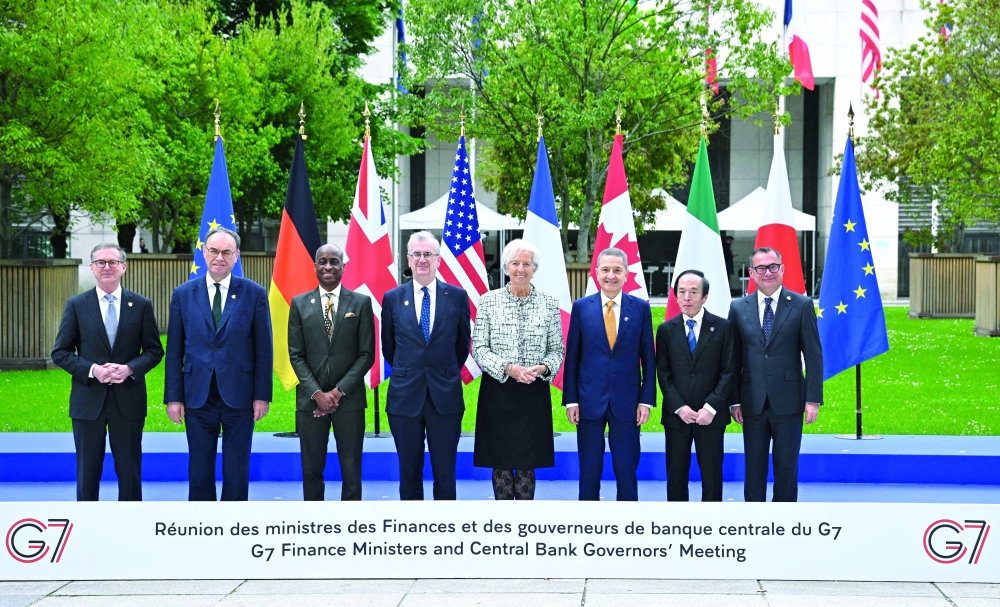





PARIS: Finance chiefs from the G7 industrialised nations gathered in Paris on Monday for two days of talks aimed at forging a united front as the Middle East war roils economic prospects worldwide. France, which currently chairs the rotating presidency of the Group of Seven, faces the tricky task of keeping dialogue open as trade feuds spurred by US President Donald Trump's tariff blitz compound geopolitical tensions. Reducing reliance on China's vast holdings of rare earths is also at the top of the agenda.
"We are facing significant challenges — war in the Middle East, obviously, multilateral imbalances that are not sustainable, and the stakes regarding rare earths, critical materials and development aid," French Finance Minister Roland Lescure told journalists on Monday. He noted in particular the surging US budget deficit, a lack of technological innovation in Europe, and China's efforts to counter slumping consumer spending and industrial over-capacity that has pushed its companies to elbow into overseas markets. "I believe that today, we are going to show that multilateralism is useful, and it works," Lescure said. "We have... to commit ourselves to figure out a return to a more sustainable growth model."
Meanwhile, Fatih Birol, head of the International Energy Agency, said on Monday that commercial oil inventories were depleting rapidly with only a few weeks worth left due to the Iran war and the closure of the Strait of Hormuz to shipping.
Birol, who is participating in the Group of Seven finance leaders meeting in Paris, told reporters that the release of strategic oil reserves had added 2.5 million barrels of oil per day to the market, but said these reserves "are not endless".
The onset of the spring planting and summer travel seasons in the northern hemisphere will drain inventories more quickly as demand for diesel, fertiliser, jet fuel and gasoline increases, Birol added.
Asked about his comments in the G7 meeting, he said he described "a perception gap in the markets between the physical markets and the financial markets" for oil. Birol said that before the US and Israel launched attacks on Iran at the end of February, there was a major surplus in the oil markets, and commercial inventories were very high. But the situation has rapidly shifted due to the war. — AFP/Reuters
Oman Observer is now on the WhatsApp channel. Click here