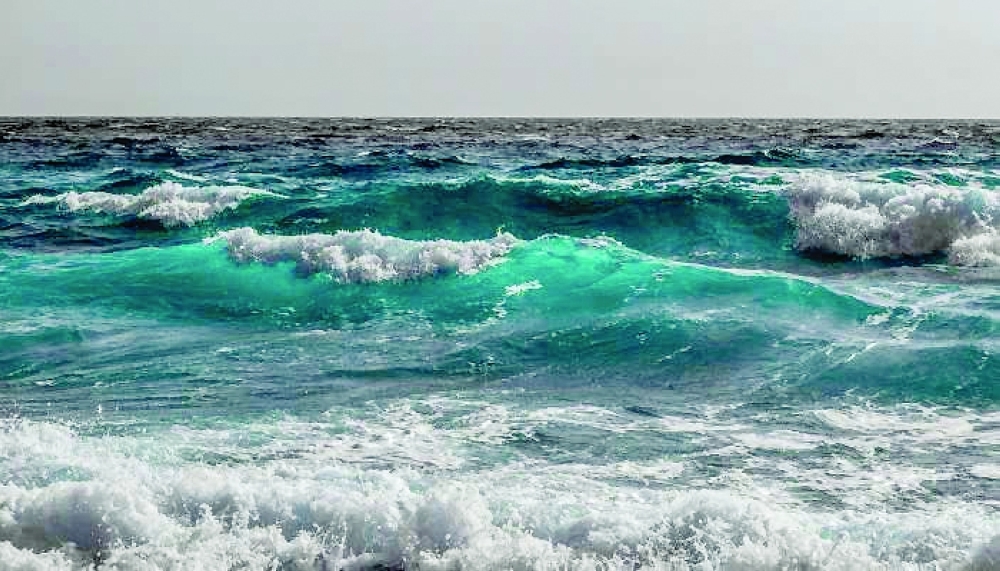





MUSCAT, MAY 17
The findings of a first-of-its-kind assessment of Oman’s wave energy potential will be unveiled by a team of local scientists and researchers at the Oman Sustainability Week (OSW) taking place in Muscat later this week.
According to Dr Saleh al Saadi, Director of the Sustainable Energy Research Centre (SERC) at Sultan Qaboos University (SQU), the study — centring on the techno-economic feasibility of wave energy in Oman — is the product of collaborative research involving Oman LNG, EJAAD, Sustainable Energy Research Centre (SERC) and the Department of Civil and Architectural Engineering, College of Engineering; and the College of Agriculture and Marine Science of Sultan Qaboos University.
“Our findings demonstrate that North Oman possesses a stable low-to-moderate wave resource that can serve as a complementary renewable energy source within the national energy mix”, Dr Al Saadi noted in a post.
This work contributes towards Oman Vision 2040 and supports ongoing efforts towards achieving net-zero carbon, sustainability, innovation and diversification of the energy sector through emerging ocean renewable energy technologies.
Although Oman has hosted multiple initiatives to assess the potential of its coastal wave energy resources, this latest study is unique in terms of the comprehensive approach used to evaluate the country’s potential for generating electricity from ocean waves. The study combined real-life wave measurements collected at sea with advanced computer modelling to gain a detailed understanding of wave conditions and energy potential along Oman’s coastline.
It also examined a range of wave energy technologies to determine which options would be the most technically and economically viable for local conditions. In addition, the study assessed how electricity generated from wave power could be delivered efficiently to the national grid, while also developing an interactive digital platform to support analysis of the technical and financial feasibility of future wave energy projects.
According to Dr Al Saadi, the study also stressed that the success of wave energy projects in Oman will depend on choosing technologies that are well suited to the country’s wave patterns, minimising electricity losses during transmission to the grid and introducing projects gradually as technology improves and costs come down. It further highlighted the need to factor in real-world electricity grid requirements when planning future renewable energy projects.
Among the technologies studied, the WaveDragon system showed strong potential in terms of the amount of electricity it could generate, while Oscillating Water Column (OWC) systems appeared to offer better cost-effectiveness under Oman’s sea conditions.
Oman Observer is now on the WhatsApp channel. Click here