




MUSCAT, MAY 13
The Ministry of Energy and Minerals has launched the updated National Zero Neutrality Plan and the regulatory framework for carbon markets, as part of the Sultanate of Oman's efforts to achieve zero carbon neutrality by 2050 and strengthen its position as a regional hub for green hydrogen and renewable energy.
The updated plan, prepared by the Oman Net Zero Centre, is based on a realistic assessment of emissions trajectory using up-to-date data. It prioritises reductions in line with the national economy, identifies the necessary enablers and financing; and explores opportunities for transitioning to a low-carbon economy.
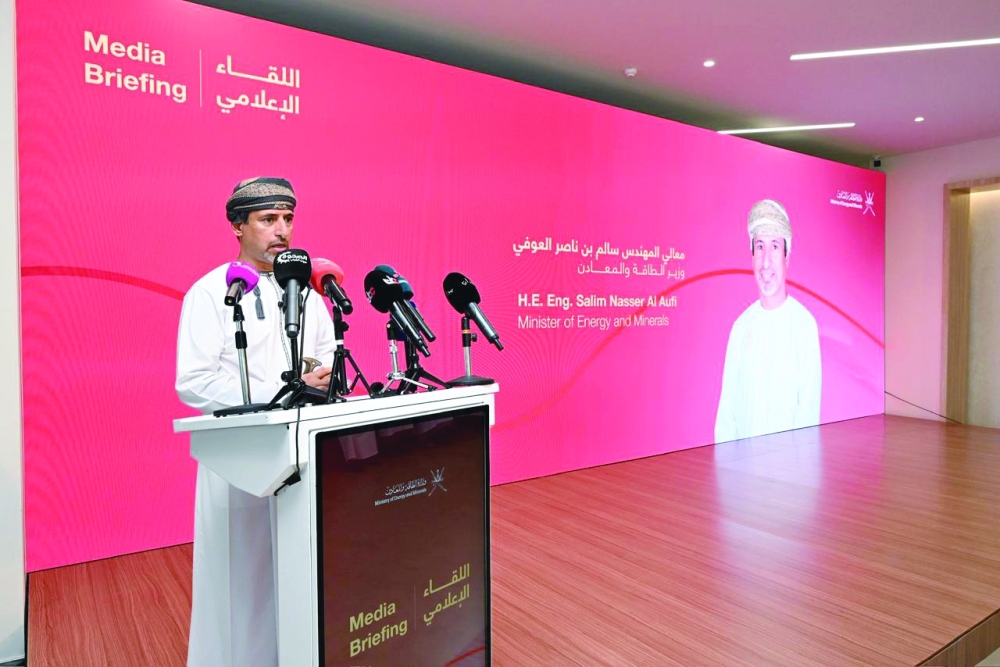
Addressing the media on Wednesday, May 13, 2026, Eng Salim bin Nasser al Aufi, Minister of Energy and Minerals, said the adoption of the updated National Net Zero Plan represents a strategic step towards building a robust, sustainable and low-carbon economy, enhancing Oman's global standing and aligning with the objectives of Oman Vision 2040.
He explained that the Net Zero path yields significant economic and climate benefits by promoting green industries and boosting Oman's competitiveness, while also providing the Sultanate of Oman with modern technologies to reduce emissions and contribute to increasing GDP.
He noted that the regulatory framework for carbon markets is a key enabler for implementing the plan. This comprehensive national regulatory framework for carbon markets in Oman establishes clear rules and simplified procedures that encourage the participation of the private sector and small and medium-sized enterprises (SMEs), thereby contributing to job creation and diversifying the national economy's sources of income. The regulatory framework for carbon markets aims to transform the targeted 33% emissions reduction by 2035 into investable, verifiable and tradable carbon credits. It also seeks to attract international and private investment to mitigation and adaptation projects across seven key national sectors, while solidifying the Sultanate of Oman’s position as a reliable supplier of high-quality carbon credits in global markets.
For his part, Eng Mohsin bin Sulaiman al Jabri, Director General of the Oman Net Zero Centre, affirmed that the updated national plan represents a comprehensive and systematic roadmap for emissions reduction at the national level. He explained that its development involved a participatory process that included more than 300 experts and specialists from various sectors, through 14 specialised workshops with the participation of government and private entities.
He added that the Cabinet's adoption of the regulatory framework for carbon markets will contribute to attracting the necessary technologies and financing for implementing emissions reduction projects and will enhance Oman's presence in regional and global carbon markets. He explained that launching the National Carbon Register via the “Meezan” platform provides a sophisticated digital infrastructure for tracking carbon credits and managing issuance, transfer and trading processes according to the highest standards of transparency and international compliance, while ensuring the prevention of double counting.
The plan indicated that total greenhouse gas emissions reached approximately 94 million tonnes of CO₂ equivalent in 2024, with projections indicating a rise to 127 million tonnes by 2050 if no further interventions are implemented. The oil, gas, transportation and electricity sectors account for approximately 70% of total national emissions.
The plan adopted a mitigation cost curve methodology to classify technological solutions across three levels: low-cost technologies such as renewable energy, energy efficiency and public transportation; medium-cost solutions such as carbon capture and hydrogen use; and more ambitious technologies including full grid conversion and hydrogen vehicles. The plan aims to reduce emissions by 33% compared to the baseline year of 2024, with a 7% mandatory target and a 26% voluntary target linked to securing the necessary funding and technologies and enhancing national capabilities. The goal is to achieve net-zero emissions by 2050.
The carbon market also seeks to establish a transparent national framework for registering carbon projects and licensing their carbon credits according to international standards. This framework will transform emissions reduction efforts into tradable carbon credits, attract international capital in seven strategic sectors and create opportunities for small and medium-sized enterprises (SMEs) and specialised jobs in verification, certification, consulting, clean technologies and legal and financial services.
Oman Observer is now on the WhatsApp channel. Click here