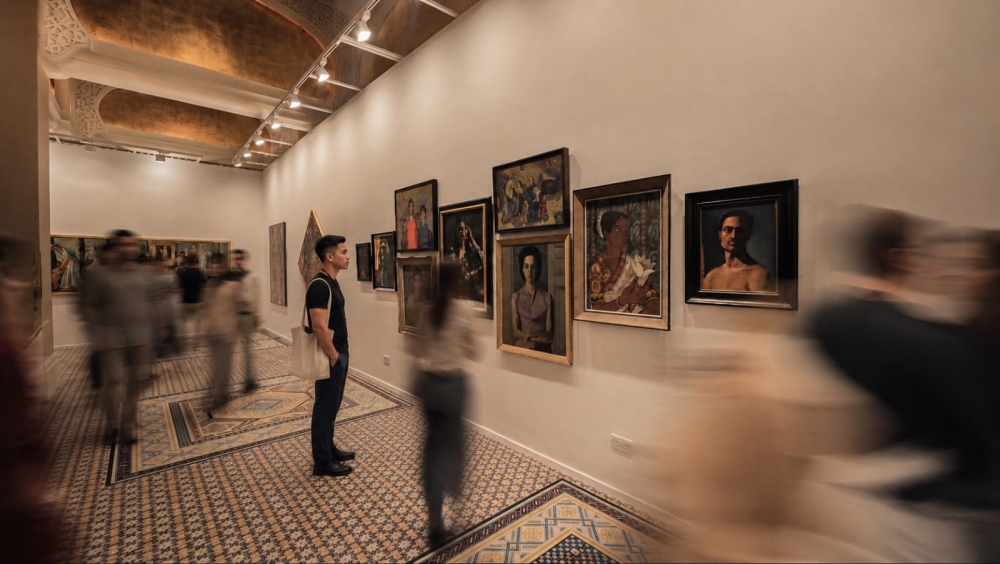
As someone who genuinely loves art, I’ve always found it strange that the extreme heat of April and May never really bothers me. While most people complain about the start of summer, I quietly look forward to it because, for me, this has become the season of art.
Over the last three years before this one, I’ve spent this period following and celebrating Omani and Oman-based artists presenting their work at Art Dubai. Many of them drew inspiration from Oman itself: its mountains, villages, landscapes, traditions and even its environmental fragility and brought those stories onto an international stage.
I’ve seen installations that made people emotional. I’ve seen artworks that tackled climate change, identity, migration and politics. Some pieces were deeply personal. Others reflected the anxieties of the world around us. But what stayed with me most was how Oman's neighbouring powerhouse managed to build a cultural meeting point where artists from places like Oman could enter global conversations without losing their own identity in the process.
But this year feels different.
The fair’s 20th anniversary arrives at a difficult time for the region. Wars, political tensions and instability across parts of the Middle East forced organisers to rethink parts of the event. And yet, despite everything, the fair still continued.
Maybe smaller. Maybe quieter. More restrained. But alive. And there’s something deeply human about that.
Lately, whether I’m thinking about Venice, Dubai or even smaller art spaces in Oman, I keep coming back to one uncomfortable truth: art never really disappears during war. If anything, it becomes more important.
History has shown this repeatedly. During World War II, artists continued painting while cities burned around them. Palestinian artists turned embroidery, murals and poetry into forms of resistance and cultural survival. Lebanese artists continued creating through years of civil war.
In the middle of all this geopolitical uncertainty, I’ve come to realise that the region needs artists now more than ever, not necessarily to shout louder, but to speak more honestly.
I hope there will still be many exhibitions this year because when visitors walk through these spaces, I hope they understand that something deeper is happening beneath the gallery walls. What they are really seeing is a region refusing to let instability define it completely.
As someone who genuinely loves art, I’ve always found it strange that the extreme heat of April and May never really bothers me. While most people complain about the start of summer, I quietly look forward to it because, for me, this has become the season of art.
Over the last three years before this one, I’ve spent this period following and celebrating Omani and Oman-based artists presenting their work at Art Dubai. Many of them drew inspiration from Oman itself: its mountains, villages, landscapes, traditions and even its environmental fragility and brought those stories onto an international stage.
I’ve seen installations that made people emotional. I’ve seen artworks that tackled climate change, identity, migration and politics. Some pieces were deeply personal. Others reflected the anxieties of the world around us. But what stayed with me most was how Oman's neighbouring powerhouse managed to build a cultural meeting point where artists from places like Oman could enter global conversations without losing their own identity in the process.
But this year feels different.
The fair’s 20th anniversary arrives at a difficult time for the region. Wars, political tensions and instability across parts of the Middle East forced organisers to rethink parts of the event. And yet, despite everything, the fair still continued.
Maybe smaller. Maybe quieter. More restrained. But alive. And there’s something deeply human about that.
Lately, whether I’m thinking about Venice, Dubai or even smaller art spaces in Oman, I keep coming back to one uncomfortable truth: art never really disappears during war. If anything, it becomes more important.
History has shown this repeatedly. During World War II, artists continued painting while cities burned around them. Palestinian artists turned embroidery, murals and poetry into forms of resistance and cultural survival. Lebanese artists continued creating through years of civil war.
In the middle of all this geopolitical uncertainty, I’ve come to realise that the region needs artists now more than ever not necessarily to shout louder, but to speak more honestly.
A Conversation with Art Experts
As wars and political tensions continue to shape the Middle East, one question quietly hovered over: what does an art fair become during a time of crisis?
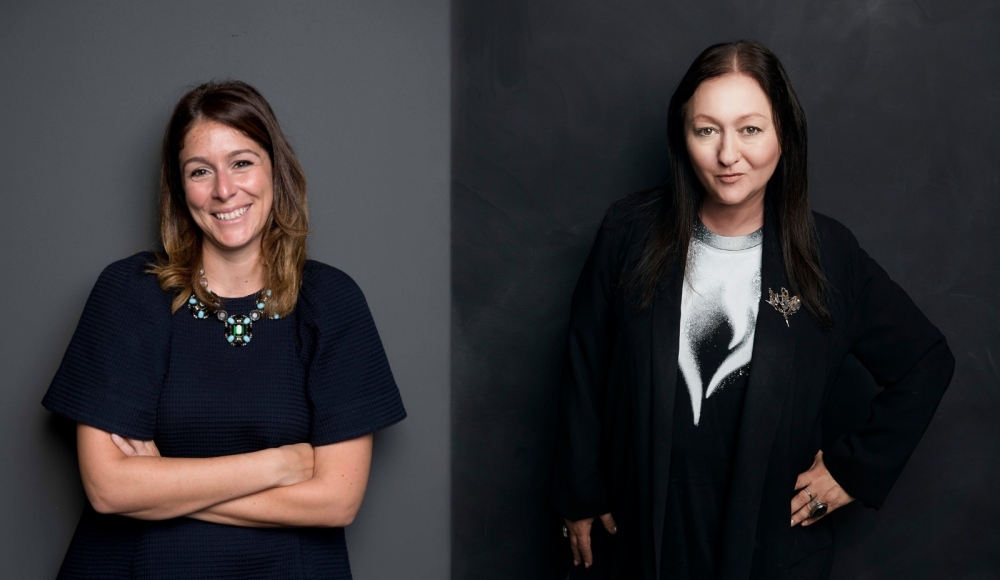
For Benedetta Ghione, Executive Director of Art Dubai, the answer was never about retreating.
Ghione repeatedly framed the fair not simply as a marketplace for art, but as a cultural meeting point whose role becomes even more essential during instability. She emphasised that, in moments like today, “convening feels more important than ever.”
Rather than scaling back ambition amid regional uncertainty, Ghione said it is important to expand on the idea of what an art fair could.
This is seconded by Alexie Glass-Kantor, Curatorial Director of Art Dubai adding that an art fair, based on the challenges, should therefore be built around installations, performances and communal experiences that connected deeply with “the ecosystem of art and culture in the Gulf and the Middle East.” An art fair that one can spend the whole day exploring or for the case of Art Dubai, "an environment where audiences could move fluidly between exhibitions, films, performances and public discussions."
In many ways, that may be the future of art fairs during conflict.
In a region experiencing uncertainty, the fair appears to be moving beyond the traditional model of booths and collectors toward something more socially responsive: an evolving cultural commons where art, performance, conversation and community intersect.
Because history repeatedly shows that art never truly disappears during war.
If anything, it becomes one of the few places where humanity continues to gather.