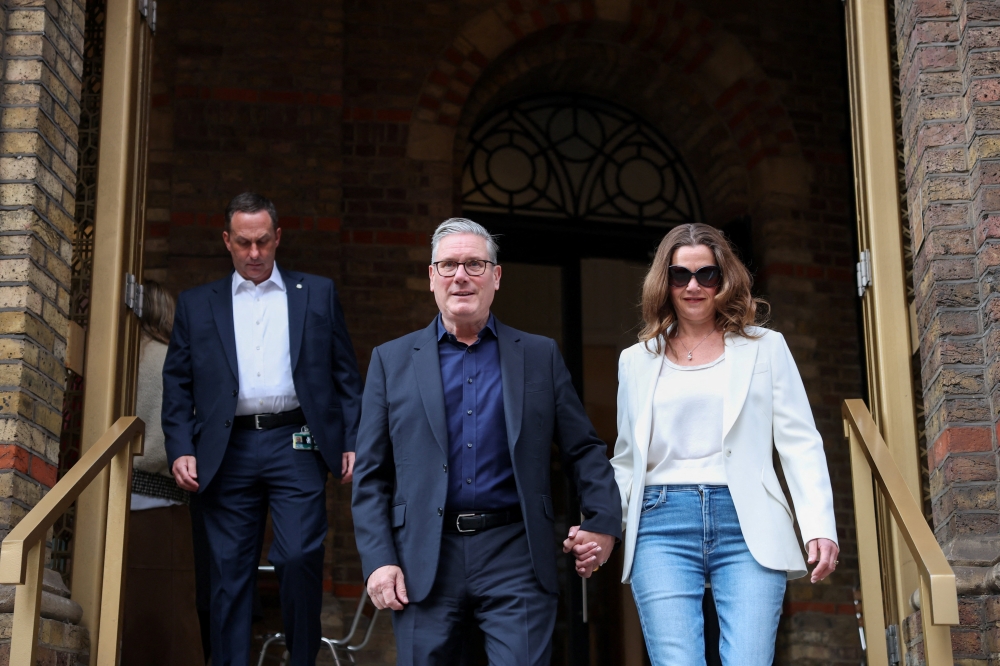





LONDON — With the right-wing populist Reform UK party headed by Nigel Farage posting significant gains in local elections, Prime Minister Keir Starmer took responsibility Friday for large Labour Party losses, saying that he would “not sugarcoat” voters’ scathing verdict on his 22 months in office.
Results from Thursday’s municipal elections in England and parliamentary votes in Scotland and Wales are shattering the grip on power long held by Labour and the Conservatives, and signaling a new political landscape in which at least seven parties are vying for votes across Britain.
In returns announced late Friday, Farage’s party had gained more than 1,400 seats on municipal councils across England, taking seats from the Conservative Party and Labour and consolidating Reform’s status as the dominant party of Britain’s political right.
Starmer’s Labour Party suffered deep losses as it shed support to the left-wing Green Party, the Liberal Democrats, and Reform. By evening, Labour had lost more than 1,300 council seats, with the vote count still incomplete. About 5,000 council seats were being contested in total.
In Wales, where Labour had dominated politics since 1922, the party suffered a crushing blow. The left-wing nationalist party Plaid Cymru (pronounced plide KUM-ree) was on track to win the largest number of seats in the Welsh Parliament. Labour received far fewer votes and came in third in the number of seats, after Reform.
“Voters have sent a message about the pace of change, how they want their lives improved,” Starmer told reporters Friday morning. But he insisted he would not resign, saying: “I was elected to meet those challenges, and I’m not going to walk away from those challenges and plunge the country into chaos.”
Farage, an ally of President Donald Trump, declared that Reform had made “historic” gains and should now be treated as a national party with broad support across Britain. The party has surged in popularity in the last two years, but it has just eight lawmakers in the British Parliament.
“It’s a big, big day, not just for our party, but for a complete reshaping of British politics,” Farage told reporters.
The Green Party and the Liberal Democrats also made gains, adding to pressure on Starmer and further eroding the clout of the Conservatives. The Greens have so far won more than 360 council seats, and the Liberal Democrats have gained more than 150.
Votes are still being counted, and more results are expected by Saturday morning.
Public opinion surveys had for months predicted a tough election for Labour. Polls have shown that Starmer is one of the least popular British leaders in modern history.
Here’s what else to know:
— Starmer’s struggles: Starmer’s tenure has been marked by a series of flip-flops on taxes, welfare, immigration, and digital IDs. He has also been wounded by scandals, including his decision to appoint Peter Mandelson as Britain’s ambassador to the United States despite Mandelson’s association with Jeffrey Epstein, the convicted sex offender.
— Reform’s future: Farage is hoping that Reform’s strong showing will improve the party’s chances of a much more significant victory in a general election, although that does not have to take place until 2029.
— Scotland’s elections: The left-wing Scottish National Party, which has led the Parliament for almost 20 years, remained the dominant party even after losing six seats. But having failed to secure an outright majority, the party has less possible leverage in its long-standing campaign for Scotland’s independence from the United Kingdom. With the results in, the Labour and Reform parties tied for the second-most seats, with 17 each.
— Labour in Wales: Voters ended Labour’s control of the Welsh Parliament, known as the Senedd, for the first time since Wales gained its own political assembly. Plaid Cymru, which favors Welsh independence, won the largest number of seats.
This article originally appeared in The New York Times.
Oman Observer is now on the WhatsApp channel. Click here