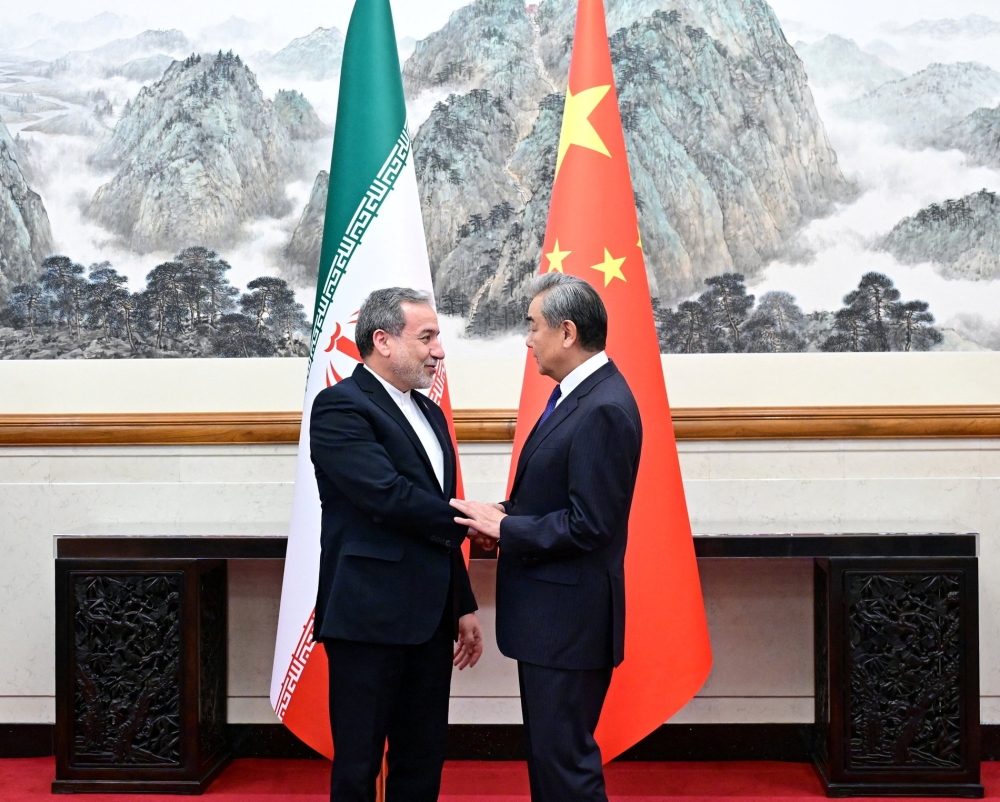





China’s top diplomat met with Iran’s foreign minister on Wednesday and called for greater efforts to open the Strait of Hormuz and for an end to the war, after the Trump administration pressed Beijing to help end Tehran’s chokehold over the waterway.
Meeting in Beijing with his Iranian counterpart, Abbas Araghchi, Foreign Minister Wang Yi of China said that stopping the war was a matter of urgency, according to an official summary of their meeting issued by Xinhua, China’s main state news agency.
While Wang was careful not to blame Iran for the crisis over the strait — a shipping route vital for global oil, natural gas and other cargo — he emphasized China’s concerns about the blockade. The standoff over the route has sent oil prices to new highs, along with broader global economic shocks.
“China believes that a comprehensive cessation of hostilities should not be delayed, any reigniting of hostilities is even less desirable, and sticking to negotiations is particularly important,” Wang said in the talks, according to the Xinhua summary.
Wang said that the “international community shares a common concern for restoring normal, safe passage” through the Strait of Hormuz, and that China “hopes the parties concerned will respond to the strong calls from the international community” over reopening the strait.
Araghchi is the first senior Iranian official to visit China since the United States and Israel’s war with Iran broke out in late February. His meeting with Wang was another step in Beijing’s measured efforts to encourage an end to the war while seeking to avoid entanglement in the conflict.
The Chinese account of their talks suggested that Beijing is holding to that position, even as it becomes more worried about the economic damage from the blockade.
Wang also reiterated Beijing’s position that Iran should have the right to peaceful development of nuclear energy, while not acquiring nuclear weapons, and said: “China supports Iran’s efforts to safeguard its national sovereignty and security.”
Araghchi sought to reassure his Chinese hosts that Iran is committed to diplomacy, saying in a statement about his meeting with Wang that he briefed his counterpart on the status of efforts to end the war, including the peace talks mediated by Pakistan.
Iran was as “serious and steadfast” in negotiations as it has been in defending itself militarily, the statement from Araghchi’s office said.
Beijing is preparing to host President Donald Trump for a summit with President Xi Jinping next week, during which the leaders are likely to discuss the Iran war and the reopening of the Strait of Hormuz to allow commercial ships and oil tankers through.
Iran has effectively blocked the strait for two months since the war started. In addition, the U.S. Navy has imposed a blockade on ships going to or from Iran. On Tuesday, Secretary of State Marco Rubio told reporters in Washington that China should press Araghchi to open the waterway during his visit.
“I hope the Chinese tell him what he needs to be told, and that is that what you are doing in the straits is causing you to be globally isolated,” Rubio said, referring to Araghchi. “It is in China’s interest that Iran stop closing the straits. It’s harming China as well.”
On Tuesday, Trump announced that he was briefly pausing the day-old U.S. operation to escort commercial ships through the strait, citing what he said was progress toward an agreement with Iran.
Iran has allowed ships carrying Iranian oil to pass, including ones bound for China. Even so, surging global energy prices have hurt China’s economy. Foreign officials have said that China played a backroom role in persuading Iran to accept the terms of the brittle ceasefire that was reached in April.
Even as China tries to keep ties with the United States steady ahead of Trump’s summit with Xi, it has pushed back against U.S. pressure over Iran. After the U.S. Treasury Department imposed sanctions on an independent Chinese refinery that buys large amounts of Iranian oil, China told its companies not to comply with the U.S. sanctions.
This article originally appeared in The New York Times.
Oman Observer is now on the WhatsApp channel. Click here