




MUSCAT: Aligned with the goals of Oman Vision 2040 to diversify income and reduce reliance on hydrocarbons, Oman’s aquaculture sector is rapidly emerging as a high-potential pillar of the non-oil economy. Strong policy support, rising investor interest and a focus on food security have driven notable expansion, positioning the sector as an increasingly attractive destination for both local and international capital.
Performance indicators for 2025 underscore this momentum. Total aquaculture production rose sharply to 9,240 tonnes, up from 5,507 tonnes in 2024 — an increase of 67.7%. The sector’s economic value also climbed significantly to RO 20.3 million, compared with RO 12.4 million the previous year, reflecting growth of 63.7%. These gains highlight improved operational efficiency and the scaling up of production capacity, reinforcing aquaculture’s reputation as a stable, returns-driven investment segment.
This growth is underpinned by a pipeline of major projects aimed at expanding capacity and diversifying output. Four key investment packages have been launched, including three large-scale shrimp farming projects in Al Sharqiyah South Governorate and Al Wusta Governorate. Together, these projects account for a combined production capacity of around 13,000 tonnes annually, backed by investments totalling RO 51.1 million and contribute to balanced regional development while optimising the use of coastal resources.
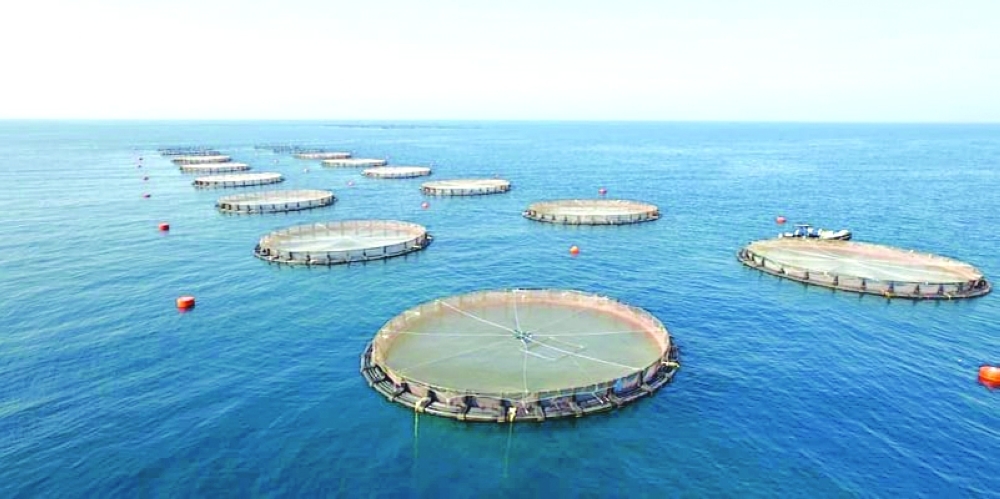
Further diversification is being achieved through finfish farming initiatives, notably a project in the Wilayat of Qurayat, Muscat Governorate, with an annual capacity of 2,000 tonnes and an investment value of RO 3.8 million. This development is expected to reduce import dependence, strengthen domestic value chains and support downstream fisheries-related industries.
In terms of production mix, white-legged shrimp and European cobia dominate due to strong market demand, followed by tilapia, Omani abalone and rock oysters — demonstrating a broad and adaptable production base capable of serving diverse consumer markets.
According to the Ministry of Agriculture, Fisheries and Water Resources, the adoption of advanced aquaculture technologies — including smart water management, automated feeding systems and intensive farming techniques — is playing a central role in boosting productivity while maintaining environmental sustainability.
Beyond food production, aquaculture is contributing to the expansion of Oman’s seafood exports, supported by a growing emphasis on quality standards and sustainability certifications that enhance global competitiveness. At the same time, coordinated fisheries management — such as regulated fishing seasons — helps safeguard natural fish stocks and ensures long-term resource sustainability.
The sector forms a cornerstone of Oman’s broader blue economy strategy, which targets raising its contribution to over 10% of GDP by 2040. Aquaculture’s dual role in driving economic growth and preserving marine ecosystems makes it a key enabler of this vision, while also generating employment opportunities, particularly in coastal communities.
In parallel, the sector is stimulating the development of related industries, including seafood processing, packaging and export logistics, thereby increasing in-country value addition. Continued emphasis on clean technologies, efficient resource use and environmentally responsible practices — such as water quality management and reduced antibiotic reliance — further strengthens the sector’s long-term sustainability.
Oman Observer is now on the WhatsApp channel. Click here