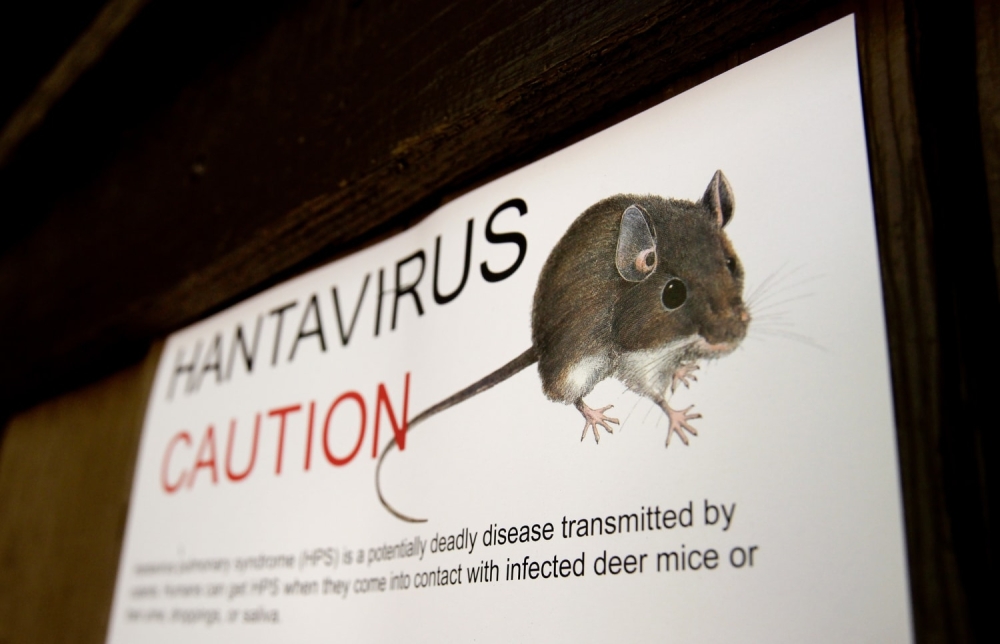





Hantavirus, a rare disease often caused by contact with droppings from infected rodents, is suspected in the deaths of three people who were aboard a cruise ship sailing the Atlantic Ocean.
Hantavirus is most commonly transmitted by breathing in particles of dried rodent droppings or urine.
In rare cases, it may spread among people, according to the federal Centers for Disease Control and Prevention. Hantaviruses found throughout the United States are not known to spread among people.
At first, hantavirus causes flulike symptoms, including fever, chills, body aches and headaches. But as the disease progresses, respiratory symptoms develop and patients can experience shortness of breath and then lung or heart failure.
Here is what to know about hantavirus.
What is hantavirus?
Hantavirus refers to a family of viruses carried by rodents.
It is often transmitted to humans by inhaling particles from dried mouse droppings. The only hantavirus documented to have spread person-to-person is the Andes virus, found in South America.
“Hantavirus isn’t really a virus that people usually associate with cruise ships,” said Kari Moore Debbink, a teaching professor and virology expert at Johns Hopkins University in Baltimore.
Other viruses, like the norovirus, Dr. Moore Debbink added, are far more commonly spread on cruise ships.
In North America, Sin Nombre virus is the most common form of this virus, according to Sabra L. Klein, a professor at the Johns Hopkins Bloomberg School of Public Health.
As of the end of 2022, 864 cases of hantavirus disease had been reported in the United States since surveys of such cases began in 1993, according to the CDC.
The “classic” case of hantavirus is contracted by someone who has visited a rural cabin that has a rodent infestation, said Emily Abdoler, a doctor and assistant professor of medicine at the University of Michigan Medical School.
Hantavirus brings flulike symptoms at first.
Hantavirus can cause flulike symptoms that appear one to eight weeks after exposure to droppings from an infected rodent.
Later, patients often experience shortness of breath and then lung or heart failure.
How do I prevent contracting hantavirus?
Although there are antivirals that can help manage symptoms, there are no cures specifically for hantavirus, Klein of Johns Hopkins said. That’s why prevention is important.
If you live in an area where hantavirus-infected rodents are known to roam, clean any droppings with a wet paper towel. Do not use a vacuum or a broom, which can stir up the aerosols from the excrement.
Use gloves and a tightfitting N95 mask in a well-ventilated space. People should spray the area with a bleach solution or a commercial disinfectant and let it sit for five minutes.
Then they should clean the area with paper towels, tossing them in a trash can that closes tightly, said Dr. Erin Phipps, a veterinarian at the New Mexico Department of Health.
Treatment of hantavirus in the intensive care unit may include intubation and oxygen therapy, fluid replacement and medications to support blood pressure. Sometimes antiviral drugs are used.
This article originally appeared in The New York Times.
Hantavirus Pulmonary Syndrome (HPS)
HPS is a severe and potentially deadly disease that affects the lungs. Symptoms of HPS usually start to show 1 to 8 weeks after contact with an infected rodent.
Early symptoms can include:
- fatigue
- fever
- muscle aches, especially in the large muscle groups like the thighs, hips, back, and sometimes shoulders
About half of all HPS patients also experience:
- headaches
- dizziness
- chills
- abdominal problems, like nausea, vomiting, diarrhea, and abdominal pain
Four to 10 days after the initial phase of illness, the late symptoms of HPS appear. These symptoms include coughing and shortness of breath. Patients might experience tightness in the chest, as the lungs fill with fluid.
HPS can be deadly. Thirty-eight percent of people who develop respiratory symptoms may die from the disease.
Hemorrhagic Fever with Renal Syndrome (HFRS)
HFRS is a severe and sometimes deadly disease that affects the kidneys. Symptoms of HFRS usually develop within 1 to 2 weeks after exposure. In rare cases, they may take up to 8 weeks to develop. Initial symptoms begin suddenly and include:
- intense headaches
- back and abdominal pain
- fever/chills
- nausea
- blurred vision
People may have flushing of the face, inflammation or redness of the eyes, or a rash. Later symptoms can include:
- low blood pressure
- lack of blood flow (acute shock)
- internal bleeding (vascular leakage)
- acute kidney failure, which can cause severe fluid overload
The severity of the disease varies depending on the virus causing the infection. Hantaan and Dobrava virus infections usually cause severe symptoms where 5-15% of cases are fatal. In contrast, Seoul, Saaremaa, and Puumala virus infections are usually more moderate with less than 1% dying from the disease. Complete recovery can take several weeks to months.
Reducing risk
Eliminate or minimize contact with rodents in your home, workplace, or campsite to reduce your risk of exposure to hantaviruses. Seal holes and gaps in your home or garage to keep rodents from entering these spaces. Place traps in and around your home to decrease rodent infestation. Clean up any easy-to-get food that might attract rodents.
Diagnosing hantavirus in a person who has been infected less than 72 hours is difficult. If the initial test is done before the virus can be found, repeat testing is often done 72 hours after symptom start. Early symptoms such as fever, headache muscle aches, nausea, and fatigue are easily confused with influenza.
If you suspect hantavirus disease, see a physician immediately and mention a potential rodent exposure.
There is no specific treatment for hantavirus infection. Patients should receive supportive care, including rest, hydration, and treatment of symptoms.
HPS can cause breathing difficulties, and patients may need breathing support, such as intubation. Intubation is a medical procedure where a tube is placed in the lungs from the mouth to help the patient get oxygen.
HFRS can disrupt kidney function. Patients with HFRS may need dialysis to remove toxins from the blood and maintain the right balance of fluids in the body when the kidneys aren't working well.
Oman Observer is now on the WhatsApp channel. Click here