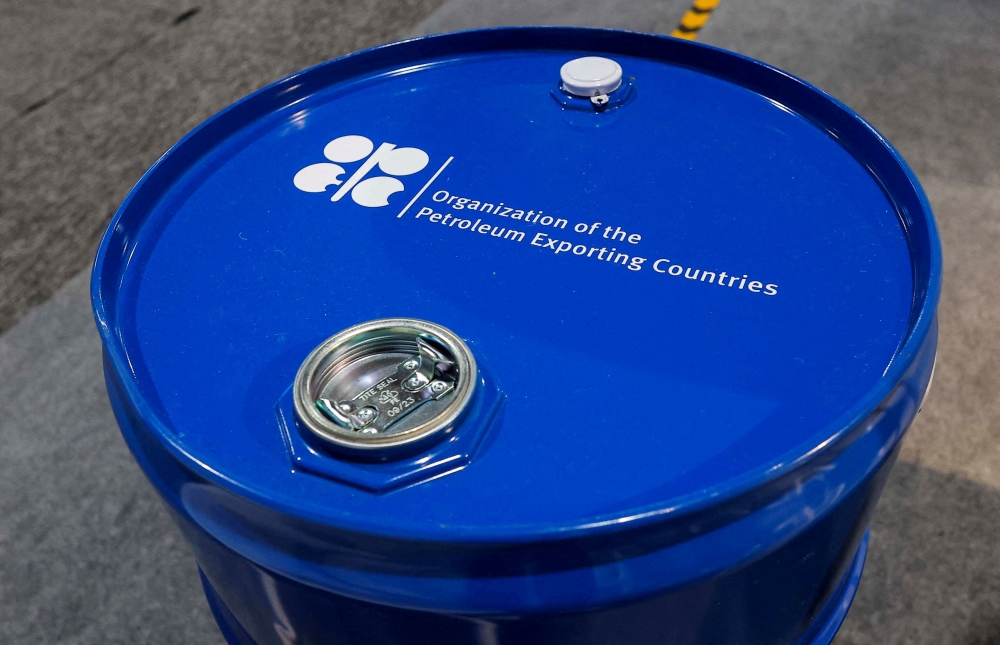





The United Arab Emirates said on Tuesday it was quitting Opec and Opec+, dealing a heavy blow to the oil exporting groups and their de facto leader, Saudi Arabia, at a time when the Iran war has caused a historic energy shock and unsettled the global economy. The loss of the UAE, a longstanding OPEC member, could create disarray and weaken the group, which has usually sought to show a united front despite internal disagreements over a range of issues from geopolitics to production quotas.
UAE Energy Minister Suhail Mohamed al-Mazrouei told Reuters the decision was taken after a careful look at the regional power's energy strategies. Asked whether the UAE consulted with Saudi Arabia, he said the UAE did not raise the issue with any other country. "
This is a policy decision, it has been done after a careful look at current and future policies related to level of production," said the energy minister.
OPEC Gulf producers have already been struggling to ship exports through the Strait of Hormuz, a chokepoint between Iran and Oman through which a fifth of the world's crude oil and liquefied natural gas normally passes, because of Iranian threats and attacks against vessels. Mazrouei said the move would not have a huge impact on the market because of the situation in the strait.
But the UAE exit from OPC represents a win for U.S. President Donald Trump, who has accused the organisation of "ripping off the rest of the world" by inflating oil prices.
GARY ROSS, CEO OF BLACK GOLD INVESTORS AND VETERAN OPEC WATCHER:
"They (UAE) have ignored quotas for the last few years and pursued a near-maximum-production policy. At the end of the day, Saudi Arabia was essentially OPEC -- the only country with spare capacity. It is nice having Russia involved to somewhat constrain its supply development."
MICHAEL BROWN, SENIOR RESEARCH STRATEGIST, PEPPERSTONE:
"While, undoubtedly, a pivotal event for the global energy market, the near-term implications of the move are likely to be relatively limited. As the U.S.-Iran conflict continues, and the Strait of Hormuz remains impassable, the most significant issue for the crude market is not production, but actually shipping product to where it is needed. Today's announcement does not change anything on that front.
"Still, the UAE's pre-conflict output target of 5 million barrels per day in 2027 could now prove more likely to be achieved, in turn helping crude benchmarks to normalise in shorter order once the ongoing Middle East conflict comes to an end."
OLE HANSEN, SAXO BANK
"In the short-to-medium term, the market should be able to absorb additional UAE barrels given depleted global inventories and the need to rebuild reserves. Over time, however, the departure raises a broader strategic question: if other producers begin prioritising market share over quota discipline, OPEC’s ability to manage orderly markets through coordinated supply adjustments may increasingly be called into question."
JAN VON GERICH, CHIEF MARKETS ANALYST, NORDEA, FINLAND
He said the UAE wants to produce more oil, so the move should be negative for oil prices.
When the Iran conflict ends, OPEC will not be able to control prices the way it did in the past, he said.
MONICA MALIK, CHIEF ECONOMIST AT ADCB:
"This opens the door for the UAE to gain global market share when the geopolitical situation normalises."
The exit should be positive for consumers and the broader global economy, she said.
JORGE LEON, ANALYST AT RYSTAD: "The UAE withdrawal marks a significant shift for OPEC. Alongside Saudi Arabia, it is one of the few members with meaningful spare capacity - the mechanism through which the group exerts market influence."
"While near-term effects may be muted given ongoing disruptions in the Strait of Hormuz, the longer-term implication is a structurally weaker OPEC. Outside the group, the UAE would have both the incentive and the ability to increase production, raising broader questions about the sustainability of Saudi Arabia’s role as the market’s central stabiliser - and pointing to a potentially more volatile oil market as OPEC’s capacity to smooth supply imbalances diminishes."
AJAY PARMAR, DIRECTOR OF ENERGY AND REFINING AT ICIS:
"The UAE has been in disagreement with general OPEC policy for quite some time. So it's not a surprise, but it will certainly have a significant impact in the long term. It also signifies the general drift in the historically strong alliance between the UAE and Saudi Arabia."
SERGEY VAKULENKO, CARNEGIE RUSSIA EURASIA CENTER, FORMER GAZPROM NEFT EXECUTIVE
"The UAE has been planning to grow oil production by up to 30%, and it would be difficult to do so within the limitations of OPEC and OPEC+. "Now is probably the least damaging time to announce it - oil prices are high, and there are genuine shortages because of Hormuz closure. After Hormuz reopens, there will be elevated demand as countries will be replenishing reserves that were drawn down since February, so prices will stay high." "Without the UAE, OPEC will be much weaker. Other major producers, Iran and Iraq, did not maintain any substantial spare capacity. It was mostly done by UAE and Saudi Arabia."
Oman Observer is now on the WhatsApp channel. Click here