




MUSCAT: Emmy Culianez, a French photographer based in the Sultanate of Oman, has expressed her astonishment at the remarkable presence of Omani customs and traditions in everyday life. Through her photographs — which seek to capture the true meaning of both people and place — her vision has revealed the unique interplay between historical reality and contemporary immediacy. "There is a clear intention to preserve and express Omani cultural identity through architecture, materials, and the repetition of forms," she said. "At the same time, everything feels alive, still part of daily life."
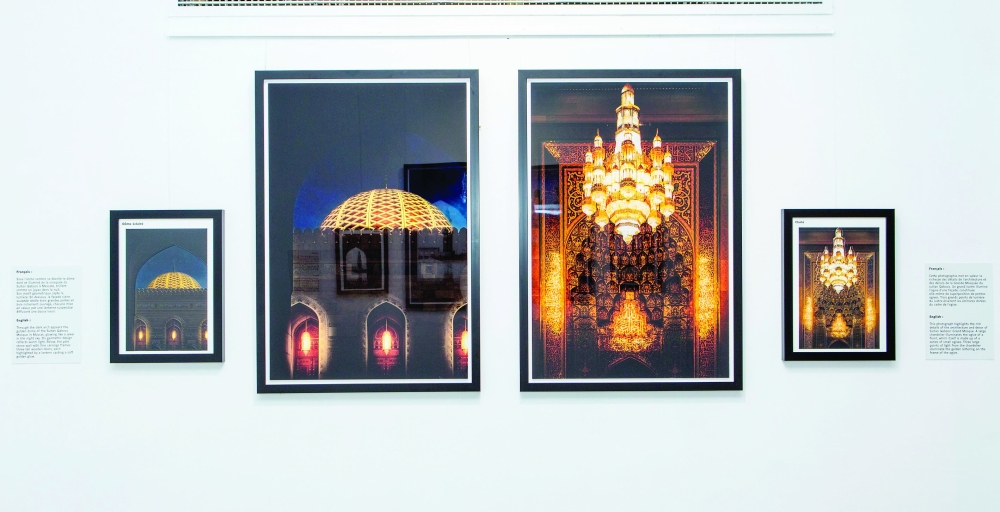
Regarding the aesthetic reality of Oman as reflected in her images, Culianez noted that what she translates visually is often linked to what she feels. "The way light interacts with surfaces, the texture of stone, the rhythm of arches — these elements create a very specific atmosphere," she said.
"What I found in Oman is a kind of soft power — something subtle, not imposed, yet very present," she added. "There is a space where you do not just look; you take your time, you feel, you experience. In other words, the Omani photographic image reflects the landscape of that soft power and its role in crafting an experience to be discovered over time."
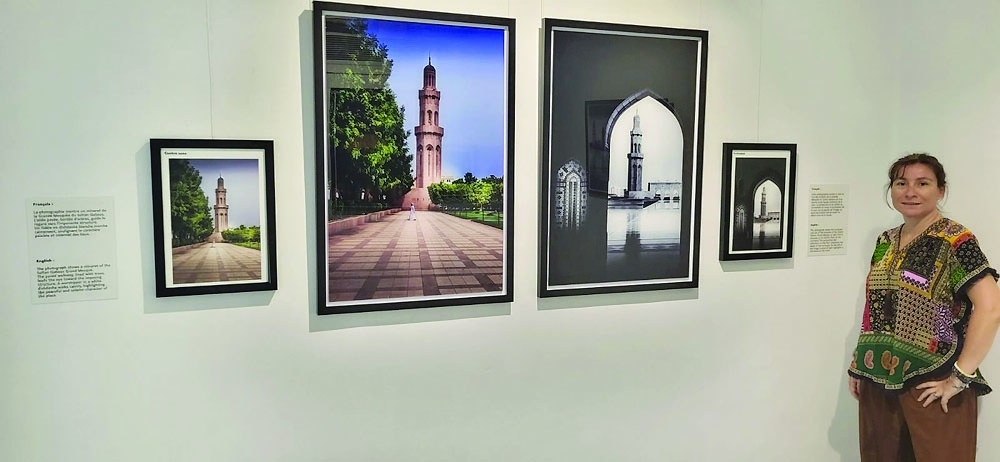
Culianez presented a number of her works at Stal Gallery as part of the French Weeks events, titled "200 Years of Photography: A French Invention." The images focused on Oman's cultural components and distinctive architecture, alongside works designed to be experienced by both sighted and blind visitors.
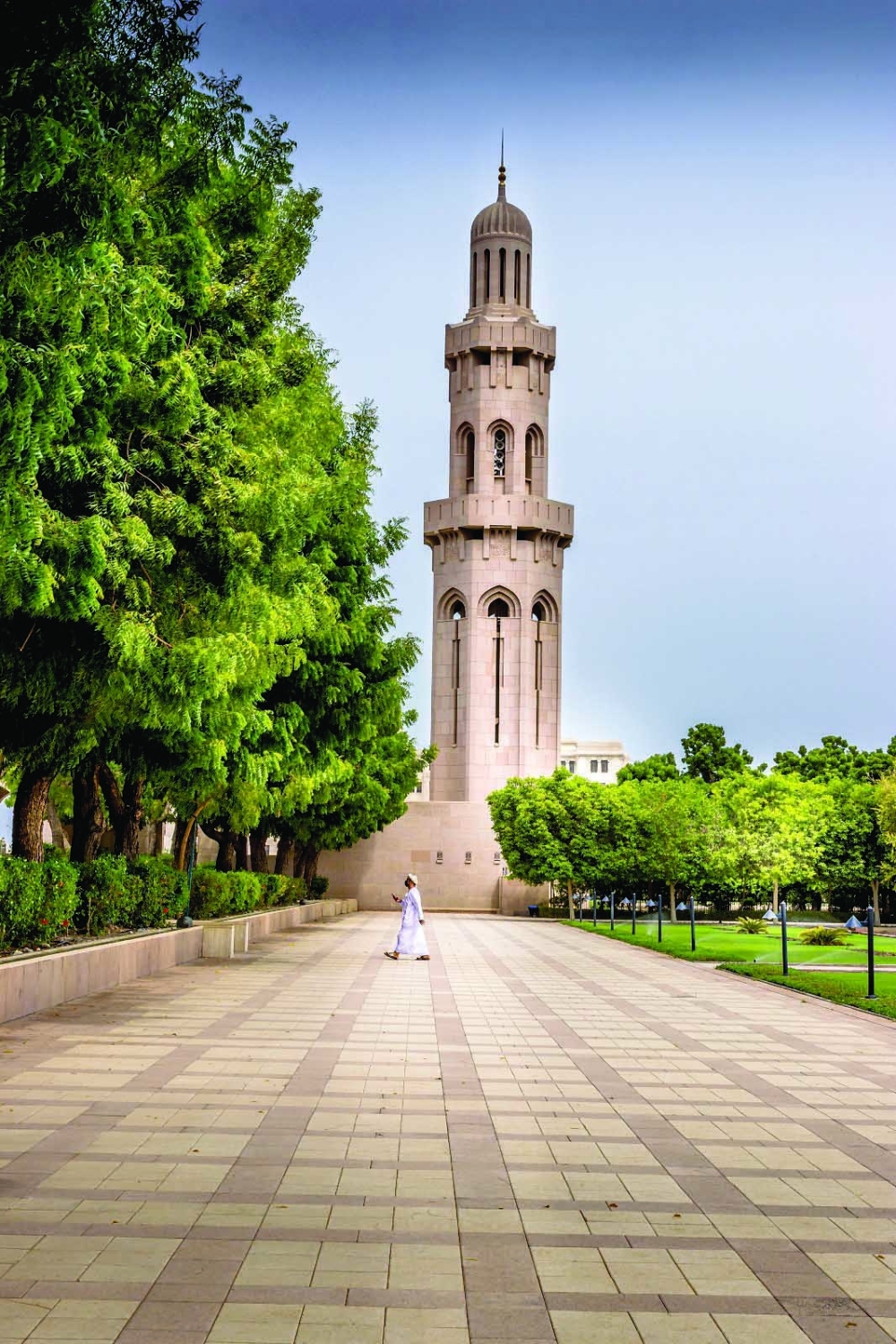
Speaking of the Omani people — their dignified bearing and quiet presence — and their prominent place in her work, she said: "In my work, I sometimes focus on people and their faces, especially when something authentic emerges naturally. But in the series exhibited at Stal Gallery, my focus was different. I wanted to offer a tribute to the country that welcomed me, so I naturally chose to focus on the Sultan Qaboos Grand Mosque — its space, its architecture, its light, its atmosphere."
"When a person appears in these images, they are not the main subject," she affirmed. "They add scale, movement, and a sense of life to the place. So, instead of focusing on identity through portraits, I explore the relationship between human presence and the environment."
Because her photographs present Omani architecture as living, real spaces, Culianez speaks of the harmony between the solidity of historical walls and the delicacy of human movement within them. "For me, architecture is not merely a backdrop. It truly brings the image to life. The arches, shadows, and repetition of forms create a rhythm. They naturally shape the way we look, and even the way a person moves within the space."
"At the same time, human presence adds something very subtle. Even when it is not the main subject, a simple movement can bring the image to life. Between architecture and humanity, there is a deeply rooted intellectual cultural connection, a continuous dialogue that gives a sense of life and scale."
Culianez reflects on the photographic image in Oman before she captures it, and on her own presence as a photographer as part of the cultural fabric she creates. "When I take a photograph, it is always because something has touched my artistic and cultural sensibility — a moment — whether symmetry, light, or sometimes just a feeling I cannot fully explain. I do not alter the image before capturing it, nor do I stage anything. I simply respond to what I see and feel."
"Once I have taken the image, I may use simple editing tools or filters, not to transform reality, but to help express what I felt at that moment. Speaking of Oman, it has undoubtedly influenced me, making me slow down and pay attention to details — through sensation, light, and silence. Over time, I no longer feel like an 'artist', merely an observer. I feel a greater connection to what I photograph. The image is not only about what is in front of me; it is also about how I experience it."
"For me, photography is not just about taking a picture. It is a way to make people discover, or rediscover, what I see — and more importantly, how I see it."
Culianez addressed her lens's contribution to documenting history. "Photography can document reality, but it is never neutral. Every image carries a point of view, shaped by experience, sensitivity, and intention. In my case, my work is strongly connected to what I feel — textures, sensations, atmospheres — rather than being a purely factual record."
"I see photography as both a visual memory and a personal interpretation. The aesthetic aspect is not separate from the documentary aspect. It is what allows the image to exist, to attract attention, and to create emotion."
She also spoke of the digital age and the role of her Omani collection in shaping a visual memory for future generations. "For me, photography should slow things down. It should invite people to take time, to look, to feel something. My work is not about showing everything, but about showing differently — through atmosphere, light, and sensation. I also believe that photography should remain a physical object, something you can hold, look at, and return to over time. This is part of how we build a visual memory."
She concluded, "I wanted to create images that are not only seen but also experienced differently — through touch, sound, or description — so that more people can connect with them. If my work contributes to the future, I hope it is not by setting standards, but by opening new ways to experience photography, making it accessible to a wider audience." — ONA
Oman Observer is now on the WhatsApp channel. Click here