







US negotiators are scheduled to leave for Pakistan on Saturday. Still, Iran said its officials did not plan to meet the Americans to discuss ending the war that has killed thousands and roiled global markets.
President Donald Trump's special envoy Steve Witkoff and son-in-law Jared Kushner are due to depart on Saturday morning for talks with Iranian Foreign Minister Abbas Araqchi, the White House said.
Defense Secretary Pete Hegseth told reporters that Iran had a chance to make a "good deal" with the United States.
"Iran knows that they still have an open window to choose wisely," he said. "All they have to do is abandon a nuclear weapon in meaningful and verifiable ways."
While Iran has publicly rejected peace talks during the U.S. naval blockade of its ports, the two Iranian officials said that Tehran has been exchanging messages through Pakistan and engaging in diplomacy to resume talks. The Trump administration has said the military cordon is aimed at crushing the Iranian economy and pressuring Tehran to make a deal.
Iran’s foreign minister, Abbas Araghchi, arrived in Islamabad on Friday, Iranian state media reported. He was carrying a written response to a U.S. proposal for a peace deal, according to two senior Iranian officials familiar with his plans.
IRAN PLANS TO MAKE AN OFFER, TRUMP SAYS
Araqchi arrived in the capital, Islamabad, on Friday. But an Iranian foreign ministry spokesperson posted on X that Iranian officials did not plan to meet with U.S. representatives and that Tehran's concerns would be conveyed to mediator Pakistan.
The White House did not immediately respond to a request for comment on the Iranian statement.
Washington and Tehran are at a costly impasse as Iran has largely closed the Strait of Hormuz, which normally carries one-fifth of global oil shipments, while the U.S. blocks Iran's oil exports. The conflict, now in its ninth week, has pushed energy prices to multi-year highs, stoking inflation and darkening global growth prospects.
Trump told Reuters on Friday that Iran planned to make an offer aimed at satisfying U.S. demands but that he did not know what the offer entailed. He declined to say who Washington was negotiating with, "but we're dealing with the people that are in charge now".
White House press secretary Karoline Leavitt said the U.S. had seen some progress from the Iranian side in recent days and hoped more would come this weekend, while Vice President JD Vance was ready to travel to Pakistan as well.
Vance, Witkoff, Kushner, and Araqchi, as well as the speaker of Iran's parliament, Mohammad Baqer Qalibaf, took part in inconclusive talks in Islamabad two weeks ago.
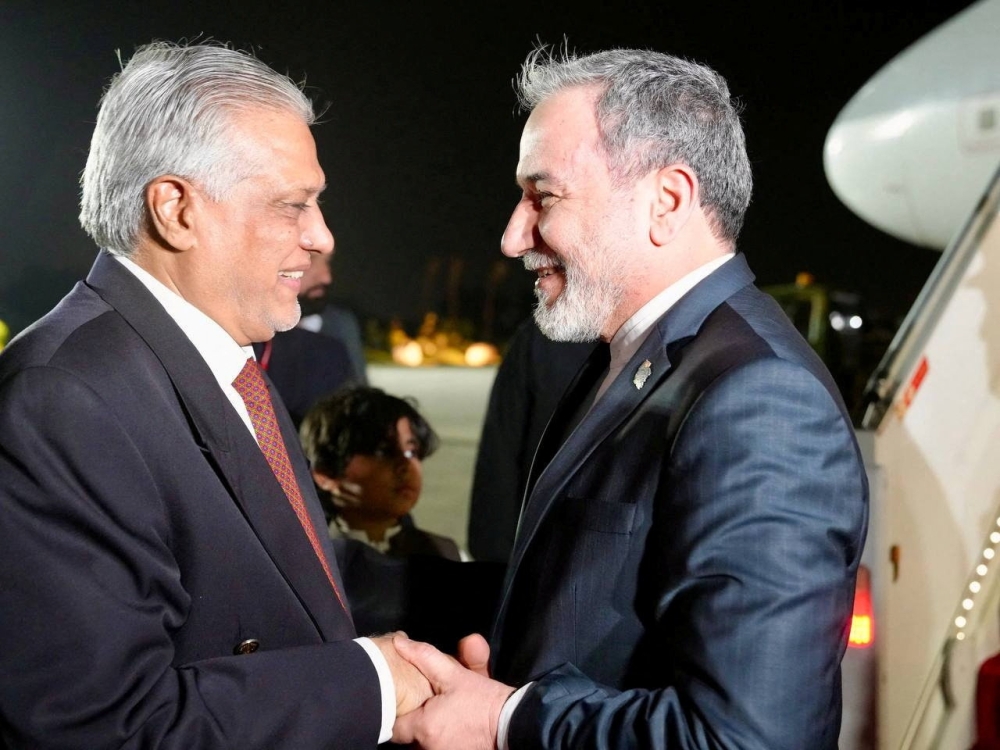
Araqchi, who posted on X that he would also be visiting Pakistan, Oman, and Russia, met Pakistani Foreign Minister Ishaq Dar on Friday at the Serena Hotel, where the earlier talks were held, while a U.S. logistics and security team was in place in Islamabad, Pakistani sources said.
CEASEFIRE IN PLACE, FEW SHIPS CROSSING HORMUZ
Trump unilaterally extended a two-week ceasefire on Tuesday to allow more time to reconvene the negotiators.
Oil prices surged this week, with Brent crude futures soaring 16%, on uncertainty over the fate of the peace talks and as violence flared in the region.
Shipping data on Friday showed that five ships had crossed the Strait of Hormuz in the previous 24 hours, compared to around 130 a day before the war that the U.S. and Israel launched on February 28. The ships included an Iranian oil-products tanker but none of the vast crude-carrying supertankers that normally feed global energy markets.
On Thursday, Israel and Lebanon extended their ceasefire for three weeks at a White House meeting brokered by Trump, but there was little sign of an end to the fighting in southern Lebanon.
Oman Observer is now on the WhatsApp channel. Click here


