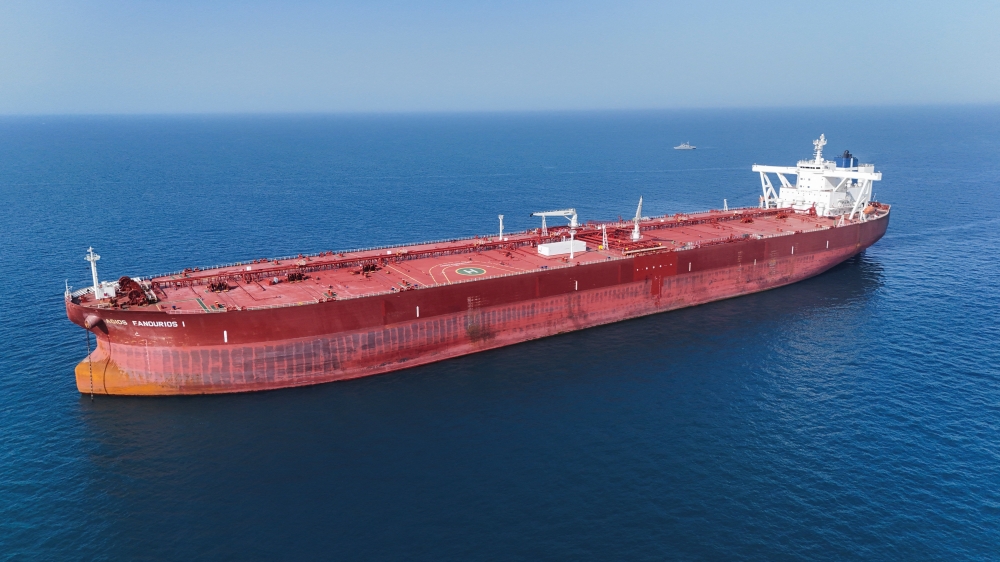
Geopolitical crises often seem distant when they first unfold. We see them in headlines, shipping maps, military briefings, and oil market charts. Yet their true significance only becomes clear when they begin to affect ordinary people in their daily lives. Few recent events demonstrate this more clearly than the disruption in the Strait of Hormuz.
For many readers, the Strait may appear to be merely a narrow waterway on the map. In reality, it is one of the world’s most critical economic arteries, carrying around 20 million barrels of oil every day - roughly one fifth of global oil consumption. More than 80% of that oil moves toward Asia. When this route is disrupted, the consequences do not remain confined to energy traders or shipping companies. They eventually appear where people feel them most: at fuel stations, in electricity bills, in food prices, and ultimately in household budgets.
What I believe this latest Hormuz shock has exposed more than anything else is that not all economies experience the same crisis in the same way. Two countries may both import energy, yet one absorbs the shock while the other transmits it directly to its people. The difference lies not simply in access to fuel, but in how the economy itself has been designed.
Take the Philippines. It offers perhaps the clearest example of what genuine economic exposure looks like. Nearly 98% of its crude oil imports come from the Middle East, meaning that the country’s energy security is tied heavily to a single high-risk geopolitical corridor. When disruption hit the Strait, the effects were immediate. Fuel prices in Manila rose sharply, the peso weakened to record lows, and the cost of transport and food climbed together. For many Filipino households, it meant daily commuting became more expensive, groceries cost more, and wages no longer stretched as far as they did before.
Now compare that with Singapore. Despite importing nearly all of its energy needs, Singapore reacts very differently to the same shock. More than 70% of its oil imports come from the Middle East, and almost all of its electricity generation depends on imported natural gas. Yet energy disruption there does not produce the same social strain. Why? Because Singapore has built an economic system capable of intercepting shocks before they reach households. Strong fiscal reserves, strategic stockpiles, targeted support measures, and a high-income economic structure all provide layers of protection. Singaporean households may notice higher prices, but they do not experience the same level of economic distress.
Jordan presents a third and more balanced case. As an energy-importing country in a volatile region, it remains vulnerable to global energy shocks, but it benefits from partial logistical insulation. A significant portion of its imports arrives through the Red Sea via Aqaba, reducing direct dependence on Hormuz. Even so, rising global oil prices still affect the Jordanian consumer, and the government frequently steps in to absorb part of the burden through subsidies or fiscal support. In this model, the shock is shared between the state and the citizen rather than falling entirely on households.
To me, the lesson from these three examples is clear: energy vulnerability is not simply about how much oil a country imports. It is about the quality of the economic model behind that dependence. Two nations can face the same external shock yet produce entirely different outcomes for their citizens. The determining factors are institutional strength, fiscal flexibility, currency stability, logistical planning, and the broader structure of household income and expenditure. In weaker systems, the shock passes rapidly from global markets into people’s pockets. In stronger systems, it is absorbed, managed, and redistributed before it becomes a social burden.
In my view, the most resilient economies are not those that avoid shocks entirely—no country can. They are those that can absorb disruption without allowing it to become a domestic crisis. That requires far more than secure fuel supplies. It requires productive economic sectors, prudent fiscal policy, strong institutions, strategic foresight, and long-term discipline in policymaking.
Some states have managed this well. Their oil and gas wealth undoubtedly helped, but resources alone do not create resilience. Many resource-rich economies remain highly fragile. What distinguishes the more successful models is that they used periods of prosperity not simply to spend more, but to build stronger institutions, improve governance, create fiscal buffers, and prepare for instability before it arrived.
Ultimately, crises like the Strait of Hormuz disruption test more than energy markets. They test the underlying design of national economies. They reveal whether prosperity rests on robust institutional foundations or merely on assumptions of uninterrupted global stability. In addition, that, perhaps, is the real lesson of this moment: in an increasingly unstable world, the strength of an economy will be judged not only by how fast it grows in good times, but also by how well it protects its people when conditions deteriorate.
Oman Observer is now on the WhatsApp channel. Click here