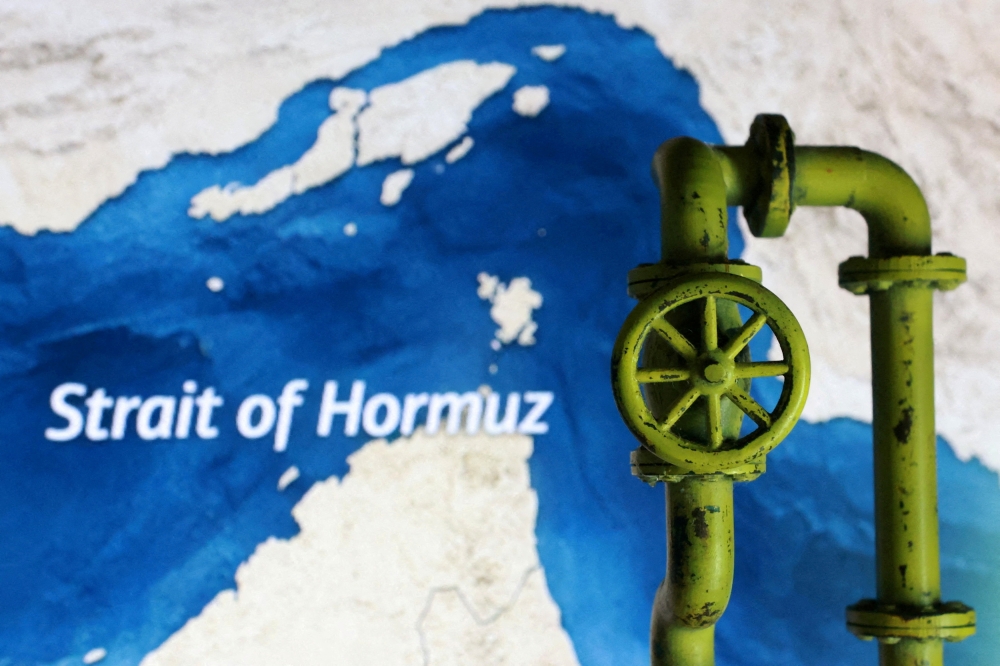





Musandam is one of the most unique places on our planet. It overlooks the Strait of Hormuz, the Sea of Oman, and their scenic fjords. It is a living heritage of civilisations. In Khasab, Bukha, Madha, and villages like Kumzar, languages blend effortlessly, Arabic, Farsi, Urdu and echoes of English, Portuguese and Dutch.
Nearly 5,000 years ago, the Sumerians referred to this passage as Khor Majan, linking it to Oman’s ancient identity as a hub of copper and rare mineral trade. For centuries, it has been a corridor of empires, Greek, Arab, Persian, Portuguese, Dutch, and British, each recognising its strategic gravity.
Today, that same corridor sits at the centre of a modern geopolitical and economic paradigm shift. Since March 2026, the effective closure of the Strait of Hormuz amid escalating war by the US, the Israeli occupation, against Iran has triggered one of the most disruptive supply shocks in recent history. While global narratives frame the closure as a security reaction, the economic consequences reveal a more calculated outcome, one that disproportionately benefits multinational energy and insurance corporations.
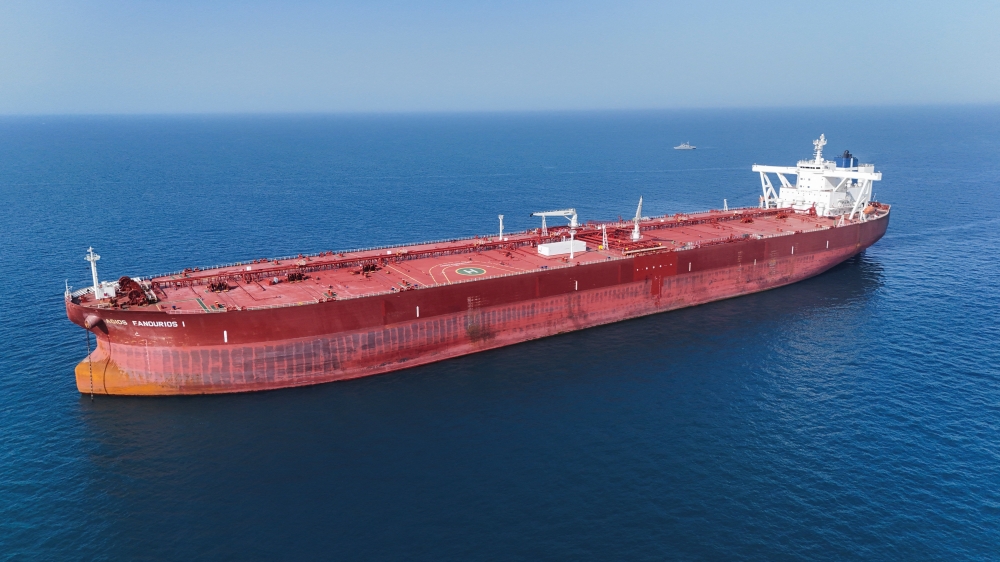
Roughly 20 to 21 million barrels of oil per day, about one fifth of global consumption, normally pass through the Strait of Hormuz. With disruption, global oil prices surged from an average of around $80 per barrel in early 2025 to well above $100 in recent weeks. This spike alone translates into hundreds of billions of riyals in additional revenues for major oil producers and trading houses. Analysts estimate that global energy giants, including companies like ExxonMobil and Shell plc, could collectively realise windfall gains exceeding RO 115 to 150 billion in 2026 due to monopolistic price inflation and volatility-driven trading margins.
Parallel to this, the insurance industry has experienced an unprecedented surge based on unverified ships data. War-risk premiums for tankers transiting near the Gulf have risen by more than 300 per cent since the start of the crisis. Daily insurance costs for a single large crude carrier have jumped from approximately RO 11,500 to over RO 60,000 per voyage. Major insurers such as Lloyd’s of London are reporting record underwriting profits, with sector-wide gains projected to exceed RO 40 billion globally by the end of 2026. When combined with derivatives trading and freight rate spikes, the total economic extraction linked to this crisis is approaching, and could plausibly exceed, RO 1 trillion in redistributed global value.
Yet, while multinational actors accumulate extraordinary gains, the GCC economies are absorbing the shock.
The most immediate impact is logistical and trade disruption. GCC countries rely heavily on maritime routes for both exports and imports. With shipping delays, rerouting costs, and insurance premiums, regional supply chains have seen cost increases of 15 to 25 per cent. For import-dependent sectors such as food, where Gulf countries import over 80 per cent of their needs, this has translated into food price inflation of 5 to 10 per cent in just a few months.
More critically, the closure risks accelerating long-term demand destruction for Gulf hydrocarbons. Major energy consumers in Europe and Asia have responded by fast-tracking diversification strategies, increasing investments in renewables, nuclear energy, and even coal as a short-term hedge. The International Energy Agency has already projected that sustained disruptions could reduce long-term oil demand growth by up to 2 million barrels per day by 2030. This is not a temporary fluctuation; it is a structural shift. Once customers reconfigure their energy systems, demand rarely returns to previous patterns.
A second, less quantifiable but equally damaging consequence is the erosion of GCC soft power. Over the past decade, Gulf nations have carefully positioned themselves as global hubs for diplomacy, tourism, and investment. From mega sporting events to world-class infrastructure and neutral mediation roles, the region built a reputation for stability. Today, that perception is under strain. Capital flows are becoming more cautious, tourism bookings have softened in key markets, and regional diplomatic influence is increasingly contested by emerging actors and malignant forces such as the Israeli occupation.
Estimates suggest that non-oil sectors across the GCC, particularly tourism, logistics, and aviation, could face combined losses exceeding RO 20 to 70 billion in 2026 if instability persists. The region, once seen as a bridge between East and West, risks being reframed as a chokepoint.
This moment, however, must not be viewed only through the lens of loss. It is a strategic paradigm shift.
The same forces exposing vulnerabilities are also revealing the urgency of transformation. The Gulf cannot rely indefinitely on geography as an advantage if that geography can be weaponised. Instead, the region must double down on building resilience through diversified energy corridors, advanced manufacturing, In-Country Value or ICV, digital economies, and localised supply chains. Investments in green hydrogen, AI-driven logistics, and sovereign industrial capabilities are no longer optional, they are existential.
History offers perspective. Musandam and the Strait of Hormuz have witnessed cycles of conflict and reinvention for millennia. Each disruption reshaped trade routes, power structures, and economic models. Those who adapted emerged stronger.
The question before the GCC today is not whether the system is changing, it already is. The real question is whether we will remain passive observers of a global “Hormuz robbery,” or become architects of a new model that secures our long-term prosperity.
Because in moments like this, resilience is not just survival, it is strategy.
Oman Observer is now on the WhatsApp channel. Click here