




MUSCAT, APRIL 13
Beyond a prospective expansion of its planned low-carbon iron production project at Duqm into a second phase, Meranti Green Steel (MGS) also has in its sights potential investments further downstream in steel products over the longer term.
According to CEO Dr Sebastian Langendorf, a future downstream component could include the manufacture of semi-finished products, such as slabs, or even flat steels. However, this will depend on a range of factors — including geopolitics, tariffs and quotas; and the trajectory of the Chinese steel market.
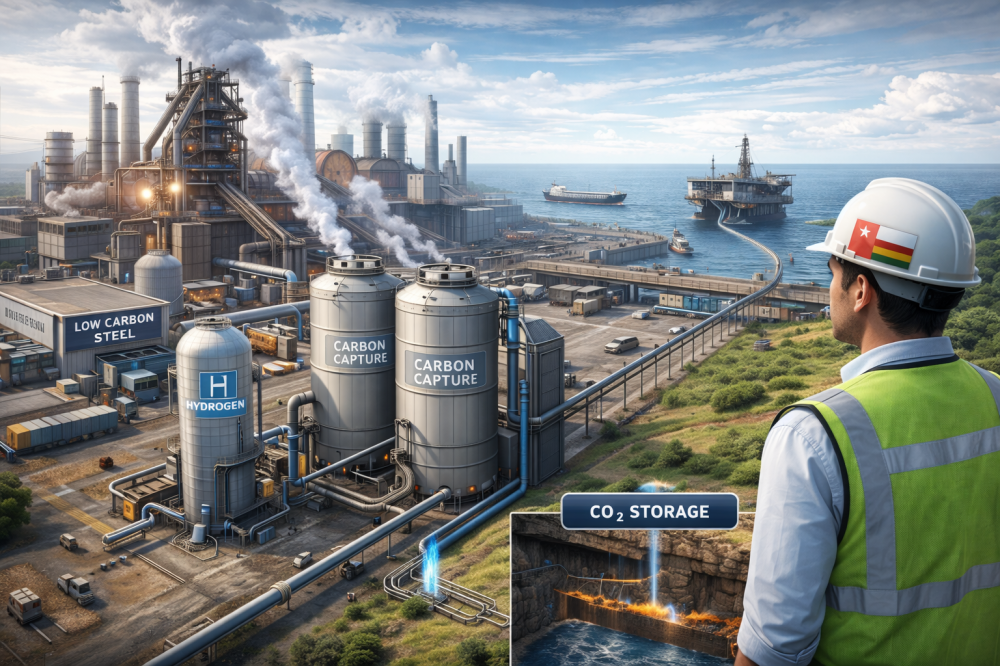
The comments come as Meranti advances plans for the first phase of its landmark investment in Oman — a 2.5 million tonnes per annum (mtpa) hot briquetted iron (HBI) plant to be established in the Duqm Special Economic Zone. A Final Investment Decision (FID) is anticipated in Q3 of this year, with commercial operations slated for early 2030.
In remarks to the Observer, Dr Langendorf said a downstream component forms part of Meranti’s long-term priorities, although these plans will be shaped by several factors. “When assessing downstream development in Oman, we consider infrastructure, particularly the availability of stable electricity, as well as domestic and export market opportunities. We also need to determine the most suitable product mix. At this stage, it is too early to be definitive, but we see potential in semi-finished products like slabs and possibly flat steels. These remain part of our long-term considerations”, he stated.
The CEO noted that a range of downstream options is under consideration, given that steelmaking typically retains a strong local dimension. However, products such as HBI are globally traded and are becoming increasingly critical for electric arc furnace (EAF) production, which relies on a mix of scrap and HBI to meet quality requirements. Domestic markets remain important, as purely export-oriented steel strategies are increasingly exposed to risks from tariffs and quotas, particularly in the current geopolitical climate, he stressed, citing protectionist measures in the United States and tighter import restrictions in Europe.
“We are therefore closely monitoring how the global steel industry evolves. China remains a key factor — it has been exporting large volumes, putting pressure on prices, but ongoing consolidation in China’s steel sector may reduce surplus output over time. That could create more opportunities for companies like us”, he remarked.
Looking further ahead — 10 to 15 years — Meranti also sees strong growth potential in East Africa, driven by a young and expanding population. While economic linkages with the Gulf could help accelerate that growth, India is also a rapidly expanding market, offering additional regional demand opportunities, he noted.
Commenting on the next phase of the Duqm project’s expansion, Dr Langendorf said: “In the current environment, nothing is ever fully certain. However, we do see strong potential for a second phase. There are infrastructure advantages that support scale and we are already developing market channels with offtakers that can be expanded”.
Phase Two, he said, will be a logical continuation of Phase One, although he declined to assign a specific timeline. “It will depend on local conditions. For example, our current gas allocation is only secured for Phase One, so we need to work with local partners to deliver that successfully first, build trust and then move to the next phase”.
Oman Observer is now on the WhatsApp channel. Click here