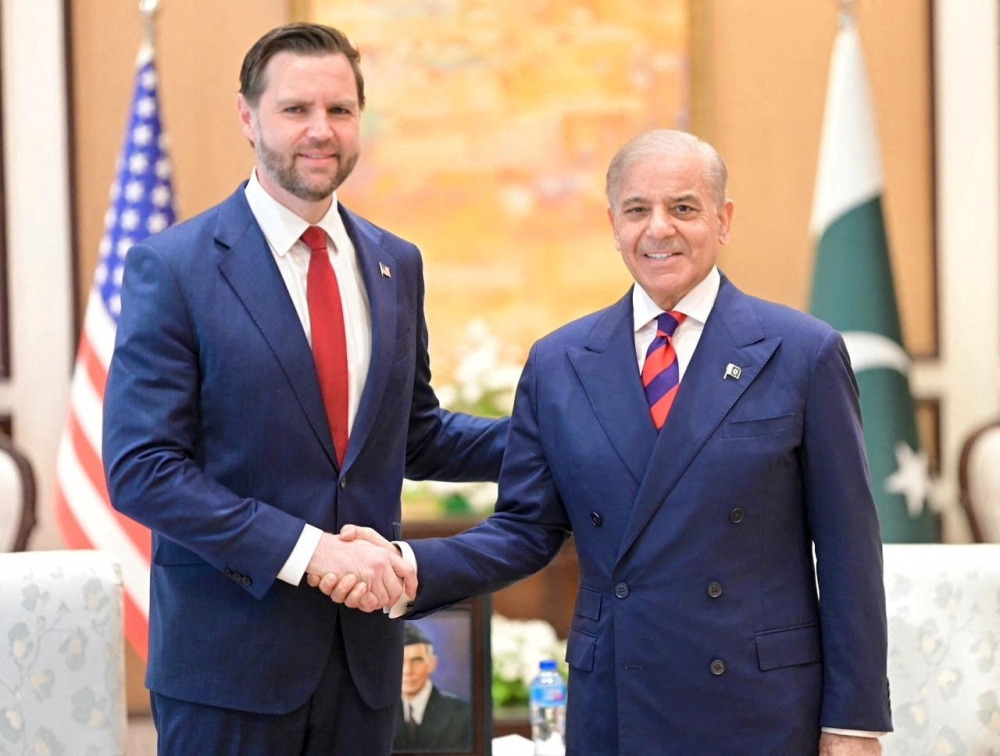





Islamabad - Two rounds of talks have taken place between Iranian and US officials in Pakistan, with a third round expected on Saturday evening or Sunday, Iranian state television reported as negotiations were underway in Islamabad."
According to information provided to the state TV correspondent by a person close to the negotiating team, another round of negotiations will likely be held tonight or tomorrow," state broadcaster IRIB reported.
The trilateral direct negotiations were taking place with host Pakistan, a senior White House official said earlier Saturday, a departure from recent practice where both sides held talks via a mediator while seated in separate rooms.
An Iranian state TV correspondent reported that there were "plans for a third round of talks", the latest in the efforts mediated by Pakistan to end the war.
We are waiting to see whether this (the third round) will happen or not," the correspondent said, according to state TV.
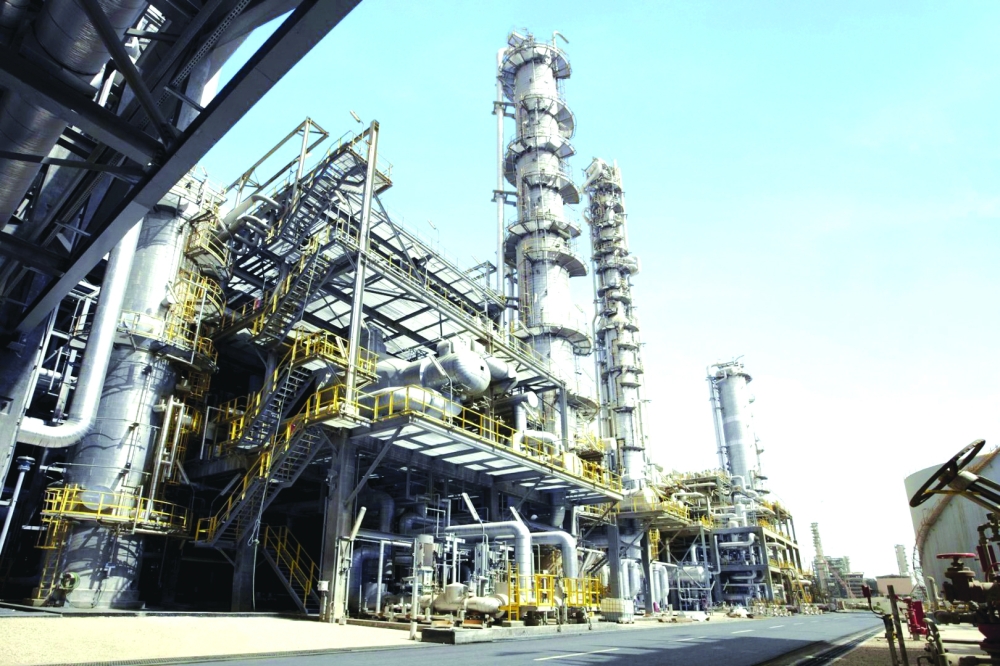
Iranian news agency Tasnim reported that the issue of the strategic Strait of Hormuz -- through which nearly global crude oil and liquefied natural gas passes in peacetime -- was "one of the topics that faces serious disagreement" among the negotiators.
The reports came as the White House said high-level in-person trilateral talks with Iran and Pakistan were "ongoing" in Islamabad late on Saturday.
A senior White House official said in a brief statement that the talks were continuing.
Senior Iranian and American officials began negotiations in Pakistan on Saturday, Iranian media reported, in a bid to bring to an end the Middle East war, which plunged the region into violence and sent shockwaves through the world economy.
According to Iranian media reports, the Iranian delegation decided to begin talks with their US counterparts after meeting with their Pakistani host, Prime Minister Shehbaz Sharif, who also sat down with US Vice President JD Vance.
The Iranian delegation is led by parliamentary speaker Mohammad Bagher Ghalibaf, and Vance was accompanied by White House envoy Steve Witkoff and President Donald Trump's son-in-law Jared Kushner."Commending the commitment of both delegations to engage constructively, the Prime Minister expressed the hope that these talks would serve as a stepping stone toward durable peace in the region," Sharif's office said.
Iran has previously said that any agreement on a permanent end to fighting must include the unfreezing of sanctioned Iranian assets as well as an end to Israel's war against Hezbollah in Lebanon, which Vance has said will not be up for discussion in Islamabad.
But Iranian state television's correspondent at the talks said he understood that progress had been made on these issues, giving Iran the confidence to allow the talks to go ahead.
A US official denied reports that Washington had already agreed to unfreeze Iran assets held in Qatar. Israel has agreed to talk to Lebanon, but ruled out ceasefire negotiations with Hezbollah.
The warring parties still appeared to be far apart on key issues -- including sanctions, Lebanon, and the opening of the strategic Strait of Hormuz -- and did not attempt to hide their mutual suspicion."Our experience in negotiating with the Americans has always been met with failure and broken promises," Ghalibaf said, shortly after landing in Pakistan.
- 'Make or break' -Vance said before leaving the US that if the other side was "willing to negotiate in good faith, we're certainly willing to extend the open hand".But "if they're going to try to play us, then they're going to find the negotiating team is not that receptive", he added.
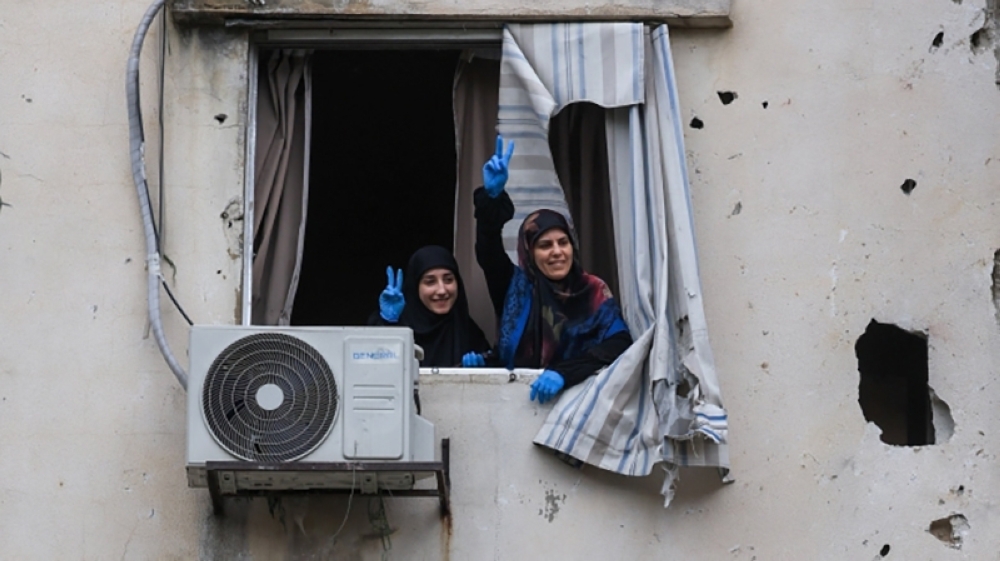
The ceasefire is already under strain, notably from Israel's continued strikes in Lebanon, which Iran and Pakistan insist are covered under the current truce.
Prime Minister Sharif, whose country's down-to-the-wire mediation got both sides to the negotiating table this week, said talks would not be easy."
“If the Iranians are willing to negotiate in good faith, we’re certainly willing to extend the open hand,” he said before departing for Islamabad, the Pakistani capital. “If they’re going to try to play us, then they’re going to find that the negotiating team is not that receptive.”
The speaker of the Iranian parliament, Mohammad Bagher Ghalibaf, on Friday reiterated Iran’s position that negotiations with the United States could not start until there is a ceasefire in Lebanon. Ghalibaf also introduced what appeared to be a new demand for frozen Iranian assets to be released.
“Two of the measures mutually agreed upon between the parties have yet to be implemented: a ceasefire in Lebanon and the release of Iran’s blocked assets before the commencement of negotiations,” Ghalibaf wrote on social media. “These two matters must be fulfilled before negotiations begin.”
Later, the Iranian delegation, led by Ghalibaf and Iranian Foreign Minister Abbas Araghchi, arrived in Islamabad to participate in the talks, Pakistan’s Foreign Ministry said.
President Donald Trump wrote on social media that Iran was overplaying its hand in advance of the talks. “The Iranians don’t seem to realize they have no cards, other than a short-term extortion of the World by using International Waterways,” he wrote, referring to Iran’s control of the Strait of Hormuz. “The only reason they are alive today is to negotiate!”
Ghalibaf’s demand for frozen assets was not part of a 10-point framework for peace talks that Iran released Wednesday, a day after the ceasefire was announced. A slightly different framework published this week by Iran’s state broadcaster did mention unfreezing assets, but described it as a basis for negotiations, not a prerequisite for them to begin.
The direct talks followed a morning of mediation by Pakistani Prime Minister Shehbaz Sharif as Tehran laid down the red lines that it said Washington must accept before the face-to-face talks could take place.
Among the conditions Tehran laid out to Sharif were the Strait of Hormuz, the release of Iran's blocked assets, the payment of war reparations, and a ceasefire to be enforced across the region, according to Iranian state TV. Iran is also demanding a ceasefire in Lebanon, where Israeli attacks on Iran-backed Hezbollah have killed nearly 2,000 people since the start of fighting in March.
Israel and the U.S. have said the Lebanon campaign is not part of the Iran-U.S. ceasefire.
Tehran's delegation is expected to continue discussing violations of the ceasefire in Lebanon, an Iranian state TV reporter said.
An unsourced report on Iranian news agencies said the acceptance of the release of Iranian assets and the limitation of attacks on Lebanon by Israel had been sufficient for direct talks to begin.
Iranian government spokesperson Fatemeh Mohajerani had earlier warned there was deep mistrust on the Iranian side."We will negotiate with our finger on the trigger," Mohajerani said on state TV. "While we are open to talks, we are also fully aware of the lack of trust; therefore, Iran's diplomatic team is entering this process with maximum caution."Tehran's agenda includes the acknowledgment of its authority over the narrow Strait of Hormuz, where it aims to collect transit fees and control access. The strait is a chokepoint for about 20% of global oil and liquefied natural gas shipments. Disruption to energy supplies has fed inflation and slowed the global economy, with an impact expected to last for months, even if negotiators succeed in reopening the Strait.
Oman Observer is now on the WhatsApp channel. Click here