


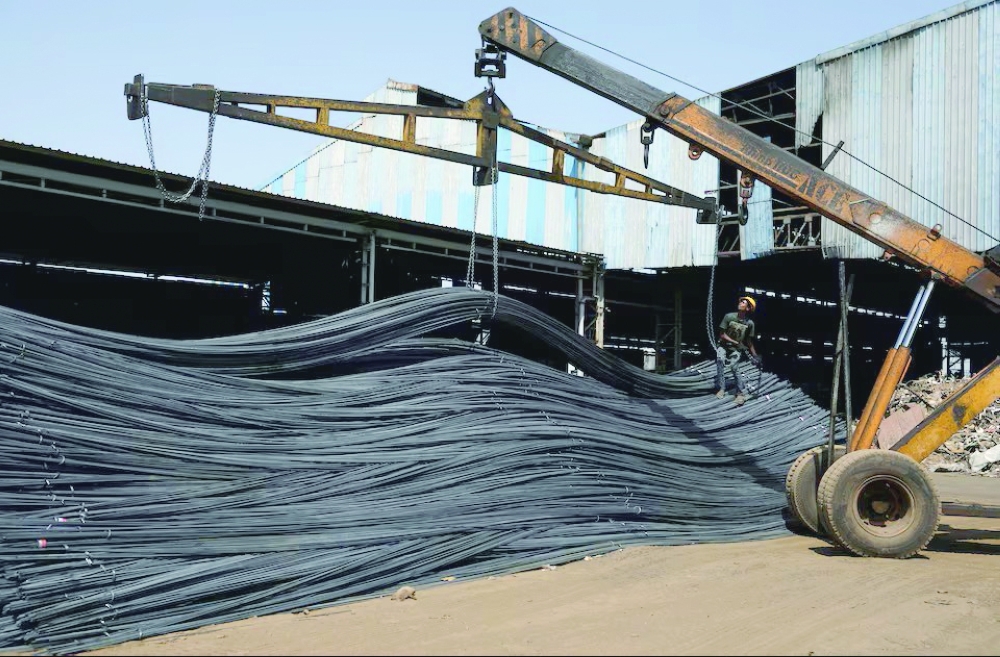





NEW DELHI, India's steel mills aim to cut carbon emissions by about a quarter over the next decade and reduce reliance on coal, while the world's second-biggest producer of the alloy plans to more than double output, according to a document seen by Reuters.
Under the proposed "National Steel Policy 2025", India aims to cut emissions from steel mills to 2 metric tons of carbon dioxide per ton of finished steel by 2035-36, according to a draft cabinet note dated March 10, reviewed by Reuters.
Steelmakers in India emit about 2.65 tons of carbon dioxide per ton of finished steel, roughly 32% higher than the global average of 2 tons, and account for 10-12% of the country's total emissions, the document showed.
India has been hit by the European Union's carbon border tariff, which from January this year imposed fees on imports of steel, cement and other high-carbon goods, forcing New Delhi to scout for alternative export markets.
The policy proposes promoting gas-based steelmaking, increasing the use of steel scrap, and offering incentives for continuous emission reduction.
It also calls for collaboration with the oil ministry to secure overseas gas supplies and partnerships.
The steel ministry did not respond to a Reuters email seeking comments.
Only 21 percent of blast furnace capacity and 5 percent of direct reduced iron (DRI) capacity - or sponge iron produced using gas or coal without melting it - have access to gas pipeline infrastructure, the document said.
"As steelmaking capacity grows, decarbonising the sector is crucial for meeting India's net-zero emissions target by 2070," the document said.
Buoyed by rapid economic expansion and increasing infrastructure spending, India has set a target to expand crude steel capacity to 400 million tons by 2035-36, up from current output of about 168 million tons.
The country also aims to more than double exports to 20 million tons.
Capacity expansion is expected to boost jobs in the steel sector, which employs 2.8 million people and accounts for 2.5 percent of the country's nearly $4 trillion economy.
India will need capital investment of around 17 trillion rupees ($183.41 billion) to reach 400 million tons of crude steel capacity, potentially creating over 3 million jobs by 2035-36, the document said.
The policy also calls for cutting import dependence on coking coal, a key raw material, to 80 percent by 2035-36 from about 90 percent currently.
India has identified 19 countries for collaboration, including Australia, Russia, Japan, Germany and the United States.
Reuters
Oman Observer is now on the WhatsApp channel. Click here


