Long before collapse becomes visible, it becomes predictable. We studied in school how more than two millennia ago, the Ma’rib Dam in Yemen, constructed as early as the 8th century BCE and sustained through successive repairs, began to show signs of structural fatigue. Historical and archaeological records indicate repeated breaches long before its final failure in the 6th century CE. The warnings were not hidden. They were ignored, except by a few.
Among them was Malik Ibn Fahm, the legendary leader of the Al Azd tribe. He understood a principle that modern policymakers still struggle to operationalise: you cannot wait for collapse, and you cannot trigger panic.
He chose neither. Instead, he engineered a gradual exit, signalling instability, allowing others to absorb his assets, and repositioning his people toward Oman and other areas before the system around him lost its value. What he executed was not flight. It was strategic timing.
Today, the Arabian Gulf Cooperation Council (AGCC) faces a comparable moment, not of imminent collapse, but of mounting structural stress. Since February 2026, the war of US, the Israeli occupation against Iran has expanded beyond a conventional confrontation into a regional systems shock. Drones and missiles exchanges, maritime disruptions, and escalating retaliation cycles are already affecting Gulf economies through higher insurance costs, disrupted logistics, and volatility in energy markets. This is not a distant conflict. It is a stress test of the region’s economic architecture.
The exposure is significant. GCC sovereign wealth funds collectively manage over RO 2 trillion in assets, with deep integration into US markets. The IMF estimates that the US dollar still accounts for nearly 57 per cent of global reserves, reinforcing the centrality of the American financial system. This integration has delivered stability, but it also creates a major concentration risk for us, particularly in times of geopolitical escalation.
A new layer of pressure is now emerging. Historically, major conflicts have often been accompanied by burden-sharing expectations. It is increasingly plausible that the US will expect its regional partners to contribute directly to the financial costs of the war, while ignoring local development needs and aspirations. This may not take the form of explicit demands alone, but could emerge through defence purchases, reconstruction commitments, or strategic investment expectations. In such a scenario, Gulf capital risks being drawn into financing a conflict it is simultaneously trying to remain neutral in.
This is where the KNIFE framework becomes critical. The challenge is not choosing between alignment and neutrality. It is managing exposure across multiple fronts simultaneously.
First, the conflict targeted advanced sectors, including AI, cybersecurity, and critical digital infrastructure. For GCC economies investing heavily in AI-driven growth and digital transformation, this introduces a new category of vulnerability. Strategic sectors are no longer insulated from geopolitical competition; they are becoming part of it.
Second, energy geography is shifting in real time. Europe, already under pressure to diversify away from unstable supply routes, is accelerating its search for alternative energy corridors, whether through the Eastern Mediterranean, North Africa, or expanded LNG imports. At the same time, Asia continues to consolidate its position as the primary destination for Gulf energy exports. This creates a dual dynamic: westward flows become more politically sensitive and fragmented, while eastward flows become more economically dominant and structurally stable. For the GCC, this is not just a market shift. It is a strategic rebalancing of dependency.
Third, the risk of fragmentation within the region itself cannot be ignored. Divide-and-conquer strategies by the Israeli occupation Pax Judaica plans have historically been a consistent feature of external interventions in the region. The current trajectory suggests attempts, whether deliberate or systemic, to create differentiated pressures on GCC states based on their strategic alignments, economic exposure, and security dependencies. However, the probability of such strategies fully succeeding remains limited.
Why?
Because the cost of fragmentation is now too visible. The shared exposure to energy infrastructure risks, maritime disruptions, and economic volatility creates a strong incentive for coordination rather than division. While tactical differences will persist, structural fragmentation is unlikely to deliver sustainable advantages to any external actor in the long term.
This brings us back to the central question: what does acting before the dam breaks actually look like today? The answer is not disengagement. It is disciplined repositioning.
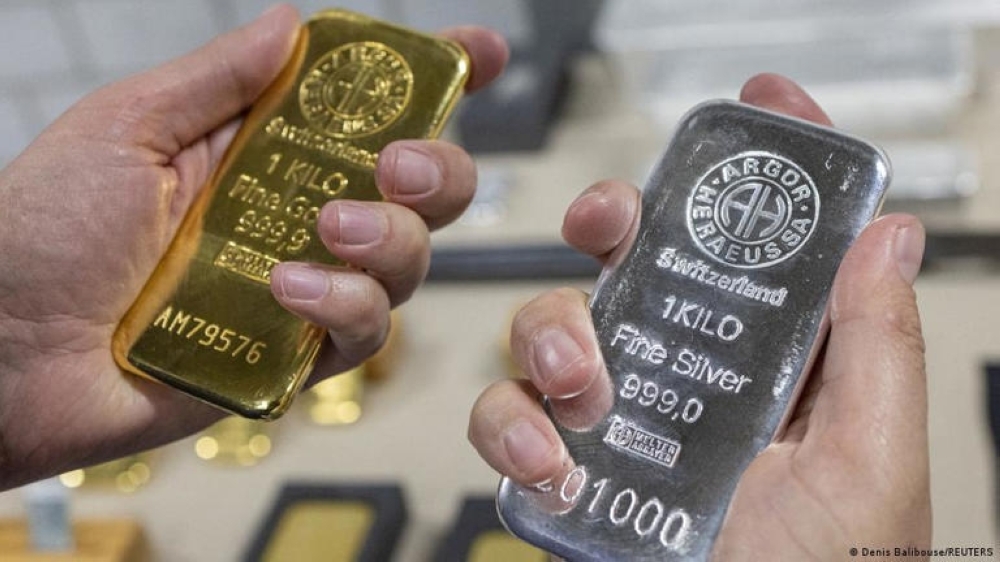
Under a KNIFE-informed approach, the GCC must adopt structured neutrality supported by gradual derisking. This means maintaining core financial stability, preserving existing US-linked holdings to avoid market disruption, while systematically redirecting new capital flows toward a broader mix of geographies and asset classes. Asia, Europe, gold, and strategic regional infrastructure all become part of this diversification logic.
At the same time, the region must invest in resilience: Alternative trade routes, expanded storage capacity, and secure digital infrastructure capable of withstanding technological targeting.
Diplomatically, neutrality must be active, anchored in mediation, de-escalation, and strategic communication. Oman’s role, once again, becomes central, not as an outlier, but as a model of how balance can be maintained in a polarised environment.
The lesson from Ma’rib is not about collapse. It is about timing. Under the KNIFE framework, the insight is clear: Those who recognise early signals and reposition gradually retain control; Those who delay are forced into reactive decisions under pressure.
The dam does not need to break for risk to materialise. It only needs to show cracks. In moments like these, strategy is defined not by where you stand, but by how intelligently you move before the dam system around you breaks.
Khalid Alsafi Al Huraibi
The writer is an innovator and an insights storyteller. khalidalharibi@gmail.com
Oman Observer is now on the WhatsApp channel. Click here