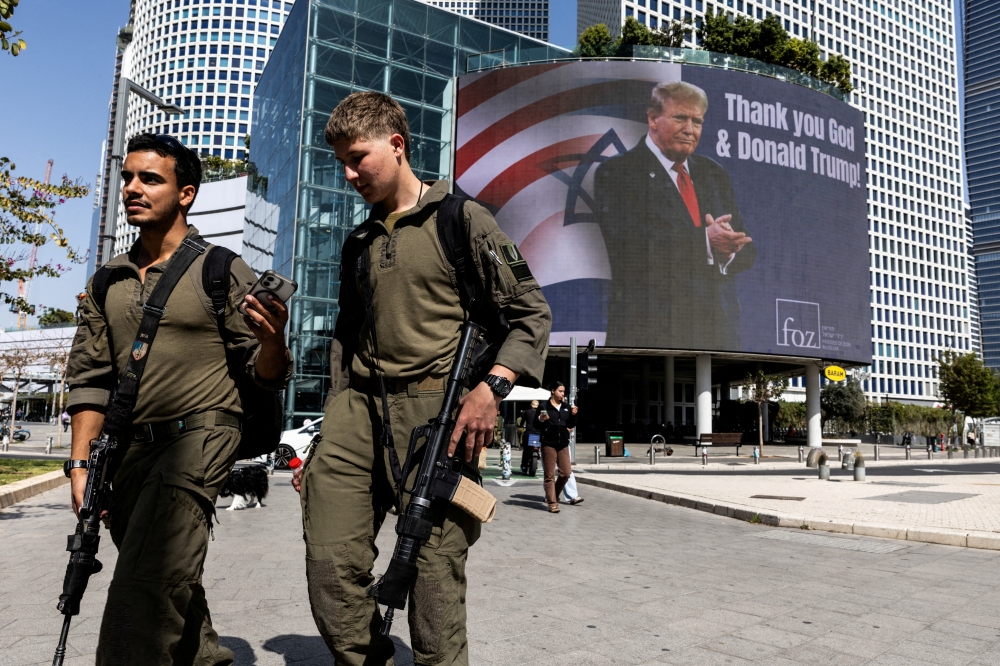





Israel’s proposed law to impose the death penalty on detained Palestinians convicted of deadly attacks is being framed as a matter of security. Yet beyond the rhetoric lies a far more troubling reality. This law does not apply equally. It targets Palestinians specifically, while Israeli citizens, primarily Jewish Israelis, remain under a different legal framework. That alone raises a fundamental question: can a state claim to be democratic while enforcing laws that treat people differently based on identity?
At its core, this proposal reflects a system where two populations living under the same authority are governed by entirely different rules. Palestinians in the occupied territories are subject to Israeli military law, while Israeli settlers are governed by Israeli civil law. This dual legal structure has long been criticised by human rights organisations as discriminatory, racist and incompatible with international legal standards. The introduction of a death penalty applicable only to Palestinians deepens that divide, turning an already unequal system into something even more severe.
As Adam Coogle, deputy Middle East director at Human Rights Watch, stated: “Israeli officials argue that imposing the death penalty is about security, but in reality, it entrenches discrimination and a two-tiered system of justice, both hallmarks of apartheid.” This is not simply an accusation; it is a legal and moral concern grounded in the principle that justice must be equal for all.
The issue is not only the existence of the death penalty itself, but the context in which it would be applied. Israel has long been criticised for its treatment of Palestinian detainees. Reports from organisations such as Human Rights Watch and Amnesty International have documented cases of arbitrary detention, harsh interrogation practices and torture in custody. Palestinians are frequently detained without charge or trial under administrative detention orders, sometimes for months or years.
In recent prisoner exchanges, images of released Palestinian detainees have drawn international attention. Many appeared physically weakened, with visible signs of neglect or abuse after prolonged detention. These cases reinforce concerns about due process and the treatment of prisoners. If individuals can already be detained under questionable conditions, the introduction of a death penalty raises the stakes dramatically. The possibility of wrongful accusations or coerced confessions becomes not just a legal concern but a matter of life and death.
This concern is particularly pressing in the context of ongoing conflict. In times of war, the line between security enforcement and collective punishment can become dangerously blurred. If the threshold for what constitutes a “deadly attack” is interpreted broadly or if accusations are made without sufficient evidence, the death penalty could be used not as a tool of justice, but as an instrument of control.
If another country implemented a legal system in which one ethnic or national group was subject to harsher laws, different courts and more severe punishments than another, it would likely provoke widespread international outrage. Yet in this case, the response has been far more muted. Israel has, over time, operated within a system that allows such disparities to persist with limited accountability, as we have seen with the ongoing genocide.
A democratic system is defined not only by elections or institutions, but by equality before the law. When legal frameworks assign different rights and punishments based on identity, they cease to function as systems of justice and instead become mechanisms of separation. The introduction of a death penalty exclusively for Palestinians risks institutionalising that separation at its most extreme level. It transforms an already unequal legal system into one where the ultimate punishment, death, is reserved for one group alone.
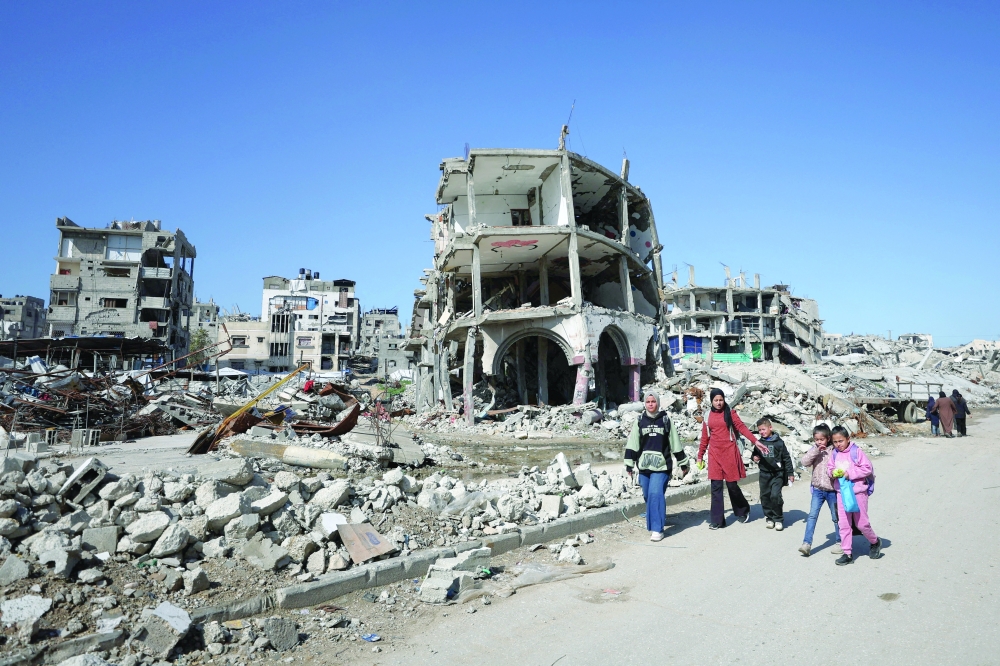
Reality has repeatedly shown that Palestinian and Arab lives are not treated with equal value. The scale of harm inflicted, particularly on civilians, including women and children, cannot be dismissed as incidental or unavoidable. While much of the world’s attention has focused on events since October 2023, patterns of violence and displacement long predate this period, tracing back to the early decades following the creation of the state of Israel.
Israeli officials often claim that military operations are directed solely at Hamas fighters. However, the high number of civilian casualties raises serious doubts about that narrative. Residential areas, schools, hospitals and even humanitarian workers have been affected. These outcomes suggest that the impact of military action extends far beyond its stated targets.
The repeated justification of “collateral damage” becomes increasingly difficult to accept, particularly given the advanced military technology available. Modern weapons systems are capable of high levels of precision, yet civilians continue to bear the brunt of the consequences. At its core, the ongoing violence reflects Israel’s broader need for land, control and power.
Oman Observer is now on the WhatsApp channel. Click here