




MUSCAT, APRIL 7
The Sultanate of Oman is witnessing rapid expansion in wheat cultivation as part of strategic efforts to enhance food security and reduce reliance on imports, in line with the objectives of Oman Vision 2040. This expansion is supported by continued government assistance and the adoption of modern agricultural technologies.
Dr Ahmed al Bakri, Under-Secretary of the Ministry of Agriculture, Fisheries and Water Resources for Agriculture, stated that the Sultanate of Oman's annual wheat requirement is approximately 350,000 tonnes, with imports primarily handled by two companies: Salalah Mills and Oman Flour Mills, totalling around 900,000 tonnes. The government supports wheat re-export and storage to ensure availability in silos for extended periods. Additionally, a wheat support programme was introduced following the Ukraine crisis, while incentivising the procurement of locally cultivated wheat.
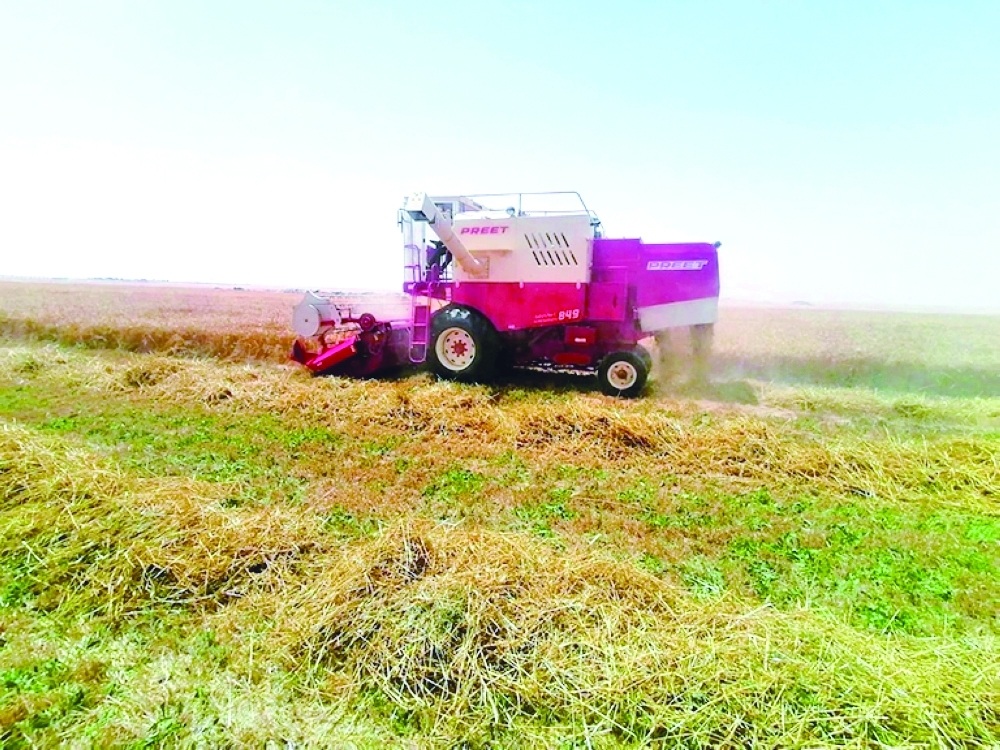
In the Sultanate of Oman, the wheat harvest season began in mid-March and will intensify during April and May. Initial indicators suggest a promising season, with many wheat farms across the governorates reporting increased production.
The 2025/2026 wheat harvest season is witnessing significant expansion, with farmers in areas such as Najd (Dhofar) and Al Mudhaibi (North Sharqiyah) beginning harvesting. The cultivated area in Najd alone exceeds 6,400 acres.
According to official data, wheat production in the 2024–2025 season reached approximately 10,128 tonnes, with a market value exceeding RO 3 million. This compares to an estimated annual requirement of around 350,000 tonnes, reflecting the continued gap between domestic production and consumption and the market’s reliance on imports.
In this context, the Ministry of Agriculture, Fisheries and Water Resources continues to implement the Wheat Cultivation Expansion Project (2023–2027), which focuses on introducing improved, high-yield varieties, providing modern equipment, and supporting farmers with advanced agricultural technologies. The 2025–2026 season is expected to see further expansion, particularly in the Najd region of Dhofar Governorate, with production projected to exceed 8,000 tonnes in some areas.
The food security sector also recorded growth of 9.1% by the end of the third quarter of 2025, increasing its contribution to GDP to RO 831 million, driven by the expansion of agricultural projects and improved production efficiency.
Despite this growth, analysts indicate that wheat cultivation in Oman remains more strategic than profit-driven, given the high production costs associated with water and energy compared to global wheat prices. However, the government continues to support the sector by purchasing the crop at incentive prices of up to RO 500 per tonne and improving supply and storage chains.
The Sultanate of Oman’s agricultural policies are moving towards a dual model based on gradually boosting local production while continuing imports to meet the majority of demand. This approach ensures the stability of food supplies amid global market fluctuations and supports agricultural sustainability.
The sector is expected to witness gradual growth in the coming years, supported by the expansion of cultivated areas, the use of smart farming technologies, and improved productivity, despite ongoing challenges related to water scarcity and climate change.
Oman Observer is now on the WhatsApp channel. Click here