



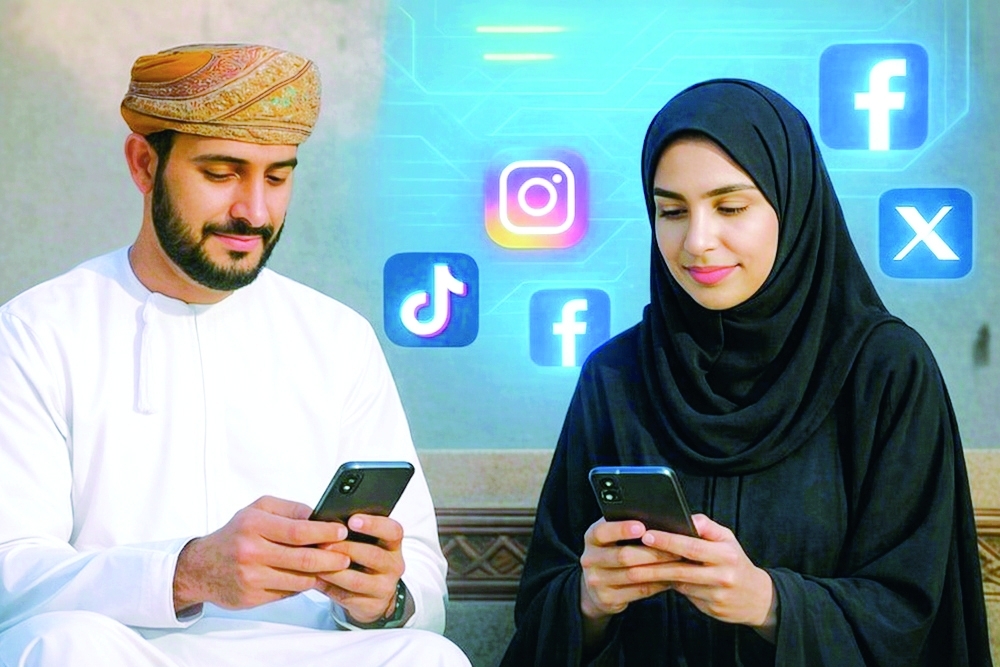





In an age where information travels faster than verification, rumours are no longer harmless whispers — they have evolved into a powerful force capable of shaping public perception, unsettling communities, and influencing real-world decisions. Amplified by social media, a single unverified claim can ripple across society within minutes, often leaving consequences that are difficult to contain.
Unlike in the past, rumours today are not confined to private conversations.
They emerge on open digital platforms and gain traction at remarkable speed, particularly when tied to issues that directly affect people’s lives — health, the economy, or public safety. Their potency lies in two key elements: ambiguity and emotional appeal.
The less clear the information, and the more it provokes curiosity or fear, the more likely it is to spread.
Dr Mohammed al Ghailani, a sociologist, explains: “Rumours tend to thrive in environments where there is a gap in information or a perceived lack of transparency. People naturally attempt to fill that gap with whatever explanations are available, even if they are inaccurate.”
He adds that while social media has accelerated the spread of misinformation, it has also underscored the urgent need for stronger public awareness and critical thinking.
The impact of rumours extends far beyond misinformation.
In many cases, they directly influence behaviour. A simple claim about a shortage of a product can trigger panic buying, disrupting supply chains and placing unnecessary strain on markets.
Similarly, health-related rumours can fuel anxiety, prompting individuals to make decisions that may not be in their best interest.
On a personal level, rumours can be even more damaging. In closely connected communities, an unverified story or misinterpreted piece of information can circulate rapidly, affecting reputations and personal lives.
Even when proven false, the damage often lingers, raising important questions about ethics and responsibility in how information is shared.
At a broader level, the repeated spread of inaccurate information erodes trust — both between individuals and within institutions.
Constant exposure to conflicting or unreliable reports can breed scepticism, making it increasingly difficult for accurate information to be accepted, especially during critical moments.
Dr Al Ghailani emphasises that countering rumours requires more than simple denial.
“It is about building a culture of verification and critical thinking,” he says. “Education and responsible media play a central role in equipping individuals with the tools to question, analyse and confirm information before sharing it.”
At the same time, official institutions bear a significant responsibility. Timely communication and transparency are essential in limiting speculation. When accurate information is delivered clearly and promptly, it reduces uncertainty and narrows the space in which rumours can grow.
However, the most decisive role still lies with individuals. Today, every user is effectively a publisher, capable of reaching wide audiences at the click of a button. This makes personal responsibility more critical than ever.
A brief pause to verify a source — or even a simple question, “Is this information reliable?” — can prevent the spread of falsehoods.
Ultimately, rumours are not merely about misinformation; they are a reflection of collective awareness. They test how societies respond to uncertainty — whether by amplifying noise or by seeking truth.
In that choice lies the difference between a community that is easily shaken and one that remains resilient, guided by awareness, responsibility, and the power of credible information.
Oman Observer is now on the WhatsApp channel. Click here


