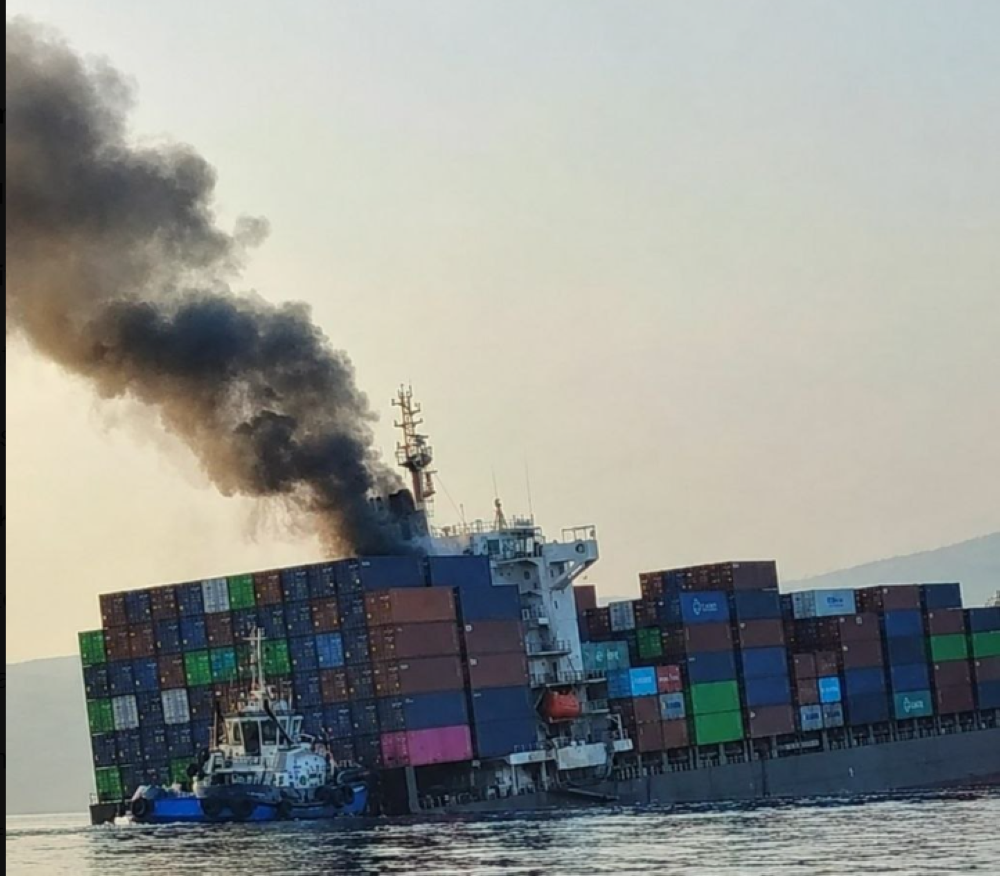
Amidst escalating geopolitical challenges and an increasingly complex regional and global landscape, the insurance and reinsurance industry stands out as the first line of defence against unforeseen risks, particularly those related to war perils and disruptions in global supply chains.
The Strait of Hormuz lies at the heart of this landscape as one of the world’s most vital arteries for trade and energy, where economic interests intersect with considerations of security and stability.
In this context, risk management is no longer merely a technical function; it has become a strategic imperative that compels insurance markets and regulatory authorities to adopt innovative solutions and explore new models of regional integration. Such approaches are essential to balancing business continuity with maritime security, while unlocking sustainable economic opportunities.
The insurance and reinsurance sector is widely recognised as a fundamental pillar of the national economy, playing a pivotal role in supporting economic growth and enhancing financial stability.
The sector contributes effectively to providing protection against a wide range of risks, thereby supporting sustainable development and strengthening confidence in the investment environment. It also offers an integrated framework for managing both financial and non-financial risks through professional mechanisms aimed at mitigating risk impacts and delivering tangible protection to individuals and institutions alike.
With respect to specialised risks such as war, hijacking and similar perils, these are typically underwritten within specialised insurance markets, particularly the marine insurance market, which possesses the expertise and technical capacity to handle such complex risks.
The General Arab Insurance Federation (GAIF), in collaboration with the Financial Services Institute in Cairo, recently organised a webinar entitled, “The Current Geopolitical Situation and Its Impact on the Insurance Industry”.
During the seminar, speakers addressed the evolving situation in the Arabian Sea and the Arabian Gulf, focusing on war risks, pricing levels, insurance coverage and the role of the Arab War Risks Insurance Pool, headquartered in the Kingdom of Bahrain.
It is worth noting that approximately 20% of global oil supplies pass through one of the world’s most critical strategic chokepoints — the Strait of Hormuz. The Strait is one of the most strategically important maritime passages globally, located at the entrance of the Arabian Gulf, bordered by the Sultanate of Oman to the south and the Islamic Republic of Iran to the north. Both countries bear responsibility for overseeing, regulating and securing navigation through the Strait, in accordance with international maritime law and relevant treaties and conventions.
In light of geopolitical tensions, some insurance companies and Protection & Indemnity (P&I) Clubs have withdrawn war risk coverage, while others have issued notices providing limited grace periods — typically seven days — during which coverage remains in force, followed by a reassessment of terms and pricing.
Historically, the idea of establishing the Arab War Risks Insurance Syndicate (AWRIS) was initiated by the Iraqi Reinsurance Company during the Iran–Iraq War in 1980, with the objective of providing specialised insurance coverage for war risks. The pool commenced operations in 1991, later relocating its headquarters to Cyprus and eventually settling in the Kingdom of Bahrain in 1994.
Today, AWRIS comprises approximately 208 insurance companies from 16 Arab countries, all members of the League of Arab States. The pool monitors market conditions, terms and pricing — particularly those of the London insurance market — to ensure alignment with international best practices.
Currently, AWRIS faces several administrative and technical challenges amidst rapidly evolving geopolitical dynamics and the complexities of the global insurance market. This necessitates strengthening governance, enhancing technical capabilities and improving coordination among members to effectively respond to these challenges.
PROFESSIONAL PERSPECTIVE
From a geopolitical and economic standpoint, it is evident that the two neighboring countries — the Sultanate of Oman and the Islamic Republic of Iran — enjoy a high degree of synergy, supported by longstanding historical ties, brotherly relations and shared common interests at both governmental and societal levels.
In this context, it is proposed to build upon this strong relationship by further enhancing joint cooperation and expanding partnerships to include the private sector. This could be achieved through the establishment of a joint investment entity under the name “Omani-Iranian International Holding Company for Logistics Services”, structured as a private holding company to be listed on the stock exchanges of both countries.
This company would provide integrated logistics services across maritime corridors, including organising operational activities and offering insurance solutions related to associated risks. Such an initiative would contribute to strengthening service efficiency, diversifying revenue streams and fostering regional economic integration, ultimately achieving sustainable mutual benefits for both nations.
Oman Observer is now on the WhatsApp channel. Click here