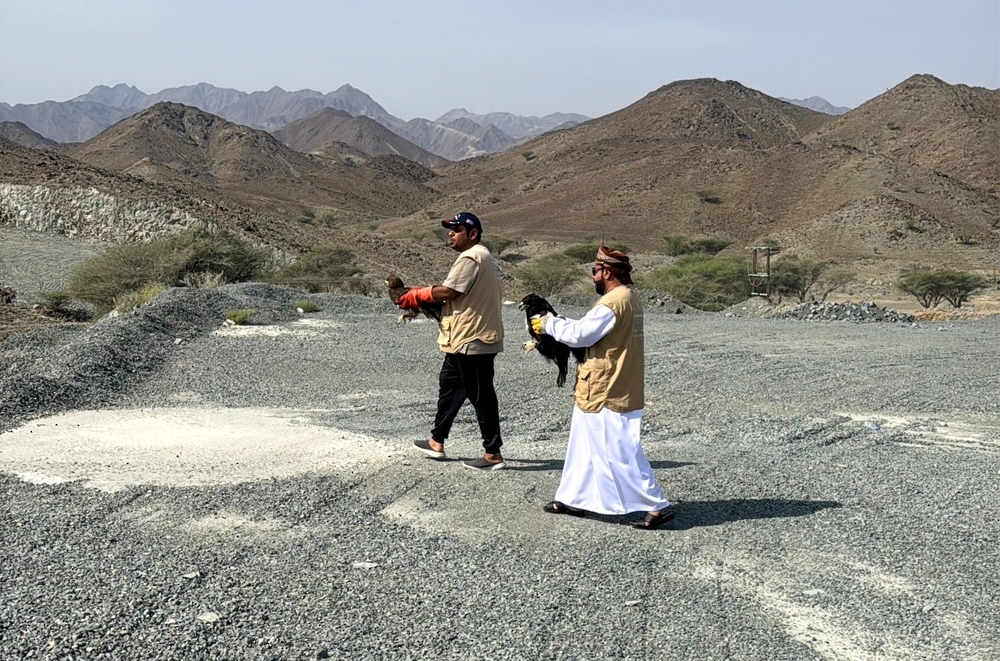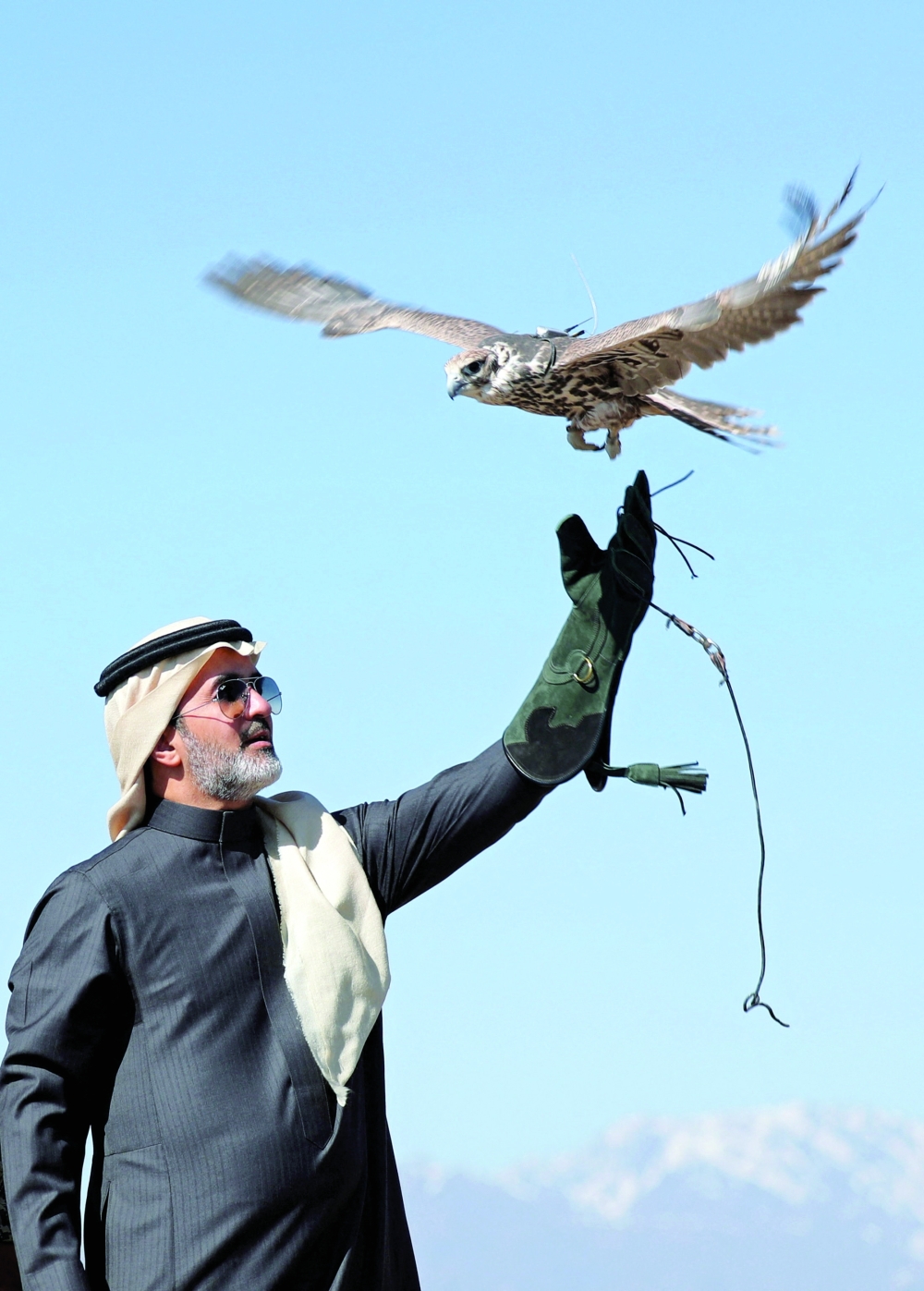





ALMATY: With a loud thwack of their wings, the falcons took flight, quickly soaring high above the rocky desert landscape of Altyn-Emel National Park in southeastern Kazakhstan.
The 34 birds were on an important mission: to help restore Kazakhstan's population of saker falcons, which for centuries have symbolised nobility and freedom for the nomadic peoples of the Kazakh steppe, as well as serving as faithful hunting companions.
Saudi Arabia's state-run Saudi Falcons Club is leading a saker falcon restoration programme in partnership with a Kazakh institute in an effort to boost the population of this endangered "Red List" species. The group will release 35 to 45 birds annually over the next three years.
A migratory bird with a wingspan of 97-126 cm (38-50 inches), the saker falcon ranges across a vast area from central Europe to northeastern China. In Kazakhstan, its population has declined by as much as 90% in recent years, largely due to habitat loss, researchers say.
Kazakhstan's natural environment makes it one of the most important nesting areas for falcons and therefore an ideal location for releasing groups of birds — known as casts — back into the wild, according to Ahmed Fahd al Hababi, executive vice president of the Saudi Falcons Club.
"We are returning the falcons to their natural habitat so they can breed and thrive in the wild", he said.
All the released birds will be fitted with GPS trackers and microchips, allowing scientists to collect data on their migration patterns and other behaviours. — Reuters
Oman Observer is now on the WhatsApp channel. Click here