




MUSCAT: The education sector across Gulf Cooperation Council (GCC) countries continues to record steady expansion, with total student enrolment in general education reaching 10.9 million in the 2023/2024 academic year, according to a report issued by the GCC Statistical Center.
The figures mark an increase from 10.4 million students in 2018/2019, reflecting an average annual growth rate of 0.8 per cent. Students now account for 17.7 per cent of the total GCC population, underlining the sector’s growing demographic and economic significance.
Public education continues to dominate, accommodating around 7.6 million students, or 70.2 per cent of total enrolment. In contrast, private education has demonstrated stronger momentum, expanding at an average annual rate of 4.8 per cent, compared to a marginal contraction of 0.6 per cent in public sector enrolment.
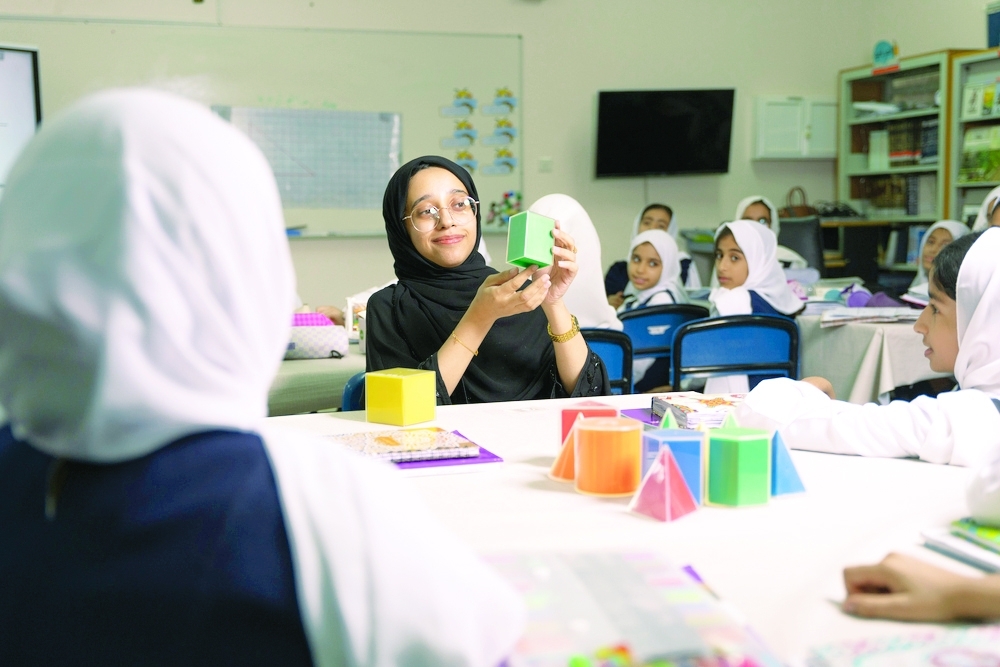
Gender distribution remains broadly balanced, with female students accounting for 49.5 per cent of total enrolment, equivalent to approximately 5.4 million students, compared to 5.5 million males. Notably, female enrolment growth outpaced that of males, rising at an average annual rate of 2.3 per cent versus 0.4 per cent.
The teaching workforce has also expanded significantly, with the number of educators in public education reaching 940,100 in 2023/2024—an increase of 169,000 teachers over five years, representing a 4 per cent annual growth rate. School education accounts for the majority of teaching roles, with 842,000 teachers, while early childhood education employs around 98,100.
Female educators form the majority of the teaching workforce, representing 63.8 per cent, highlighting the increasing role of women in shaping the region’s education systems.
The report also pointed to continued expansion in educational infrastructure, supported by rising demand, higher education development, and scholarship programmes. Sustained government investment and policy reforms have driven improvements in quality, innovation, and alignment with labour market needs.
GCC countries are also advancing efforts to integrate education systems, accelerate digital transformation, and equip students with future-ready skills—factors expected to enhance the global competitiveness of the region’s education sector. — ONA
Oman Observer is now on the WhatsApp channel. Click here