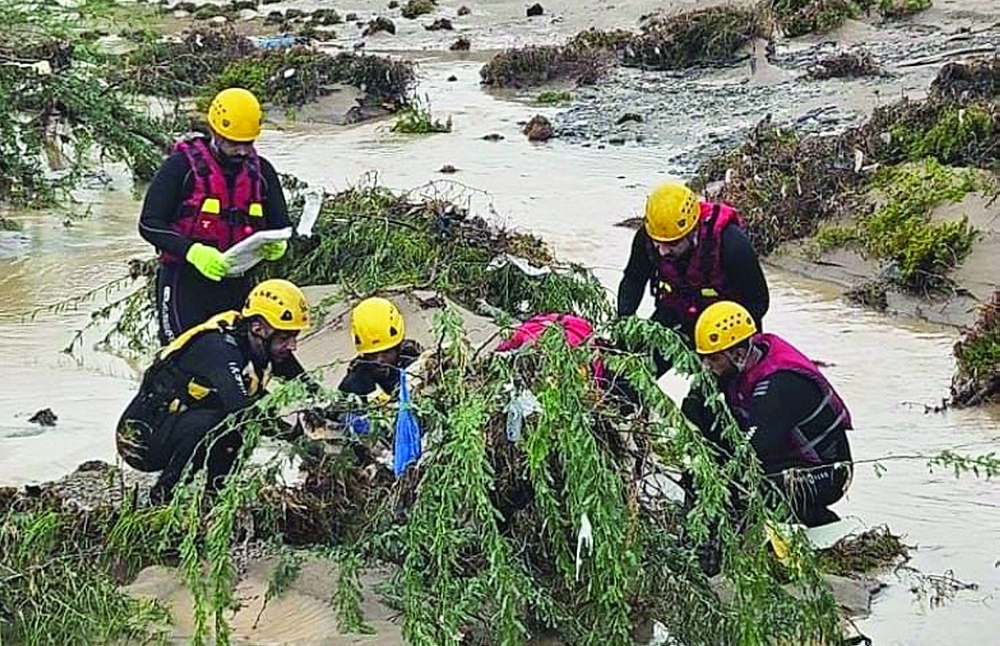
During adverse weather conditions, the sky does not send emails. It does not issue circulars or wait for approvals. When it turns heavy and gray, and rain begins to fall, its message is simple and universal: slow down, stay safe. Yet on the ground, the response can vary.
On one side of the city, an employee stood with his phone in one hand and coffee in the other, watching water gather along the street. Then his screen lit up: “Due to weather conditions, all employees will work remotely today.” He exhales in quiet relief, puts his cup down, opens his laptop, and the day begins safely and predictably.
Across the street, someone else’s morning was starting differently. He had looked out at the same rain and heard the same wind hitting the windows. But his phone remained silent — no message, no update. He heads off to the office while the roads were already crowded, water splashing high with every passing vehicle. Like many others, he found himself asking, “Why am I out here?”
The answer is simple: he had to step into the same storm, not because he must, but because his employer’s policies did not include weather conditions. Though the sky warns everyone equally, protection arrives selectively.
This is not merely a difference in operational style; it reflects a deeper disconnect in values. When some workers are told to stay home while others are expected to risk the commute, a powerful message emerges: your safety depends on where you work. Over time, this message hardens into frustration and eventually into disengagement.
No organisation — public or private — benefits from a workforce that feels unequally protected. The truth is that storms reveal what routine days conceal. They expose how quickly systems can adapt or how stubbornly they resist. They highlight whether leadership is guided by insight or by habit. Most importantly, they test whether employee well-being is treated as a principle or a convenience.
Usually this happens with corporates where the private sector is often praised for its responsiveness and innovation. Yet during adverse weather, parts of it remain bound to strict expectations of physical presence. This is not a limitation of technology, but of mindset.
What is needed is not criticism, but coordination: a single, clear directive during severe weather, issued at the national level and applied across all sectors. Such a measure would replace uncertainty with confidence and ensure that no employee is left to interpret risk alone or choose between safety and obligation.
Such a decision would not hide the line between public and private sectors; rather, it would draw a stronger line around what truly matters. To make this shift meaningful, forward-thinking practices and clear directives must be established and applied across all organisations. At the same time, organisations should be encouraged to document and review their responses to adverse weather conditions.
Ultimately, strength is not about enduring the storm, but about preparing for it together. The sky will continue to send its warnings through wind and rain. The question is no longer whether we hear them, but whether we choose to respond as one.
Imagine, instead, a different morning. The same rain, the same sky, but this time, a single announcement reaches every phone, every office, every employee, public and private alike: “Due to severe weather conditions, remote work is in effect for all. Stay safe.”
The message is clear: safety belongs to everyone. To reach that morning, change must begin before the next storm arrives. The rain will come again, it always does. Next time, the story it tells should not be one of division, but of a city that responded together. Until then, the city will continue to witness two mornings in every storm: one that begins with safety, and another that begins with risk.
Oman Observer is now on the WhatsApp channel. Click here