




Muscat, March 27
The Wilayat of Liwa recorded the highest rainfall in the Sultanate of Oman on Friday at 120 mm, according to monitoring stations of the Ministry of Agriculture, Fisheries and Water Resources. It was followed by Al Sinainah with 116 mm and Al Buraimi with 115 mm.
Other notable rainfall levels included Al Khabourah at 100 mm, Ibri at 97 mm and Yanqul at 92 mm. The rest of the governorates across the Sultanate of Oman recorded varying rainfall amounts ranging between 80 mm and 20 mm.
In Muscat Governorate, the Wilayat of Al Seeb witnessed heavy rainfall, accompanied by strong winds, affecting various areas and residential neighbourhoods.
Shaikh Ahmed bin Ali al Shihi, Wali of Al Seeb, noted the Wilayat's prior preparations to deal with the effects of the weather system that included providing and equipping three shelters for families in the Wilayat and renting alternative temporary housing for a number of affected families, in coordination with the Directorate General of Social Development in the Governorate.
The rainfall Wilayat reached 50 mm, while the water level in Wadi Al Khoudh Dam rose to approximately 5.5 metres out of its capacity of 9 metres.
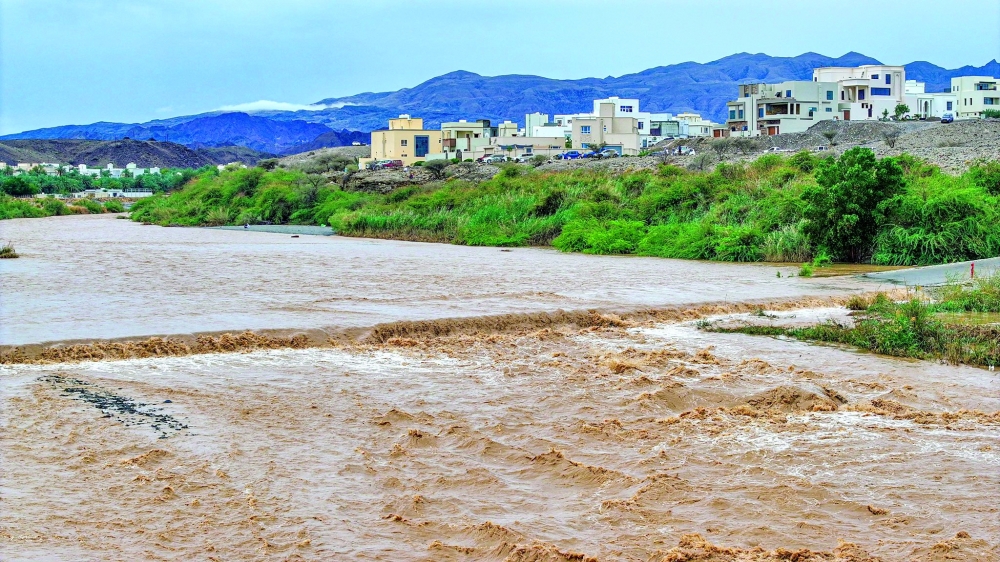
Engineer Salim bin Ahmed al Busaidy, Director-General of Muscat Municipality in Al Seeb, confirmed the readiness of the municipality's teams to deal with the effects of the weather conditions. This includes the use of equipment designated for draining rainwater accumulations from roads and public squares within residential and commercial areas; and removing debris and obstacles washed onto main and secondary roads by wadis and streams.
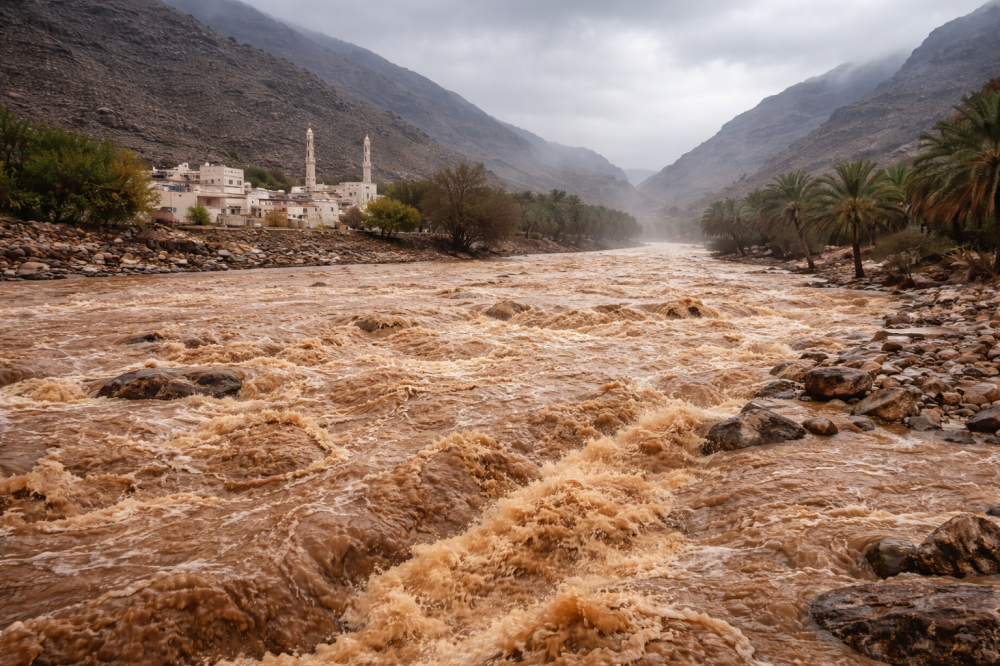
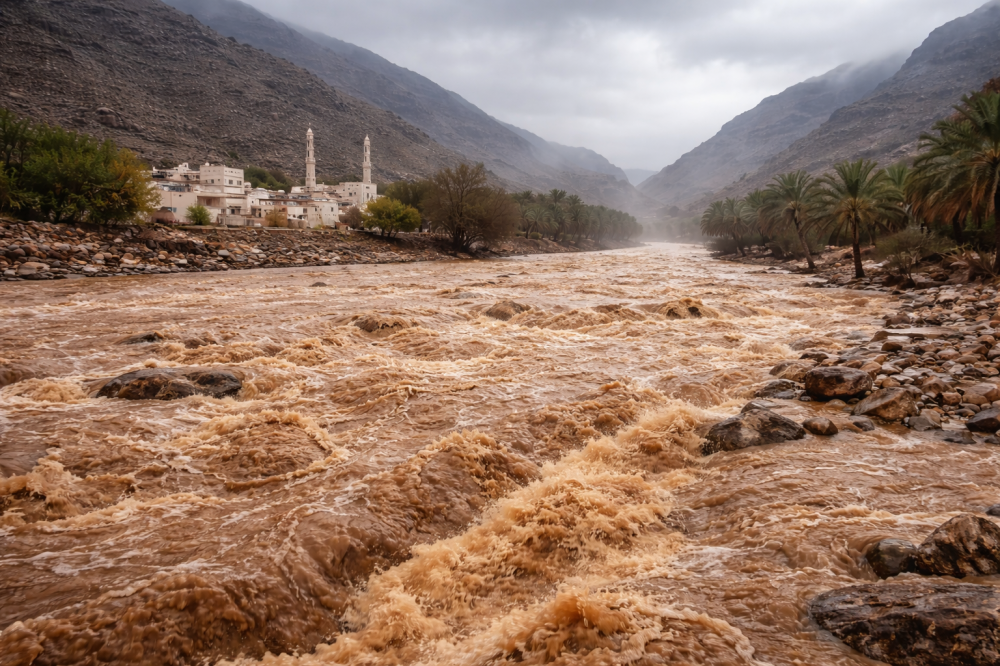
Meanwhile, heavy to very heavy rainfall swept across the Wilayats of Al Rustaq and Al Awabi in the Al Batinah South Governorate, impacting a wide range of villages and residential areas.
In Al Rustaq, the downpour triggered significant flows in several wadis, including Wadi Bani Ghafir, Bani Hani, Al Sahtan, Bani Awf and Al Hawqain. Wadi Al Sin also saw strong flows, resulting in the temporary closure of the road linking Al Rustaq and Al Awabi.
Al Awabi experienced intense rainfall accompanied by strong winds. The heaviest precipitation was recorded in the town centre and surrounding areas such as Al Mahdouth, Al Dhahir, Tawi Al Sayh, Al Rajmah, Al Subaykha, Hayy Al Subaykha, Falaj Bani Khuzair, Hayy Al Nahda, Al Rami, Al Walija, Al Salan and Al Salil.
Moderate to light rainfall was also reported in villages across Wadi Bani Kharous, including Al Aliya, Al Muhsana, Al Hudaniyah, Thaqab, Shawh, Al Hajar, Saniba, Masfat Al Hatatla, Sital and Al Hajir.
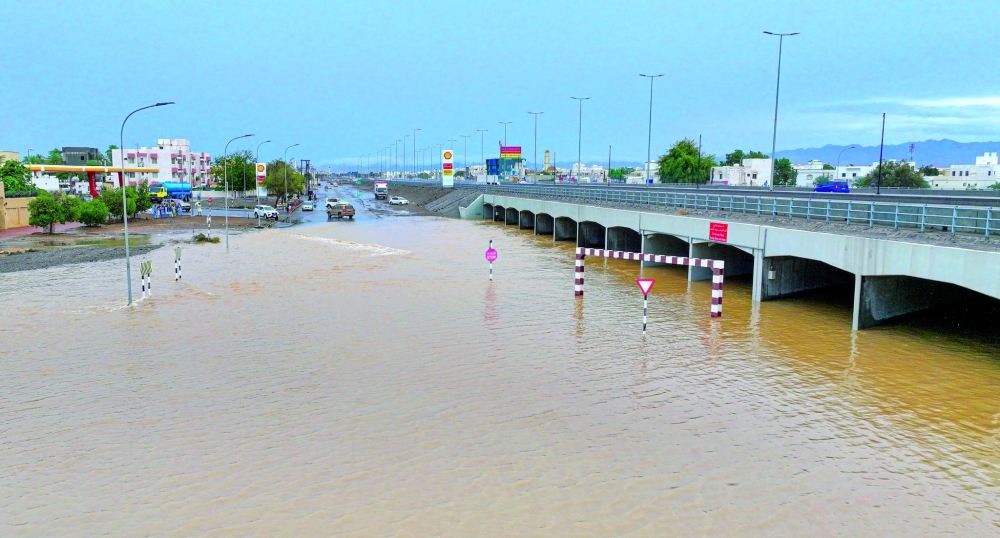
The rainfall led to the flow of multiple wadis and streams in Al Awabi, notably Wadi Safoun, Al Rajmah, Al Sahl, Al Asami, Al Harbi and Al Ad.
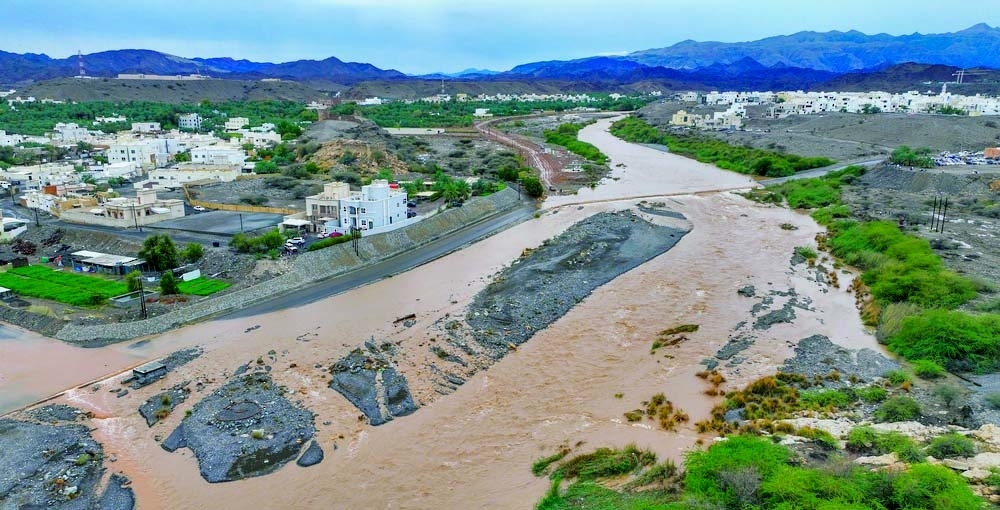
The Wilayat of Al Mudhaibi in the Al Sharqiyah North Governorate also witnessed heavy rainfall, accompanied by strong winds. As a result, most of the wadis in the Wilayat overflowed with strong and torrential water.
The town centre and surrounding villages experienced heavy rainfall, causing the wadis of Al Malah, Al Lathli, Bu Hasiyah and Al Salil to overflow. Wadi Al Masila also flowed through the town centre, along with other wadis extending along the wadi confluence to the southern villages of the Wilayat.
The Samad Al Shan district and all its villages witnessed heavy rainfall accompanied by strong winds, causing the wadis of Al Wariyah, Ba'ad, Al Ram, Andam, Al Suwairij, Dha'adha' and Al Rawdah, in addition to the Samad Al Shan wadi and Al Batha', to overflow.
The rains caused damage, including the closure of some roads between the villages of the district. Traffic was gradually restored after the removal of debris and mudslides. Power outages also occurred in some villages affected by the flooding.
Statistics issued by the Ministry of Agriculture, Fisheries and Water Resources indicate that rainfall in the Wilayat of Al Mudhaibi during the period from the 20th to the 27th reached 225 mm.
Oman Observer is now on the WhatsApp channel. Click here