




A month into the war in the Middle East, an unlikely shortage of an irreplaceable gas is looming over the global economy.
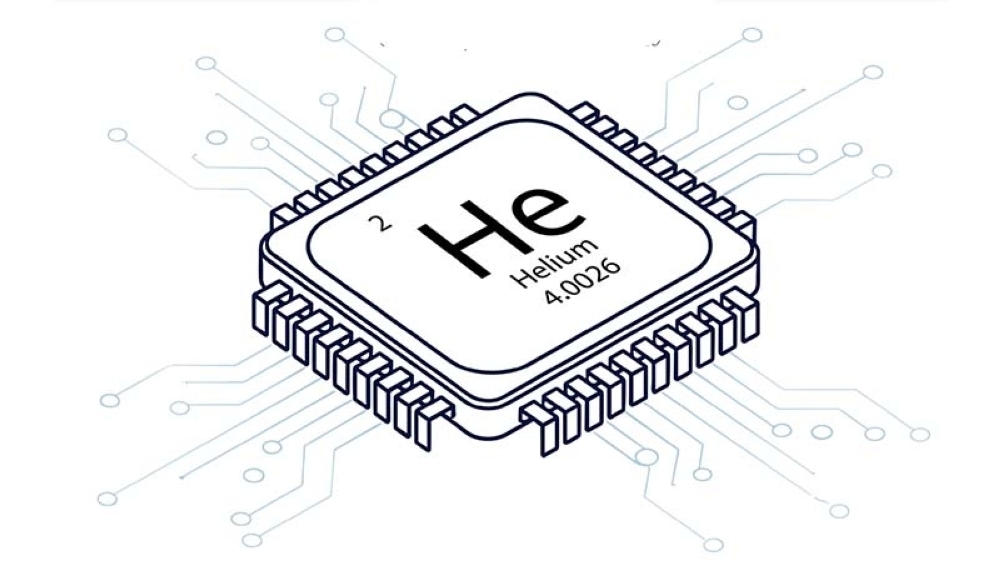
Helium is a gas that is odourless, colourless and lighter than air. It is also indispensable to manufacturing the computer chips that power artificial intelligence, an important driver of US markets and economic growth.
A byproduct of natural gas processing, helium is produced mainly in the United States and Qatar. When output in Qatar was halted this month, it cut off roughly one-third of the global supply. The outlook worsened last week after Iran struck Qatar’s largest liquefied natural gas facility, damaging helium production lines that could take years to rebuild.
Without helium, leading chipmakers, including Taiwan Semiconductor Manufacturing Co and South Korea’s Samsung Electronics and SK Hynix, could struggle to keep production lines running, with cascading effects for semiconductor-powered devices from Apple’s iPhones to Nvidia’s AI servers.
Helium may be best known for keeping balloons afloat, but its industrial uses are far more consequential. As the coldest liquid on Earth, it cools superconducting magnets in MRI machines. A shortage could ripple far beyond chipmaking, affecting everything from scientific research to space travel.
Semiconductor companies rely on helium at multiple stages of chip manufacturing. As intricate machines etch tiny circuits onto thin wafers of silicon, helium cools them from below to maintain the right temperature. After the wafers are washed with chemicals, helium is used to flush out toxic residue.
Analysts said it could take weeks or months for the semiconductor industry to feel the shortage, with chip companies relying on stored helium and what was already en route to Asia when the war in the Middle East began.
But the question is whether existing supplies can bridge the gap while the entire global helium trade is reorganised to avoid the Strait of Hormuz, the narrow waterway that has been effectively closed to tankers since the US-Israeli military campaign began last month.
About 200 specialised containers used to transport helium were stranded in the strait at the outset of the war, said Phil Kornbluth, a former gas industry executive and helium industry consultant. It could take months to reposition them, refill them and deliver the gas to customers.
With both logistics disrupted and production facilities damaged, analysts say it is only a matter of time until the helium shortage reaches the semiconductor industry.
“There is a tsunami coming, but it’s still a thousand miles offshore”, Kornbluth said. “Right now, it’s still sunny on the beach”. TSMC said it was monitoring the situation closely and did not anticipate any significant impact at this time. Samsung and SK Hynix declined to comment.
As chipmakers race to meet the insatiable demand for artificial intelligence, their ability to do so will depend in part on whether gas suppliers can secure enough helium.
On Wednesday, in Taichung, a city on Taiwan’s west coast, France’s Air Liquide opened a factory near one of the country’s few ports equipped to handle and store liquefied natural gas and helium. Until a few weeks ago, about one-third of Taiwan’s natural gas and most of its helium came from Qatar.
Air Liquide, which supplies industrial gases to most major chipmakers, was assessing customers’ stockpiles and working to ensure supply, while diversifying its helium sources, according to Armelle Levieux, a vice president at the company.
But replacing lost supply is not as simple as buying more helium from the United States and stockpiling it at factories.
Like liquefied natural gas, helium needs to be transported in a special container that can keep it in liquid form. For helium, that means storage near absolute zero or about the temperature of outer space. At such temperatures, helium must be transported as a hazardous material; and only certain trucks and ships can carry it.
The containers are insulated with liquid nitrogen, which absorbs heat during the journey. But only for so long. Once the nitrogen is depleted, the helium warms, expands rapidly into a gas and becomes dangerous to store.
Chipmakers “can only keep about a month and a half supply sitting around; otherwise, it starts heating up”, said Richard Brook, a former executive at Air Liquide and the CEO of Garrison Ventures, a helium industry consultancy.
As gas companies scramble to tap alternative sources and secure additional containers in the region, chipmakers should have enough helium for several months, said Arisa Liu, a director at Taiwan Institute of Economic Research, a think tank.
Chipmakers in South Korea are especially exposed. About two-thirds of the country’s helium imports came from Qatar last year, according to Fitch Ratings. It relies heavily on the Middle East for more than a dozen types of chipmaking materials and equipment, according to South Korea’s Ministry of Trade, Industry and Energy.
South Korea’s semiconductor companies, which produce the memory chips crucial to AI, are already struggling to make enough to keep up with booming global demand. Prices have already been driven higher.
When helium is scarce, it goes to whoever can pay the most. In past shortages, chipmakers, with their deep pockets, have outbid the competition, leaving other sectors dependent on helium such as pharmaceuticals and medical imaging short of supply.
“The semiconductor industry will pay whatever they need to pay to get that helium”, Brook said. Since the cost of shutting down a chip factory would be enormous, “they’ll outbid anybody”, he said. — The New York Times
GRAPH POINTS
1. Iran struck Qatar’s largest liquefied natural gas facility, damaging helium production lines.
2. A byproduct of natural gas processing, helium is produced mainly in the United States and Qatar.
3. Semiconductor companies rely on helium at multiple stages of chip manufacturing.
4. As the coldest liquid on Earth, it cools superconducting magnets in MRI machines.
5. About 200 specialised containers used to transport helium were stranded in the strait at the outset of the war.
Oman Observer is now on the WhatsApp channel. Click here