


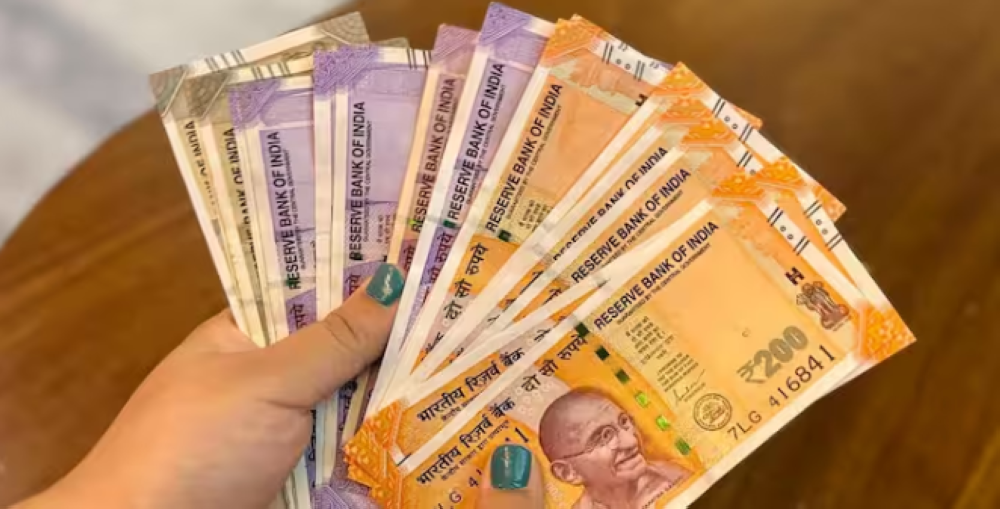





Muscat: For Indian residents in the Sultanate of Oman, looking forward to taking advantage of the remittance exchange rates, the Indian Rupee continues its fall.
On Wednesday, it crossed to $94, marking a new historic low. It went up to 94.18 against the greenback.
Markets and banks in India are closed today for a religious occasion.
According to an analyst, the continued geopolitical tensions, supply chain disruptions, market uncertainty, and higher demand for the US dollar are the reasons, in addition to domestic factors.
Exchange houses are offering 243.30 Indian rupees per RO1. If the tension continues, it may touch 245 in the coming days.
The Pakistani Rupee (PKR) and Bangladeshi Taka (BDT) are considered less volatile compared to other currencies in the region because these currencies are not freely convertible and the exchange rates are fixed by the respective central banks.
Taking into account various key economic indicate the central bank fixes the rate. Therefore, daily volatility likeAgainst an Omani Rial, the Filipinos will get 154.60 pesons, Sri Lankans will get 809 rupees, and while expatriates from Nepal will get 388.500 rupees.
Inflation and high interest rates in India
Back home in India, for expatriates, the Indian rupee depreciation may accelerate inflation and widen the current account deficit, which may consequently lead to a higher interest rate scenario.
On Friday, March 20, the Indian rupee dropped to 93.71 per dollar for the first time on Friday and logged its worst single-day drop in over four years, on the same worries over the disruptions to global energy supplies."If the conflict continues, the rupee may remain under pressure and could weaken further towards 245 per Omani rial. Even with a return to normalcy, a rebound to levels around 230 appears unlikely in the near term," said advocate R. Madhusoodanan, a financial expert based in Oman.
The sharp depreciation is primarily driven by surging crude oil prices, rising tensions around the Strait of Hormuz, and significant outflows from Indian equities by foreign investors, he said.
The rupee has been under sustained pressure in recent months, partly due to delays in concluding a trade agreement with the United States. Over the past year, the currency has depreciated by more than 7 percent, making it one of the worst-performing currencies among its peers, said Madhusoodanan."
"As a major importer of crude oil, India is particularly vulnerable to rising energy prices. Crude oil prices have increased sharply from around $73 per barrel in February 2026 to $107.8 in March. This spike is expected to widen the country’s current account deficit. India’s substantial import bill—covering oil, defence equipment, gold, and electronic goods—means that any depreciation in the rupee has far-reaching implications for the balance of payments."
For NRIs
While Non-Resident Indians (NRIs) may benefit from the rupee’s depreciation—as their foreign earnings translate into higher value in rupee terms—the broader impact is mixed. Indian students studying abroad will face significantly higher costs, as will those seeking medical treatment or travel overseas.
Borrowers with loans denominated in foreign currencies will also experience increased repayment burdens, Madhusoodanan said.
Over the medium to long term, India continues to hold strong potential as a preferred destination for foreign investment, which could support currency stability."However, reducing dependence on imported energy remains critical.
Accelerating the transition towards renewable energy sources is essential to achieving long-term resilience and addressing the structural challenges posed by external shocks."
Oman Observer is now on the WhatsApp channel. Click here


