




TEHRAN: Iran and Israel traded strikes on Tuesday, as the Middle East war showed no sign of de-escalation despite US President Donald Trump signalling "very good talks" to end the three-week conflict. The war, sparked by US-Israel attacks on Iran that killed its supreme leader, has upended global energy markets, roiled the world economy, and spiralled throughout the region — even dragging in safe-haven Gulf nations.
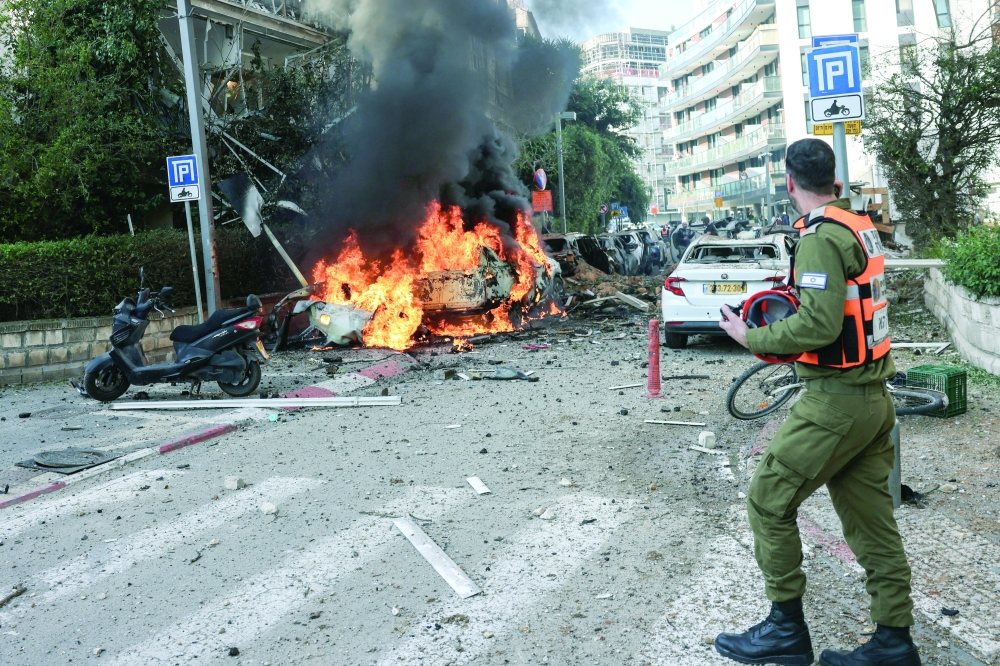
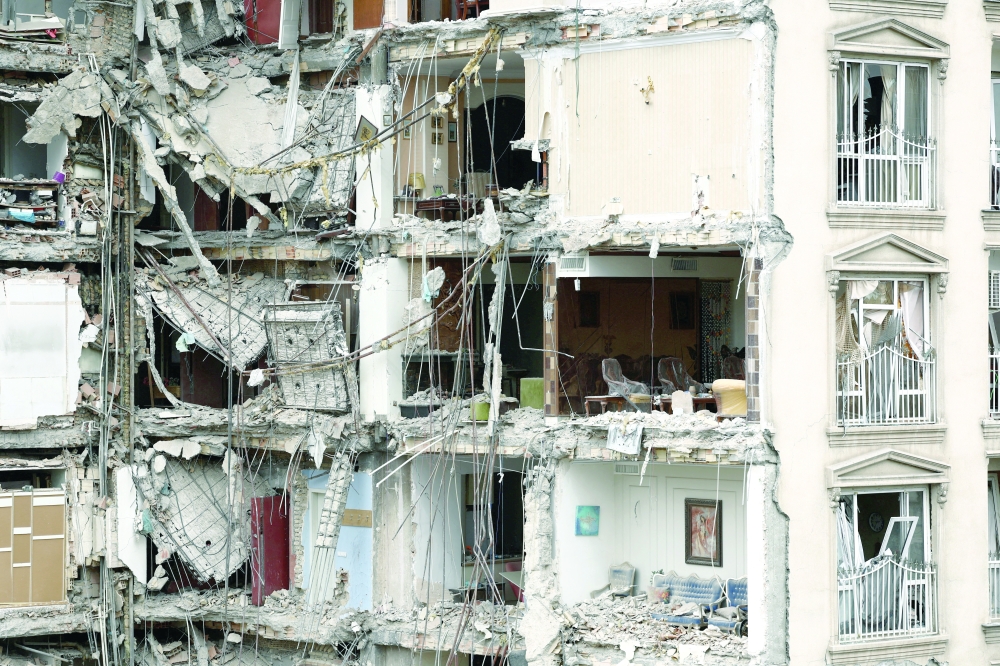
Israel's army said it had conducted a "large wave" of air strikes across several areas of Iran, which had earlier launched a "direct hit" on a building in an upscale area of Tel Aviv. Images showed rubble-strewn streets and the side of a three-storey building in Israel's commercial hub in ruins, as first responders scrambled to assist at least four people lightly injured at four different locations. According to several Israeli media outlets, police believe the damage was caused by a cluster munition missile equipped with three to four warheads, each carrying around 100 kilograms of explosives.
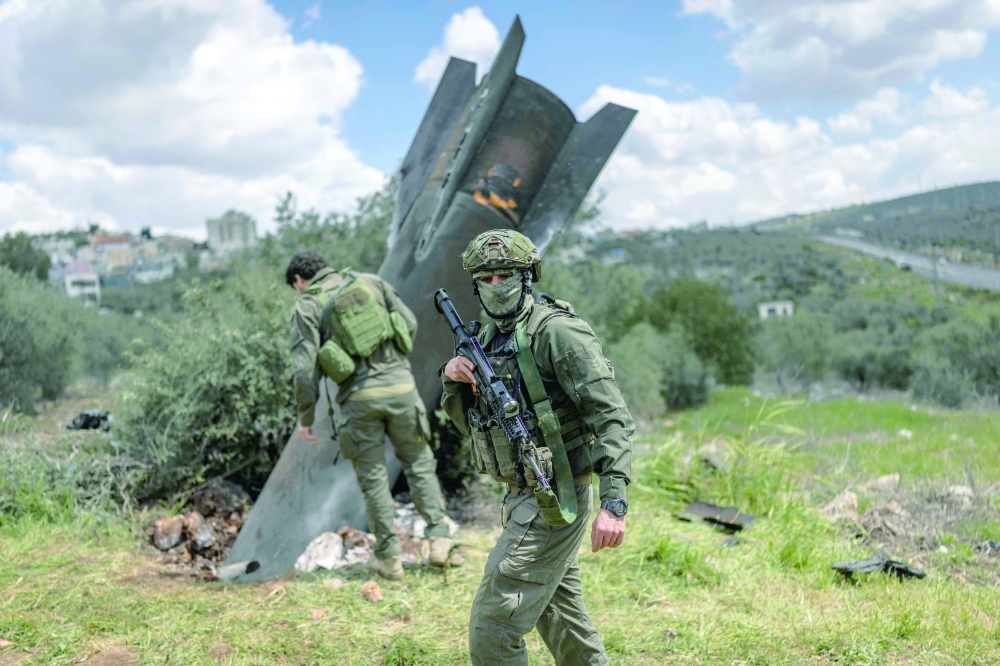
Earlier, Iranian media reported US-Israeli warplanes had struck two gas facilities and a pipeline, hours after Trump stepped back from his threat to attack energy sites, citing negotiations to end the war. Trump said his administration was speaking with an unidentified "top person", warning if talks failed in the next five days "we'll just keep bombing our little hearts out". But Tehran's parliamentary speaker, Mohammad Bagher Ghalibaf, reportedly involved in talks, said "no negotiations" were underway, accusing Trump of seeking "to manipulate the financial and oil markets." Stock markets soared and oil prices saw brief respite after Trump's abrupt about-turn that came ahead of a deadline he had set to reopen the Strait of Hormuz shipping lane or see the US "obliterate" Iran's power plants.
US media outlet Axios reported US negotiators Steve Witkoff and Jared Kushner may meet an Iranian delegation for talks in Pakistan as soon as this week, with Vice-President JD Vance possibly joining. White House spokeswoman Karoline Leavitt did not deny the reports, saying "speculation about meetings should not be deemed as final until they are formally announced by the White House." Pakistan's Prime Minister Shehbaz Sharif said on Monday he spoke with Iran's President Masoud Pezeshkian, promising Islamabad's help to bring peace to the region. "Pakistan is one of the few countries with warm ties with both Tehran and Washington," said Michael Kugelman from the Atlantic Council think tank. "It's been engaging heavily at the highest levels with both capitals over the last year, going back to the brief Iran conflict last summer," he noted.
Traditional mediator Qatar said on Tuesday it "supports all diplomatic efforts" to end the war.
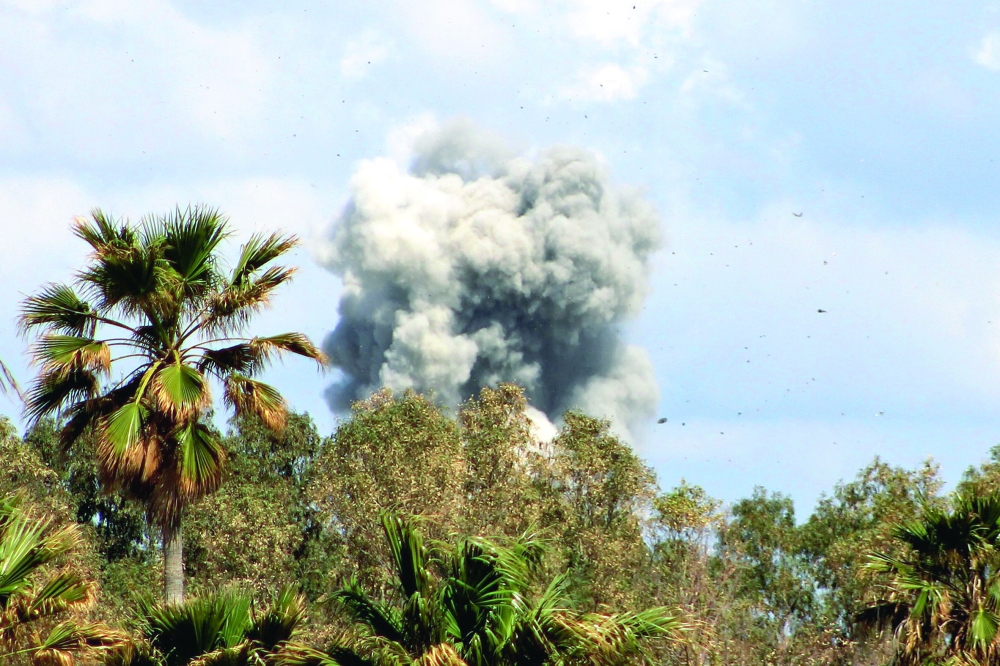
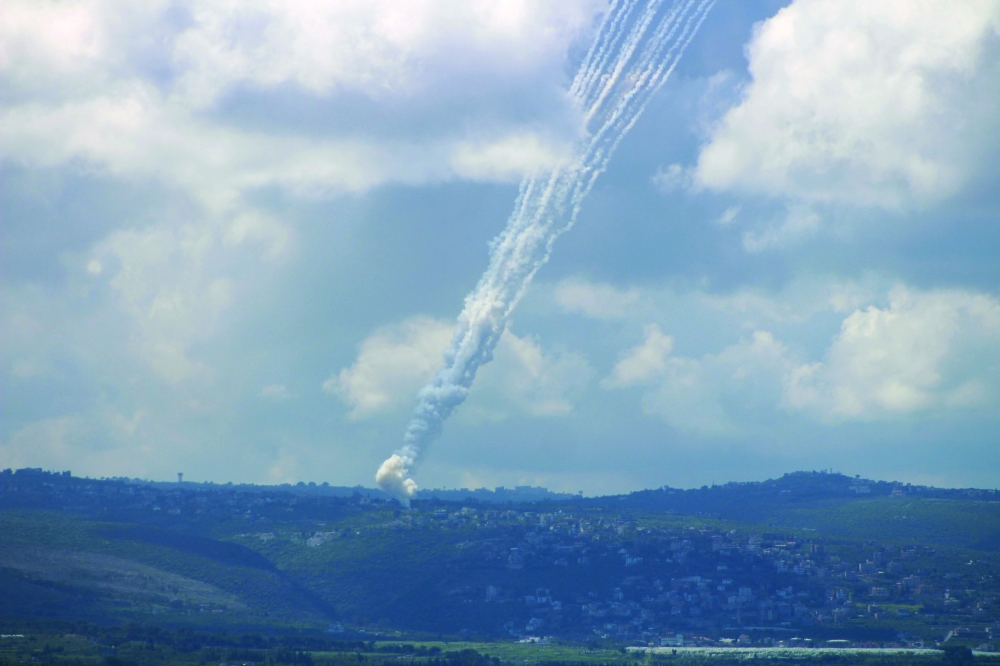
Israel pounded Beirut's southern suburbs throughout the night, while a strike on Bshamoun, south of the capital, killed two people on Tuesday, according to Lebanon's health ministry. "There's nothing left. It's all burned or destroyed... No walls, the windows are gone, the facade is gone, all my hard work has been lost," said Abbas Qassem, 55 from Bshamoun, weeping at the damage to his flat. In Beirut, images showed smoke billowing from gutted buildings, as rescuers picked through the rubble and twisted metal. Strikes also targeted several service stations linked to Iran-backed Hezbollah, which Israel has vowed to dismantle.
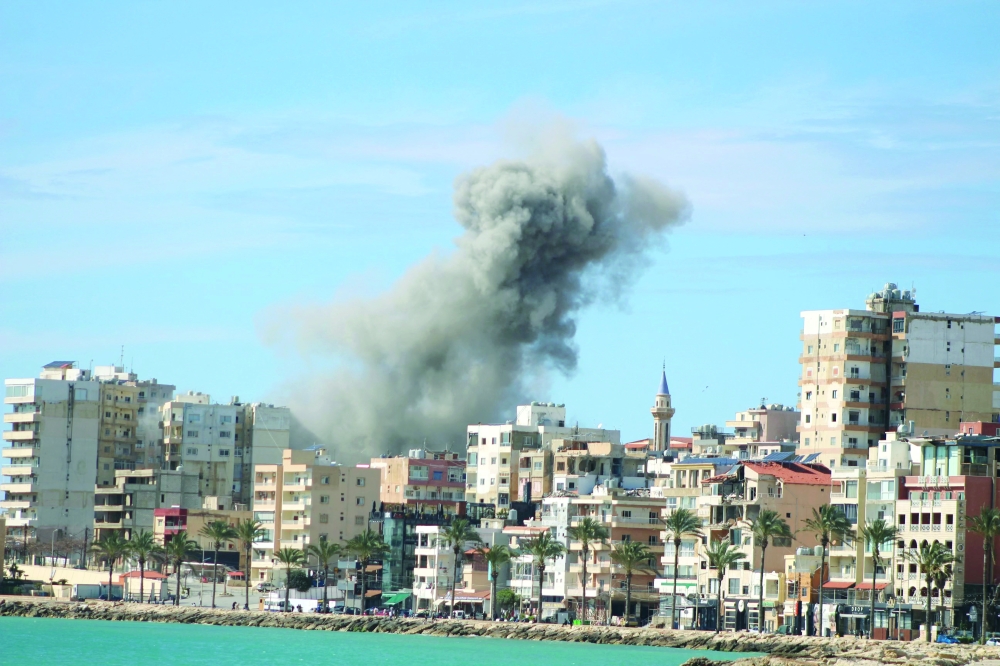
Israel's attacks in Lebanon have killed more than 1,000 people, according to Lebanon's health ministry, and displaced more than a million others. The war has killed at least 3,230 Iranians, including 1,406 civilians, according to the US-based Human Rights Activists News Agency. Underscoring the war's broad impact, Iraq's autonomous Kurdistan region accused Iran of killing six of its fighters in the first deadly attack on the regional security forces since the start of hostilities. And Qatar said the war had caused the "breakdown of the security system in the Gulf region."
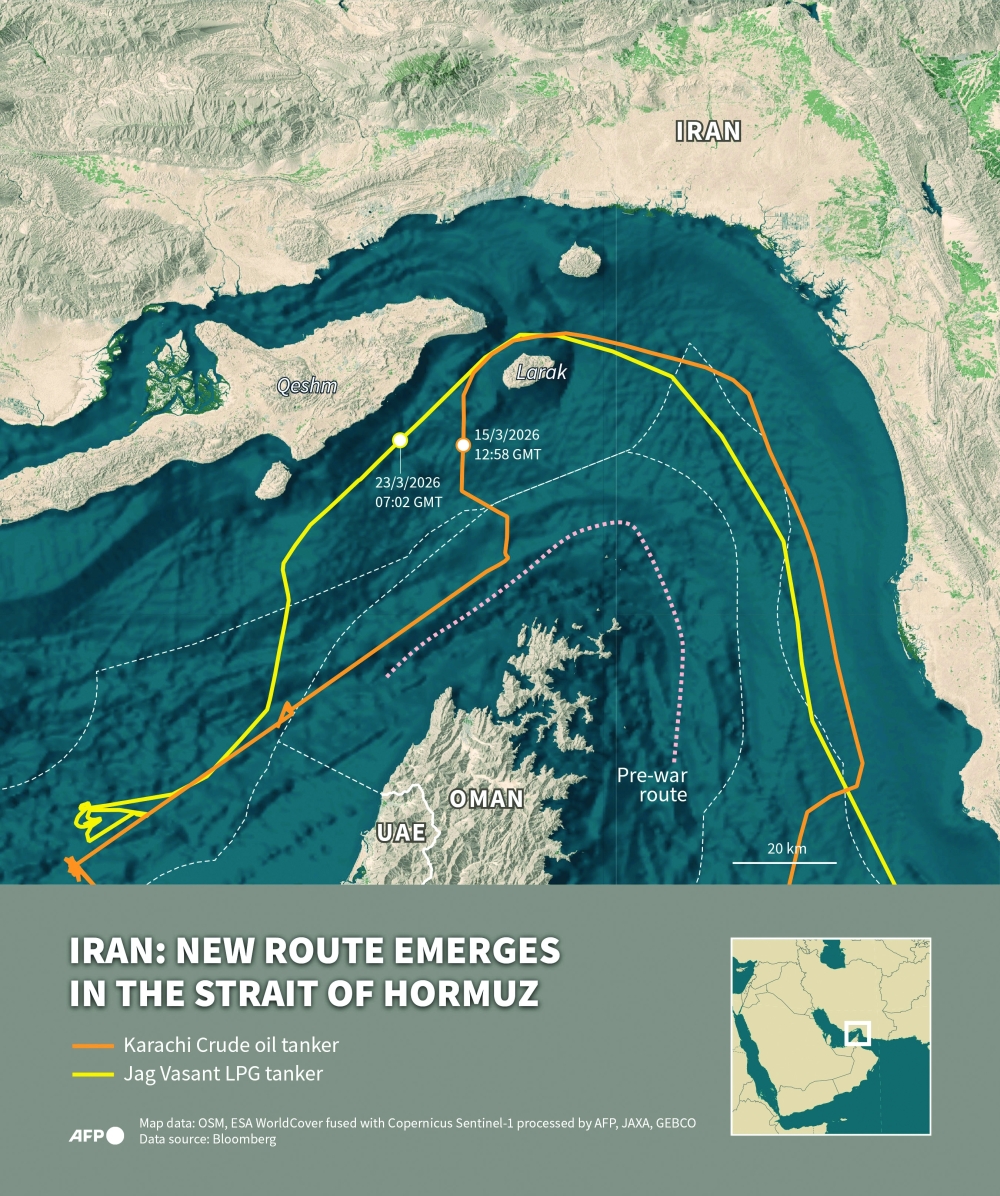
Iran's neighbours had breathed a sigh of relief after Trump stepped back from an earlier threat to target the country's power infrastructure. Tehran had vowed to deploy naval mines and strike power and water infrastructure across the region in retaliation, threatening to escalate an energy crisis of already historic proportions. "Trump has been a master of sudden pivots and switches. So it's sometimes hard to know if there is a strategy or if it's just always improvisation," said Garret Martin, a professor of international relations at American University in Washington.
Since the war erupted, Tehran has retaliated by throttling traffic through the Strait of Hormuz, a conduit for one-fifth of global crude, and by hitting Gulf energy sites and US embassies as well as targets in Israel. International Energy Agency chief Fatih Birol warned if the war is protracted, daily oil losses would pave the way for a crisis worse than the combined impact of both 1970s oil shocks and Russia's attack of Ukraine. Oil prices, which had tumbled after Trump's comments, rebounded slightly in Tuesday trade, with Brent back above $100 a barrel. — AFP
Oman Observer is now on the WhatsApp channel. Click here