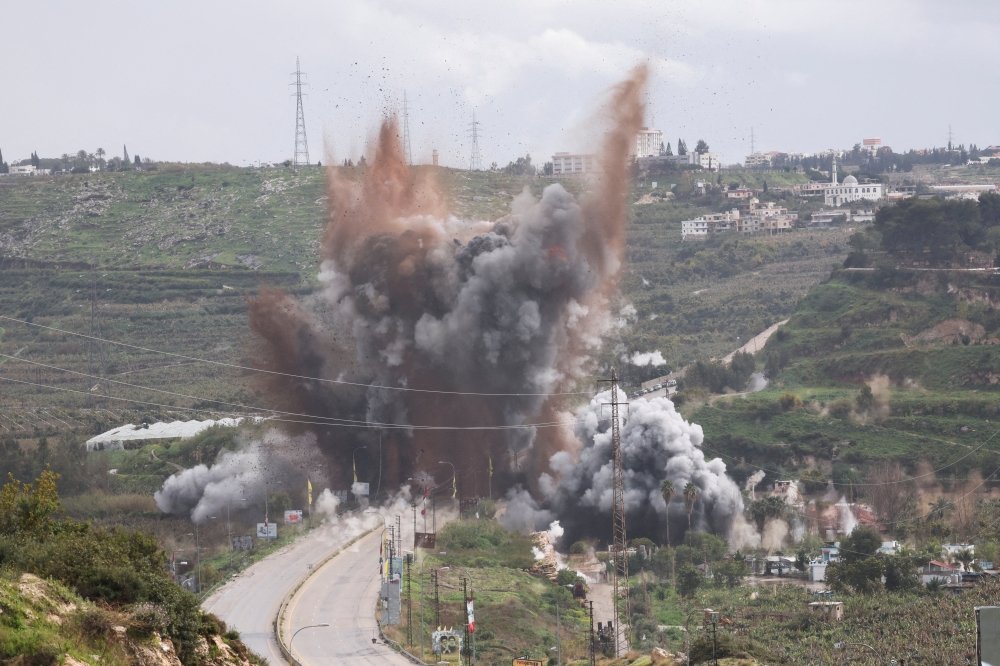





Beirut: Lebanese President Joseph Aoun on Sunday slammed Israeli strikes on bridges and other infrastructure in the country's south, calling such attacks a "prelude to a ground invasion".
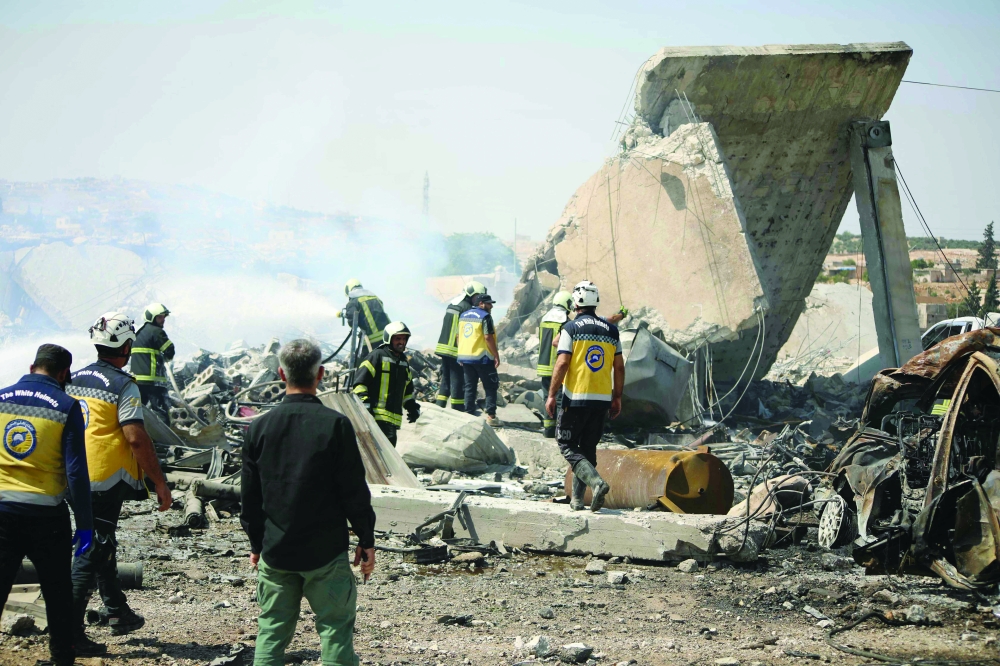
Aoun "condemned Israel's targeting and destruction of infrastructure and vital facilities in southern Lebanon, particularly the Qasmiyeh bridge over the Litani River and other bridges", a presidency statement said.
"These attacks represent a dangerous escalation and flagrant violation of Lebanon's sovereignty, and are considered a prelude to a ground invasion," Aoun said, hours after Israel's defence minister said the army had been ordered to destroy more bridges allegedly being used by Hezbollah.
More than 100 people have been injured in Iranian strikes on Israel, a military spokesman confirmed on Sunday, as Prime Minister Benjamin Netanyahu called for other countries to join the war with Tehran.
Spokesman Nadav Shoshani described the damage from the attacks in the desert cities of Arad and Dimona on Saturday evening as"catastrophic," with dozens seriously injured.
He said the strikes did not involve any new type of Iranian weapon, but rather ballistic missiles similar to those used repeatedly since the start of the war.
Iran has fired more than 400 ballistic missiles at Israel since the start of the war with Iran, with about 92 per cent intercepted by Israeli air defence systems, according to the military.
Israel and the United States launched a bombing campaign against Iran on February 28. Tehran has responded with missile and drone attacks on Israel and US-allied countries in the Gulf region.
Over the past three weeks, there have been four direct hits on Israeli cities - in Tel Aviv, Beit Shemesh, Arad and Dimona.
The military spokesman refused to comment when asked whether there were concerns about the safety of the Israeli nuclear reactor near Dimona.
Iranian state media had reported that the missile attacks on the desert cities were aimed at a nuclear research facility located around 10 km from Dimona and 30 km from Arad.
On Sunday, Israeli emergency services said an Iranian missile cluster bomb attack on Tel Aviv injured 15 people.
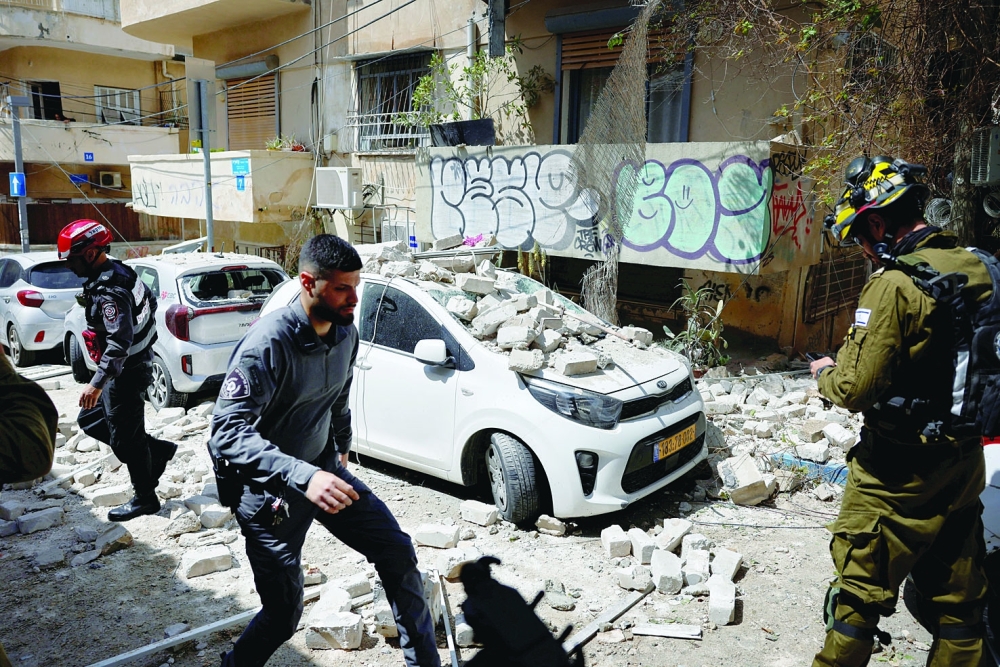
A 53-year-old man sustained serious injuries, the Magen David Adom rescue service said. Police reported multiple impact sites across the greater Tel Aviv area.
Israeli Prime Minister Benjamin Netanyahu has urged other countries to join the fight against Iran, citing recent missile attacks as evidence of a growing global threat.
Speaking at the site of the missile strike in Arad, Netanyahu said recent developments showed Iran poses a danger far beyond the region.
"If you want proof that Iran endangers the entire world, the last 48 hours have given it," he said. "They have now the capacity to reach deep into Europe."
"They are putting everyone in their sights," he continued.
Netanyahu pointed to an Iranian missile launch targeting the US-UK military base on Diego Garcia in the Indian Ocean, about 4,000kilometres from Iran.
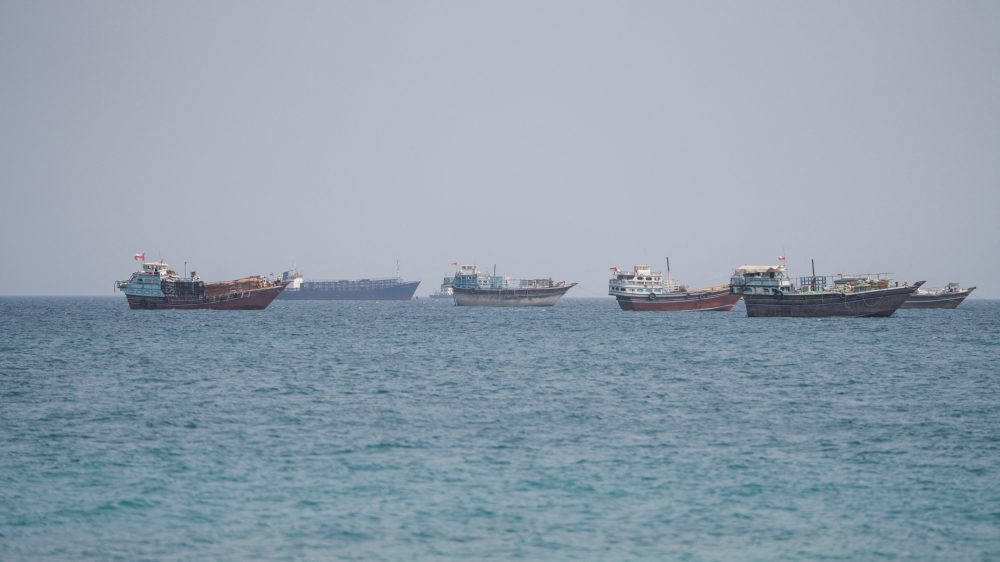
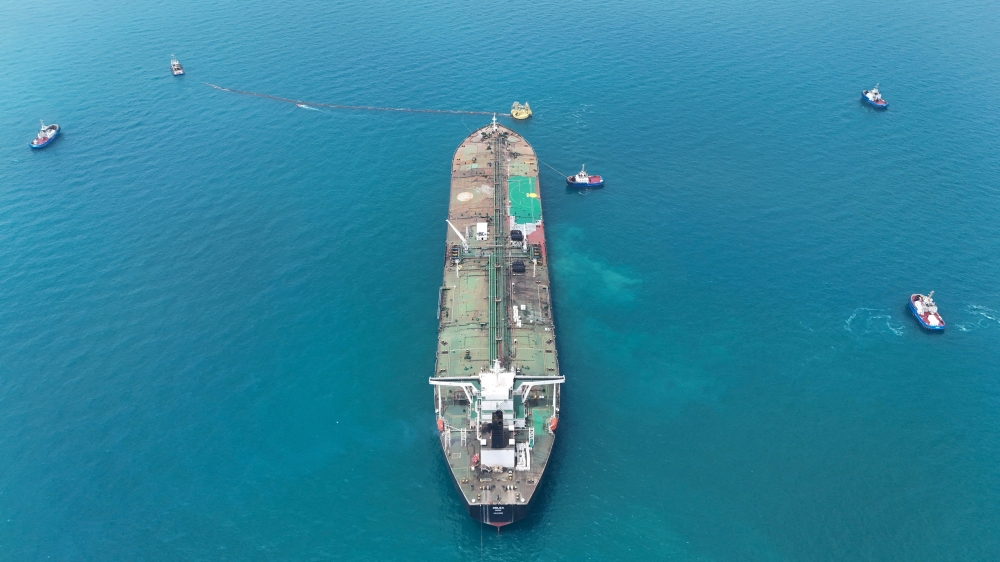
The Israeli leader also accused Tehran of seeking to disrupt global trade routes, including by threatening shipping through the Strait of Hormuz.
"They're stopping a maritime international route, an energy route, and trying to blackmail the entire world," he said.
The comments came after US President Donald Trump threatened to"obliterate" Iran's power plants if the Strait of Hormuz is not reopened within 48 hours.
The post on his Truth Social platform contradicted his earlier claim that the US was considering "winding down" the campaign against Iran.
Iran launched further attacks on Gulf countries on Sunday, forcing the United Arab Emirates, Saudi Arabia and Bahrain to fend off incoming threats.
In Qatar, seven people were killed in a military helicopter crash.
The Qatari Ministry of Defence said the helicopter went down in the country's territorial waters following a technical malfunction during a routine mission. — Agencies
Oman Observer is now on the WhatsApp channel. Click here