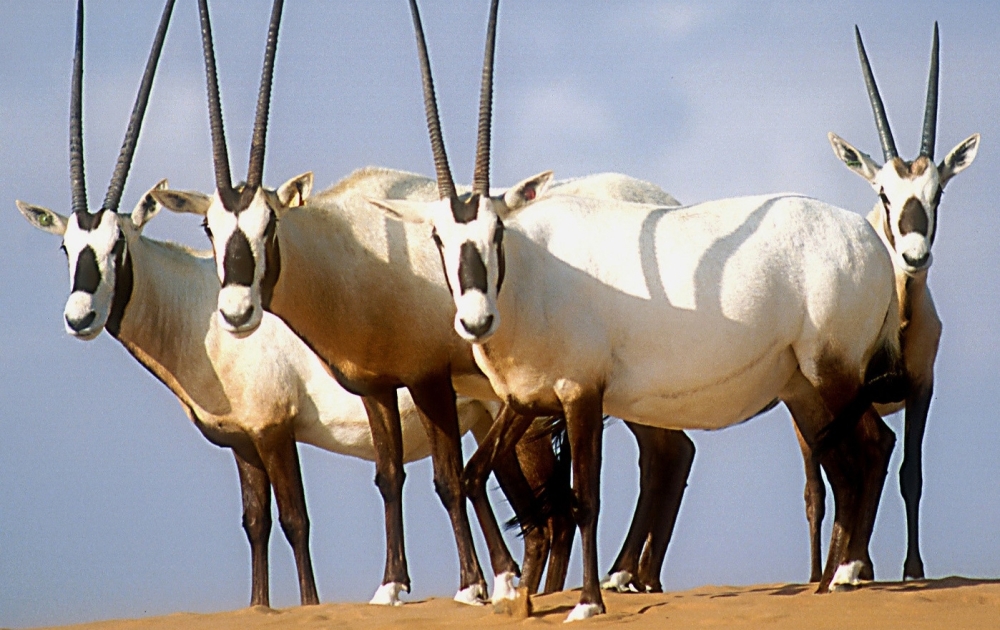





In the vast plains of central Oman, the Arabian oryx has reclaimed a landscape it once lost entirely. Its return stands as one of the most significant wildlife recoveries in modern conservation history and remains a defining chapter in Oman’s environmental legacy.
By 1972, uncontrolled hunting had driven the Arabian oryx, Oryx leucoryx, to extinction in the wild. The last known wild individual in Oman was killed in Jiddat Al Harasis that year. A decade later, Oman launched an ambitious recovery effort that would reshape global conservation precedent.
In 1982, just 10 captive-bred oryx were reintroduced into the desert of central Oman. The carefully managed release laid the foundation for what became the Arabian Oryx Sanctuary, which at its height covered approximately 34,000 square kilometres. Through structured monitoring, ranger patrols and habitat management, the population grew steadily, surpassing 400 animals by the mid-1990s. In 1994, the sanctuary was recognised as a Unesco World Heritage Site, reflecting the global importance of the achievement.
The recovery, however, faced a serious setback in the early 2000s when poaching pressures caused numbers to fall sharply to fewer than 70 individuals in the wild. The decline prompted strengthened enforcement, tighter monitoring systems and renewed breeding support.
Today, Oman’s wild Arabian oryx population is estimated to exceed 600 animals, with additional individuals maintained in managed reserves. Regionally, free-ranging numbers across the Arabian Peninsula now surpass 1,000, while several thousand more are held in conservation breeding programmes.
In 2011, the International Union for Conservation of Nature reclassified the Arabian oryx from “Extinct in the Wild” to “Vulnerable”, marking the first time a species had moved down the Red List categories following successful reintroduction. The decision was based on verified population growth and expanding protected habitats.
Conservation strategies in Oman now integrate satellite tracking collars, ecological surveys and genetic monitoring to ensure long-term resilience. Herd movements are closely studied, particularly across Al Wusta Governorate, where rainfall patterns influence grazing routes and breeding cycles.
Beyond statistics, the oryx carries cultural weight. Often described as the white jewel of Arabia, it is woven into poetry, folklore and national symbolism. Its curved horns and luminous coat embody endurance in one of the world’s most demanding climates.
As Oman advances its environmental objectives under Oman Vision 2040, the Arabian oryx remains a benchmark of what sustained policy, science and protection can achieve. From a starting point of just 10 animals in 1982 to a stable and growing wild population today, the species’ return affirms that even extinction need not be permanent when restoration is pursued with patience and resolve.
Across the desert horizon, the oryx once again moves freely, a living testament to resilience and renewal.
Oman Observer is now on the WhatsApp channel. Click here