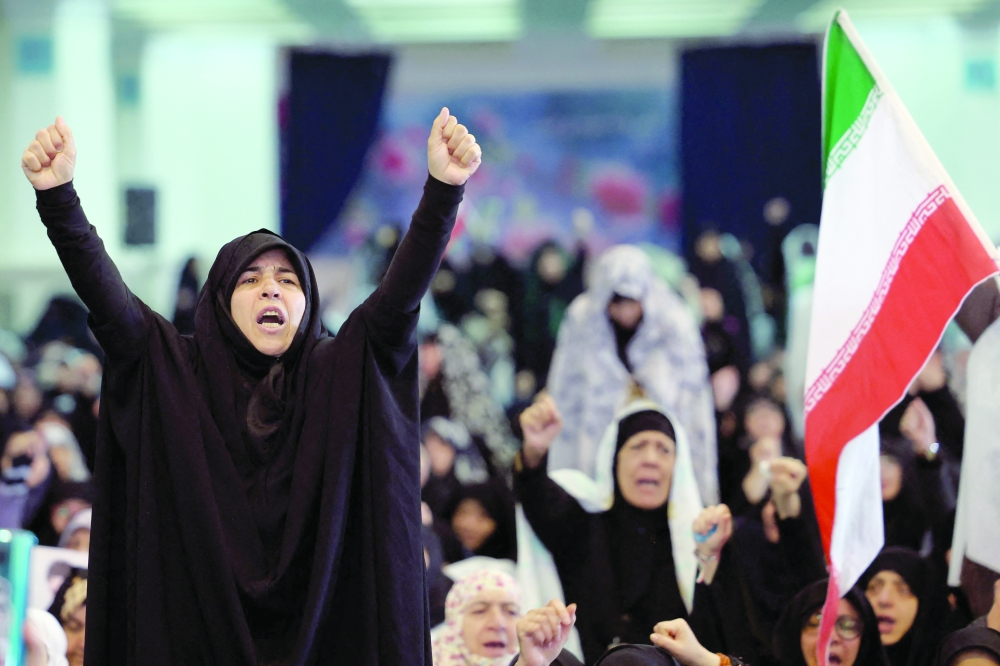





Thousands of Iranians held Eid Al Fitr prayers on Saturday to mark the end of the Ramadhan fast, as Tehran reported a strike on its nuclear enrichment plant and Israel threatened intensified bombardment.
Iran's supreme leader traditionally leads Eid prayers but Ayatollah Mojtaba Khamenei, who came to power earlier this month after his father was killed in a US-Israeli strike, has remained out of the public eye.
Instead, the head of the judiciary, Gholam Hossein Mohseni Ejei, attended prayers at central Tehran's Imam Khomeini grand mosque, which was filled to overflowing, with worshippers flooding the streets outside.
The previous evening, air strikes had darkened the mood as the city celebrated Nowruz, the Persian New Year.
"The atmosphere of the New Year was spreading through the city. Places like Tajrish or Golestan Shahrak, where I went, were full of well-dressed and beautiful women buying flowers," said Farid, an advertising executive, reached by AFP through an online message.
"The Israeli attacks happening exactly at the moment of the New Year were deeply upsetting. The thought that some people could be dying right at the New Year dinner table was painful."
Iran's key ally Russian President Vladimir Putin sent greetings to Khamenei, "wished the Iranian people strength on overcoming these severe trials and emphasised that during this difficult time, Moscow remained a loyal friend and reliable partner of Tehran".
According to Iran's atomic energy organisation, the US and Israel targeted a plant at Natanz in Isfahan province, which hosts underground centrifuges to enrich uranium for Iran's disputed nuclear programme and was already damaged in last year's June war.
"Following the attacks by the United States and the usurping Zionist regime against our country, the... Natanz enrichment complex was targeted this morning," the organisation said, in a statement carried by the Tasnim news agency.
No leakage of nuclear materials was reported, it added.
The head of the International Atomic Energy Agency (IAEA), Rafael Grossi, called for "military restraint to avoid any risk of a nuclear accident", but the UN watchdog confirmed that no increase in off-site radiation levels had been reported.
Asked about Natanz, the Israeli military said it was "not aware of a strike".
After three weeks of a conflict that has sent world energy prices soaring, blocked the Strait of Hormuz oil export route and strained Washington's ties with its closest allies, US President Donald Trump said once again that he was thinking of pulling back.
"We are getting very close to meeting our objectives as we consider winding down our great military efforts in the Middle East," Trump posted on social media.
The White House press secretary said the Pentagon was looking at four to six weeks to complete its mission.
Nevertheless, according to US media reports, Washington is deploying thousands more marines to the Middle East, in a possible sign of a ground operation, and Iran continues to carry out strikes on both Israel and its oil and gas-rich Gulf neighbours.
After Iranian missile fire at Israel overnight, the Israeli military said it had carried out strikes on what it called 'targets' in Iran's capital, which has been under bombardment since a US-Israeli attack started the war on February 28. — AFP
Oman Observer is now on the WhatsApp channel. Click here