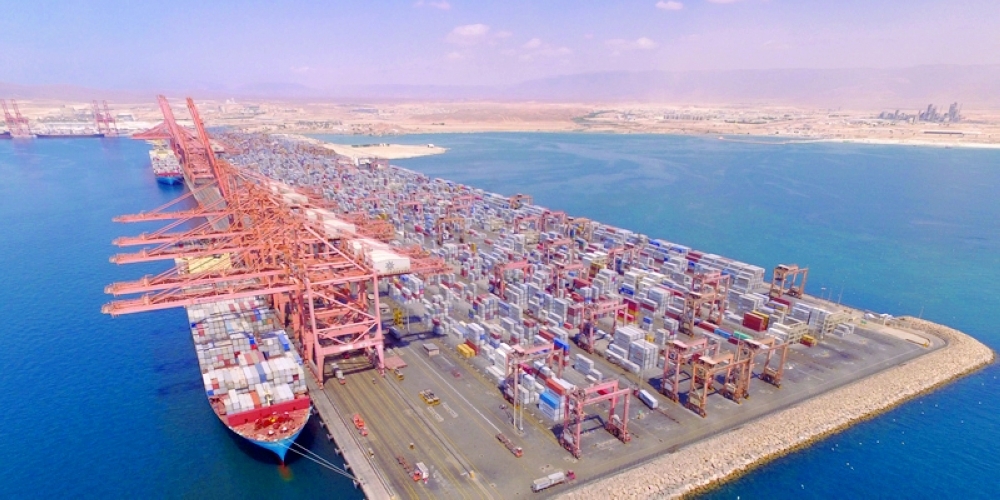
In a world where geopolitical transformations are accelerating and international trade routes are experiencing repeated disruptions, the geographic location of the Sultanate of Oman stands out as one of the most important factors giving it a strategic advantage in global trade.
Its stewardship of long coastlines, vital islands, and an important waterway in the region makes Oman a natural link between East and West, strengthening its role in connecting regional markets to the global economy.
The importance of this location becomes even clearer in light of the political and military tensions and conflicts currently taking place in the region, particularly the ongoing war against the Islamic Republic of Iran by the Zionist state and the United States of America.
These developments have directly affected maritime navigation in the Strait of Hormuz, which is considered one of the most important sea passages in the world, as more than a quarter of global oil and gas exports pass through it. With the disruption of some oil and commercial shipping due to these tensions, prices of oil, gas and food commodities have increased worldwide and inflationary pressures on the global economy have intensified.
Under such circumstances, Omani ports emerge as a strategic option capable of absorbing part of the trade movement and redirecting it, especially for countries in the region that have begun to suffer from the consequences of this war.
The Sultanate of Oman recognised early the importance of investing in the ports and logistics sector. Over the past years, it has worked on developing an integrated system of advanced ports, most notably Sultan Qaboos Port in Muscat, Salalah Port, Sohar Port and Duqm Port and its Special Economic Zone, to serve as regional centres for re-export and logistics services.
The importance of these ports is not limited to their geographic location alone, but also extends to their ability to connect maritime trade with land and air transportation networks and to facilitate the movement of goods to regional and global markets.
The development of logistics infrastructure in the Sultanate of Oman has also contributed to enhancing the efficiency of supply and delivery chains. The integration between modern Omani ports, advanced airports, economic and industrial zones, expanding road networks and the digital transformation of customs procedures has accelerated the flow of goods and reduced logistics costs.
This has positively reflected on the Sultanate of Oman’s ability to attract industrial and logistics investments linked to global supply chains.
Today, Omani ports are connected to a wide network of shipping lines that reach many sea ports across different continents. This enhances the speed of access to international markets and increases the efficiency of re-export and regional distribution operations. It also opens the door to the expansion of logistics and industrial activities associated with global trade.
The distinguished geographic location and advanced logistics infrastructure that Oman possesses provide it with a real opportunity to strengthen its role as a regional hub for supply chains. However, making full use of this opportunity requires continued development of integrated transport networks, strengthening railway projects and multimodal transportation and other facilities.
These directions are consistent with the objectives of Oman Vision 2040, which seeks to make the logistics sector one of the pillars of economic diversification in the country. With continued investment in infrastructure, ports and local airports; and by strengthening partnerships between the public and private sectors, the Sultanate of Oman can transform into a major logistics hub in the region and play a greater role in international trade in a world.
Oman Observer is now on the WhatsApp channel. Click here