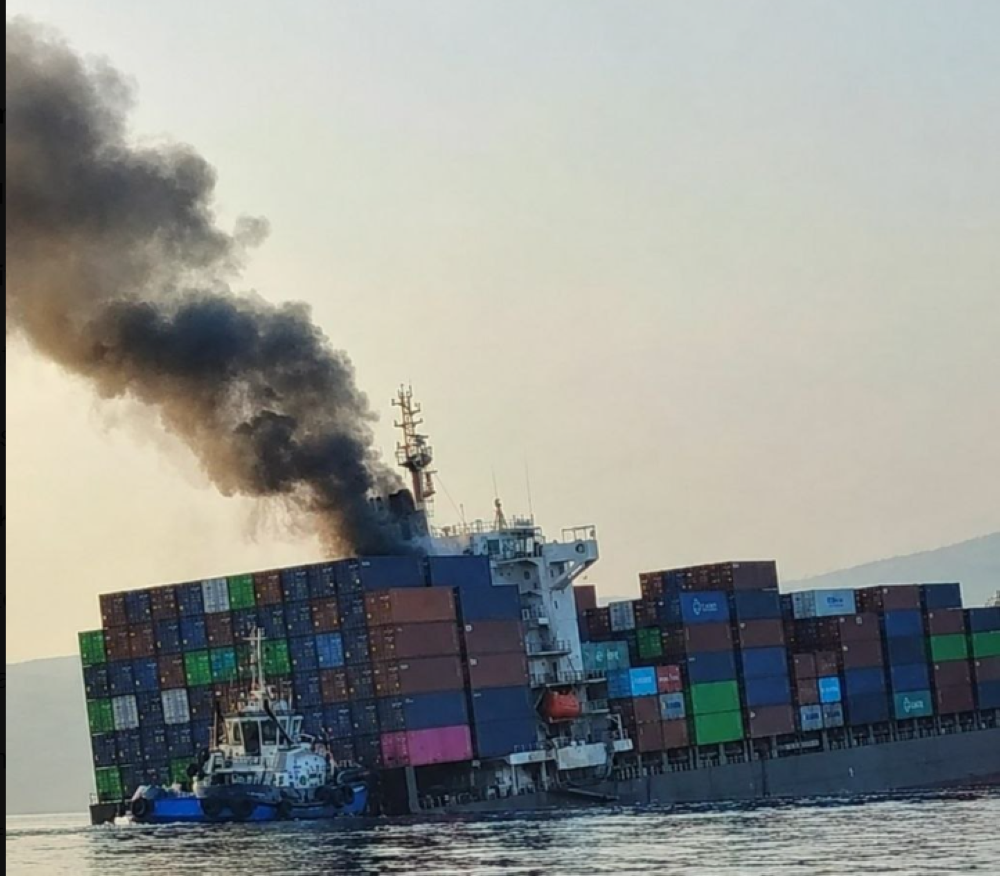
War is usually narrated through maps. Front lines are drawn, strike zones are named, and theatres of operation are presented as if they have clear edges. Nature has never recognised those boundaries. Three weeks into this conflict, its environmental reach has already moved well beyond the Gulf. Off Sri Lanka's southern coast, rescue teams moved through water marked by bodies, wreckage and an oil slick stretching 20 km after the sinking of the Iranian frigate Dena, threatening ecologically important coastal areas. A war many still describe as a Gulf crisis had entered the Indian Ocean.
Sky has offered a parallel image. The region sits on one of the world's great migratory bottlenecks, with hundreds of millions of birds passing between Europe, Asia and Africa each spring. Millions are now arriving at the peak of migration despite missile fire.
Experts say any diversions are likely to be small, yet still capable of leaving birds exhausted at the start of breeding season. War has entered a flyway shaped over millennia, sharing airspace with creatures moving on much older terms than ours.
These scenes reveal something deeper than environmental collateral. Oil, smoke, debris, noise and disrupted migration do not stop where political narratives would prefer them to stop. They travel through ecosystems first, then through economies, and finally into the daily lives of people far from the original strike. The Iran war is also a climate war.
It is a climate war in the most immediate sense because modern warfare runs on fossil fuels. Every jet sortie, naval deployment, missile interception and reconstruction effort carries a carbon cost. The world's militaries are estimated to produce 5.5 per cent of annual heat-trapping emissions, more than every country on earth except China, the United States and India.
Conflict does not sit outside the climate crisis. It feeds it directly, then deepens it indirectly by making governments even more anxious about fuel security.
The Strait of Hormuz illustrates the deeper fragility. In last week’s column, I focused on the environmental damage inside the corridor, but the structural exposure runs further. Roughly 20 million barrels of oil move through it daily, alongside one third of global seaborne fertiliser trade. When a single passage carries that much of the world's energy and food supply, its disruption stops being a shipping story and becomes a systemic one. A global economy built around chokepoints and extraction zones does not produce resilience. It produces recurring exposure.
History tells us what comes next. War does not always push governments toward cleaner choices. Fear often drives them the other way. After Russia's war on Ukraine, several governments answered one fossil fuel shock by leaning harder on others, including coal. The pattern is predictable and self-reinforcing. States double down on drilling, subsidise new extraction, or reach for the dirtiest available fuels in the name of stability. The question now is whether this war triggers the same reflex or whether it finally makes the strategic case for diversification impossible to postpone.
The alternative exists and it is closing fast. Renewables are on track to surpass coal as the largest source of electricity generation globally by mid this year. They are cheaper, faster to deploy, and harder to weaponise. A solar field cannot be blockaded in Hormuz. Wind does not travel through a chokepoint.
The birds are still crossing. The oil slick is still spreading. Both will outlast the news cycle, moving through systems that were old before this war began and will still be carrying its consequences long after the maps are redrawn.
Rumaitha al Busaidi
The writer is an environmental strategist and advocate for sustainable development
Oman Observer is now on the WhatsApp channel. Click here