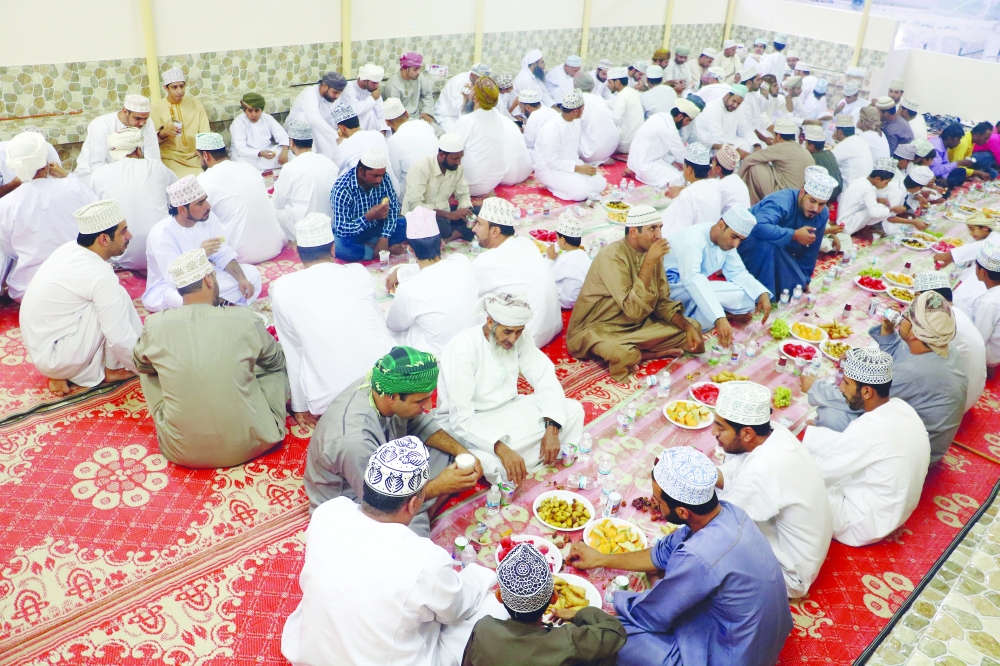





More than the food sharing and celebrating the iftar together with people from different walks of life, the social iftars being held in and around the city are threads that connect humans and platforms that solidify brotherly bonds.
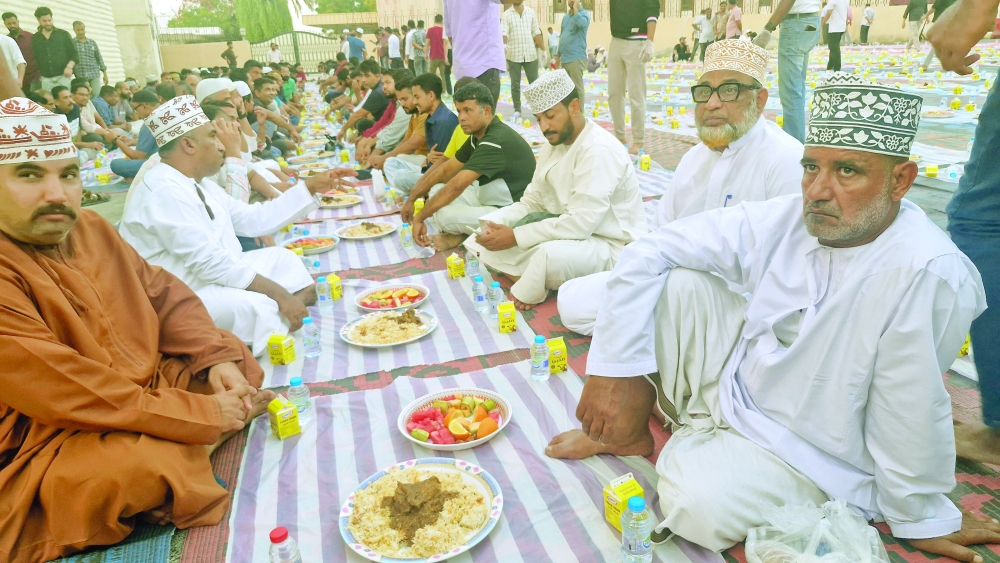
On any evening, as the sun sets into the Arabian sea, one can see people representing different continents, Omanis and expatriates, sitting together and sharing the meals and the feeling of Ramadhan and its values together. Here, differences evaporate and gaps are bridged and broken ties are mended.
A group of people from Muttrah souq have been organising social iftars since the Day 1 of Ramadhan catering to over 1,000 people every single day, thanks to the incessant efforts of the volunteers of KMCC, a social service faction; and the tradesmen and the staff inside the age-old traditional market.
The event is organised collaboratively, with KMCC members and other community groups arranging meals that include dates, fruits, laban and the hot meal is supported by Gardens by Sabries and is served around the Baladiya parking area in old Mutttrah souq area.
The group comprising expatriates as well as Omanis, Mohammed Navas, Sadhik, Saheer, Faisal, Rashid, Khaleel, Nassir, Riyas, Shuhaib, Marzook, Aftab, Nasir Kodugaloor, Mishab, Saheer, Rashid Kappad, Nasoor, Shaheer, Ismail, Latheef, Shukkur, Suhair, Shfeeq, Nabeel and Siraj begin their iftar preparations from 1 pm when they acquire the fruits required to feed over 1,000 people.
The highlight of the massive iftar that has been running for years spotlessly is the way it has been organised all this while. Here, each section is divided and responsibilities well defined. The committees vary from Preparation, Hospitality, Distribution, Cleaning and above all, Ad hoc and Crisis Management Committees, all constituting this meticulous iftar management.
“The iftar team under the Kerala Muslim Cultural Centre (KMCC) play a significant role in organising daily Iftar gatherings in the Muttrah area of Muscat during Ramadhan, serving several hundreds of people. The recipients are primarily low-income workers from nearby commercial establishments, shopkeepers, labourers and bachelors, offering them a communal space to break their fast. This is one of the great humanitarian activities in the city during the holy month”, says Sulaiman al Jardani, a social worker who has been supporting the initiative for several years.
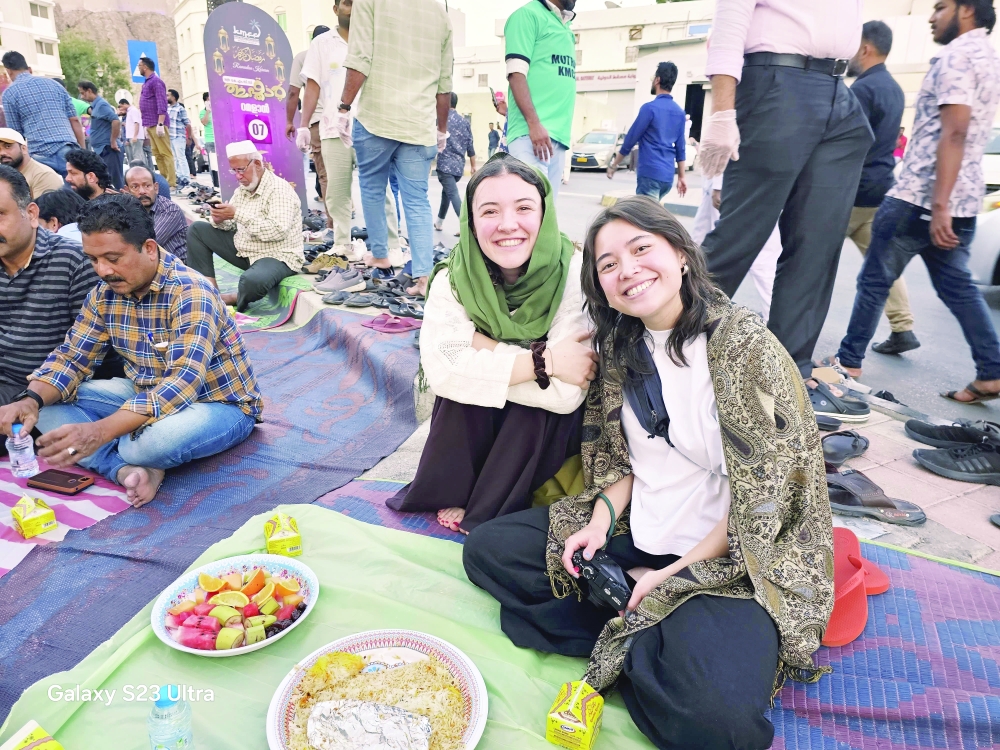
The Danish connection: Emma, the Australian born New Zealander who was seen with her friend during the Muttrah Iftar recently was all excited to share the ‘Sofrah’ (the Omani serviette where food is served and had together) and the feeling of hunger.
“I have no words as I’m seeing it for the first time in my life that people share the same feelings and share the first meal of the day together often with unknown people. I feel the daily iftar in Muttrah is part of a larger, long-standing effort by community groups in Oman to promote social solidarity and support vulnerable workers during the holy month. I really enjoyed being a part of the event”, said Emma.
Emma and her friend made it a point to visit the mass iftar venue twice and stayed through the whole event from preparations till cleaning the entire area and donated an amount for charity as well.
“We were stunned by the affection of a foreigner who was surprised to see such preparations on a massive scale and we explained to her the relevance of such social iftars and she was happy to join us for two days. She left for her country only after promising to visit Oman and this iftar venue every year”, Navas Kasargode, one of the organisers said.
Such iftars where communities come together irrespective of the differences and run throughout the holy month, stand as a testament to the Sultanate of Oman’s enduring culture of generosity — a quiet, consistent act of community care that captures the true essence of the holy month of Ramadhan and the teachings of the prophet Mohammed (peace be upon him) who advocate unity in the society.
Oman Observer is now on the WhatsApp channel. Click here