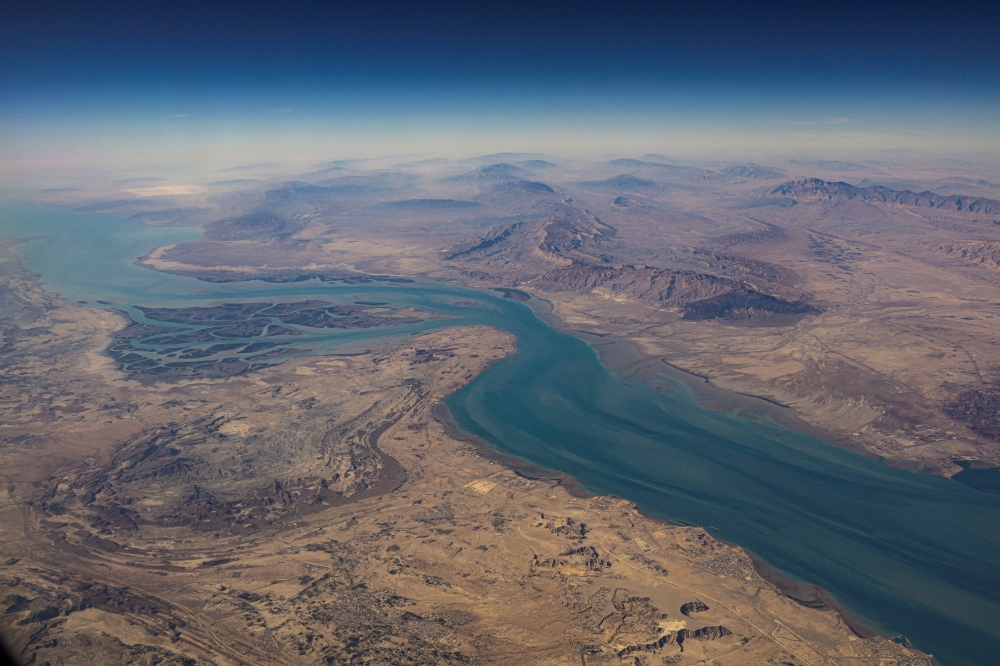





For decades, the global energy system has been closely tied to one narrow maritime passage: the Strait of Hormuz. Nearly one-fifth of the world’s oil supply, around 20 million barrels per day, passes through this strategic chokepoint every day, connecting the energy-rich Gulf with markets in Asia, Europe, and beyond. Its importance to global trade is undeniable. Yet in an era marked by geopolitical tensions, maritime security concerns, and supply-chain disruptions, reliance on a single corridor carries increasing risks.
Against this backdrop, Oman’s geography presents a compelling strategic opportunity.
Unlike many of its Gulf neighbours, the Sultanate enjoys direct access to the Arabian Sea and the wider Indian Ocean. This allows energy shipments to reach international markets without passing through the Strait of Hormuz. Traditionally, this geographic advantage has been viewed simply as reduced exposure to regional risks. However, a broader strategic perspective suggests something more significant: the country could gradually emerge as a complementary energy corridor for the Gulf, enhancing resilience for both producers and global consumers.
The foundations for such a role are already taking shape. At the centre of this transformation lies the Port of Duqm, a rapidly expanding industrial and logistics hub located outside the Strait of Hormuz. In 2024, Duqm recorded cargo volume growth of 152 per cent across all cargo types, the fastest among the nation’s ports, while also opening a new container terminal with more than 1,000 metres of quay infrastructure. Momentum continued in May 2025 when a consortium committed $550 million for further expansion.
International investors are beginning to take notice. Japan’s NYK Line signed a strategic memorandum of understanding with Duqm in October 2025, highlighting the port’s location outside the Strait of Hormuz as a major geographic advantage. Credit rating agencies such as Moody’s and S&P Global have similarly observed that export facilities at Duqm and Sohar allow shipments to bypass the strait entirely, a logistical capability that gives the Gulf state a distinctive strategic edge.
Supporting this infrastructure is the Duqm Special Economic Zone, one of the largest in the Middle East, designed to integrate energy infrastructure, logistics services, and manufacturing clusters within a single ecosystem. The Duqm Refinery, one of the region’s most significant downstream energy projects, further strengthens this platform. Together with the Ras Markaz crude storage facility, which can hold up to 10 million barrels of oil, the Duqm complex is steadily positioning itself as a gateway linking Gulf energy producers to global markets.
Another important pillar of the nation’s logistics network is the Port of Salalah. Ranked second in the World Bank and S&P Global Container Port Performance Index in 2023, Salalah has long been recognised as one of the world’s leading transhipment hubs. Its location along major East–West shipping lanes connecting Asia, Africa, and Europe gives the country a natural logistical advantage that few others possess.
The broader global context reinforces the significance of these developments. Energy markets today increasingly prioritise route diversification. Recent disruptions in major maritime corridors, including tensions affecting shipping in the Red Sea, have reinforced a simple lesson: supply chains built around a single chokepoint are inherently vulnerable. Governments, shipping companies, and energy firms are therefore seeking greater redundancy and flexibility in the routes that move critical resources across global markets.
International policy institutions have begun to recognise this shift. Analysts at the Carnegie Endowment for International Peace have highlighted the growing importance of alternative energy logistics hubs capable of operating outside politically sensitive waterways. Infrastructure such as Duqm, located along open-ocean trade routes, becomes particularly valuable during periods of geopolitical uncertainty.
In this context, the Sultanate’s geography becomes a strategic asset not only for itself but for the wider Gulf region. With further investment in pipelines, storage infrastructure, and deeper port capacity, the country could offer Gulf producers greater export diversification. Such infrastructure would not replace the Strait of Hormuz, which will remain a central artery of global energy trade for decades to come. But it could provide an important complementary pathway, one built on stability, reliability, and Oman’s long-standing tradition of balanced diplomacy and pro-trade governance.
Importantly, this vision extends beyond traditional hydrocarbons. The same logistics infrastructure being developed today is increasingly aligned with future energy systems. The Sultanate has identified green hydrogen and ammonia as strategic sectors for economic growth, and the Duqm Special Economic Zone is emerging as a focal point for green hydrogen and green steel initiatives. Investments in ports, storage capacity, and industrial clusters therefore represent not only a response to current energy dynamics but also preparation for the energy systems of the future.
This direction aligns closely with the ambitions of Oman Vision 2040, which seeks to position the country as a global logistics hub connecting international markets. By integrating energy infrastructure with advanced port facilities, industrial zones, and maritime services, the nation is steadily assembling the building blocks of a diversified economic model extending well beyond traditional oil exports.
From a broader supply-chain perspective, the emerging role of this Gulf state reflects a fundamental shift in global trade strategy. Efficiency alone is no longer sufficient. Resilience, diversification, and geopolitical stability are becoming equally important considerations. Countries capable of providing reliable, strategically located logistics corridors will play an increasingly central role in the evolving architecture of global energy trade.
Oman does not replace the Strait of Hormuz, but it can meaningfully complement it. Over time, as infrastructure expands, investor confidence deepens, and regional cooperation strengthens, this complementary role could evolve into something far more significant: a strategic gateway linking Gulf energy resources with global markets. If this trajectory continues, the Sultanate may well emerge as one of the most important energy logistics hubs of the Indian Ocean region in the decades ahead.
Dr Umair WaqasnThe author is Assistant Professor in Supply Chain Management, College of Commerce and Business Administration, Dhofar University, Oman.
Oman Observer is now on the WhatsApp channel. Click here