In Donald Trump’s fantasy world, America is invincible and impregnable.
Its military is so advanced and skillful that it can pluck a sitting head of state from a hostile country and deposit him in a New York City jail cell without losing a single soldier. It can slap punitive tariffs on any nation it likes, abandon long-standing alliances on a whim, bomb any country at any time and freely blow up boats it may suspect of carrying drugs. America’s awesome power means it is unfettered by any rules, untroubled by any consequences. As an unfathomably rich and sprawling nation, blessed by geography and protected from its enemies by two vast oceans, why shouldn’t it do what it will? Over the past six days, as Trump plunged the United States into a war with Iran, that fantasy of omnipotence has come crashing into reality. Undertaken for unexplained and perhaps unexplainable reasons, the war is being waged in a central node of the global economy against a disciplined, well-armed opponent with nothing to lose. America and Israel killed Ayatollah Ali Khamenei and a dozen Iranian leaders on the first day of fighting, but Trump has clearly given little thought to what comes next. Recklessly, he has ignited a widening conflagration with no obvious end in sight. The death toll has already surpassed 1,000 people.
For America, the repercussions are just beginning. At least six US service members have been killed, and the Pentagon, pointedly not ruling out boots on the ground, has said more casualties are likely. Despite relentless attacks on Iran’s military installations, the country has responded with relentless force.
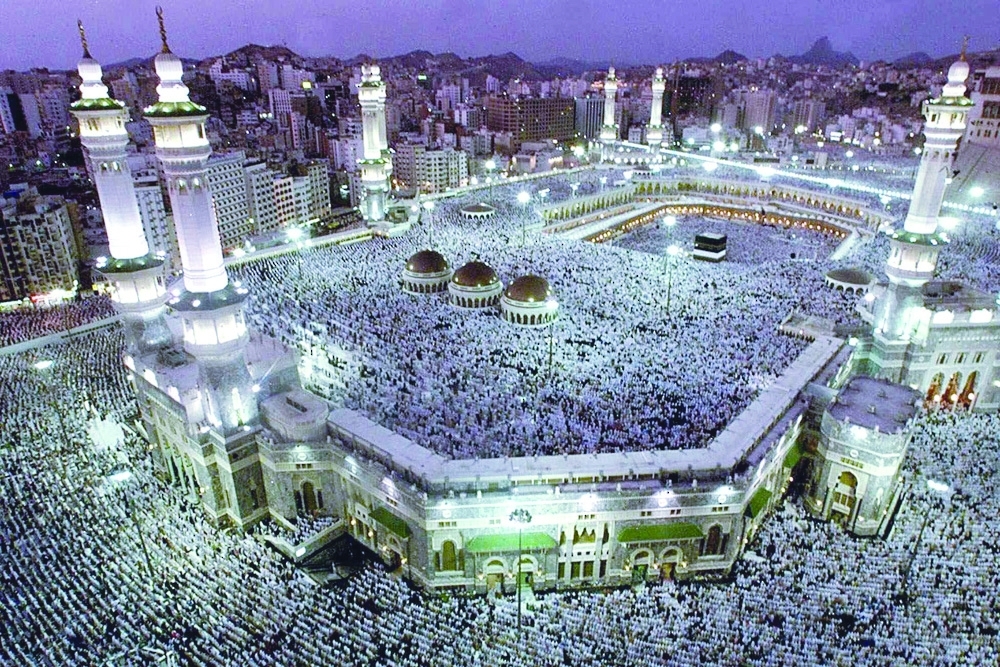
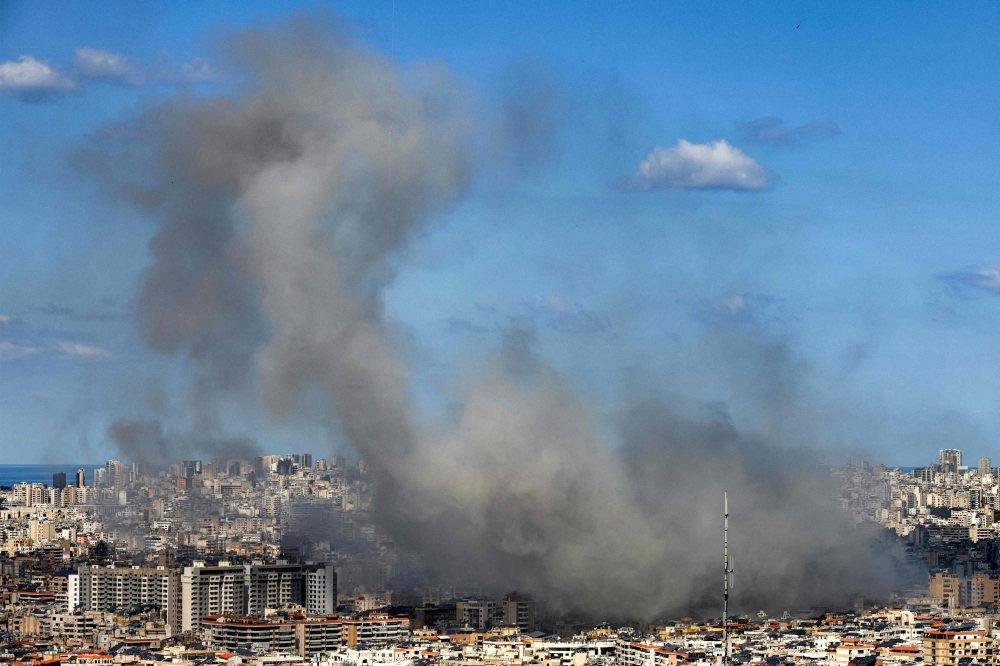
It has rained missiles and drones not only on American and Israeli targets but also on the Gulf countries — the United Arab Emirates, Qatar and Saudi Arabia — that play host to US military bases. Airports, hotels, data centres and energy infrastructure have been struck, causing chaos. Meanwhile, the Strait of Hormuz, a crucial chokepoint for the export of oil and gas, is all but closed, sending shudders through energy markets.
This is the world Trump tries to disavow — complex and interconnected, resiliently interwoven and yet vulnerable to disruption. The Arabian Gulf embodies it like no other place. An apotheosis of globalisation, it is a crossroads of money, people and power deeply intertwined with not just America’s fortunes but also Trump’s personal wealth. More than anything, it shows up — in its grounded flights, shuttered refineries and intercepted missiles — the fallacy of Fortress America.
Trump neither sought nor received congressional approval, much less international support, for his war. But perhaps the most shocking thing about his cavalier approach is that he seems to have had no idea the Gulf would be a target. In an interview with CNN on Monday, he professed that Iran’s attacks on US allies in the Gulf were “probably the biggest surprise” — despite the fact that just about every country in the region had warned his administration that Iran would surely attack them in retaliation for a US assault.
This thoughtlessness is part of a pattern. For one thing, the Trump administration has given no plausible explanation for the war, offering instead confused and contradictory justifications. Secretary of State Marco Rubio even suggested that America was effectively bounced into it by the prospect of an imminent Israeli attack on Iran. Trump soon weighed in, claiming that he was actually the one who pressured Israel into the venture. His press secretary, Karoline Leavitt, perhaps offered the closest thing to the truth. “The president had a feeling,” she told reporters on Wednesday, “that Iran was going to strike the United States.” For another, Trump appears strangely uncertain about where the war is heading. “The worst case would be we do this and then somebody takes over who’s as bad as the previous person,” Trump mused on Tuesday, seated in his gilded Oval Office alongside Chancellor Friedrich Merz of Germany. “We don’t want that to happen,” he said, seeming to be considering this very real possibility for the first time. “It would probably be the worst.” It is unsettling how often Trump affects astonishing indifference, as if the most powerful man in the world were merely a spectator to events he has set in motion — and who in any case has little investment in the outcome. But that curious passivity reveals a darker truth. Trump seems to believe that he, like his fantasy America, exists on a different plane, utterly untouchable by the swirl of global events. The devastating consequences of his actions are not just someone else’s fault. They are someone else’s problem, too.
America’s last major foray in the Middle East casts a long shadow over the Iran war — it was, in many ways, the crucible that gave us Trump. But the Gulf is a fundamentally different place than it was when America invaded Iraq after 9/11. Disastrous as that decision was, the region had not yet become the indispensable node of the global economy it is today.
There are the oil and gas, of course. The Gulf is home to about half of the world’s proven reserves of oil. Those are now imperilled: Scarcely any ships are getting through the Strait of Hormuz, and oil producers are running out of storage space. What’s more, one-fifth of the world’s liquid natural gas comes through the strait, primarily from Qatar. On Wednesday, that country shut down its liquefaction facilities and declared a force majeure, with potentially dire implications for importers in Europe and East Asia.
Yet alongside this resource wealth, Gulf nations have rapidly diversified in recent decades, transforming the region into a centre of finance, aviation, technology and tourism, as well as a home to tens of millions of people from across the globe. The sprawling airports and vast fleets of airliners in Dubai, UAE; Doha, Qatar; and Abu Dhabi, UAE have made the region the busiest flight hub on the globe — about 80% of the world is an eight-hour flight away. The closure of these airports has not only stranded hundreds of thousands of travellers, including many Americans, but has also severed vital links between vast regions of the world.
Indeed, there are few people who would have better reason to appreciate the Gulf’s centrality than Trump. After all, his family’s company has struck billions of dollars of real estate deals in the region. His son-in-law Jared Kushner got $2 billion in 2022 from Saudi Arabia’s sovereign wealth fund for his private equity company. An investment firm tied to the UAE purchased nearly half of the Trump family’s cryptocurrency company for $500 million just days before Trump’s inauguration last year. A few months later, Qatar gave Trump the lavish gift of a gilded Boeing 747.
If war is God’s way of teaching Americans geography, perhaps it will also serve as a lesson to Trump. It should be a simple one: Other places and other people are real, possessing their own agendas and agency — and America’s actions have consequences it cannot control. Anything else is pure fantasy. — The New York Times
Oman Observer is now on the WhatsApp channel. Click here