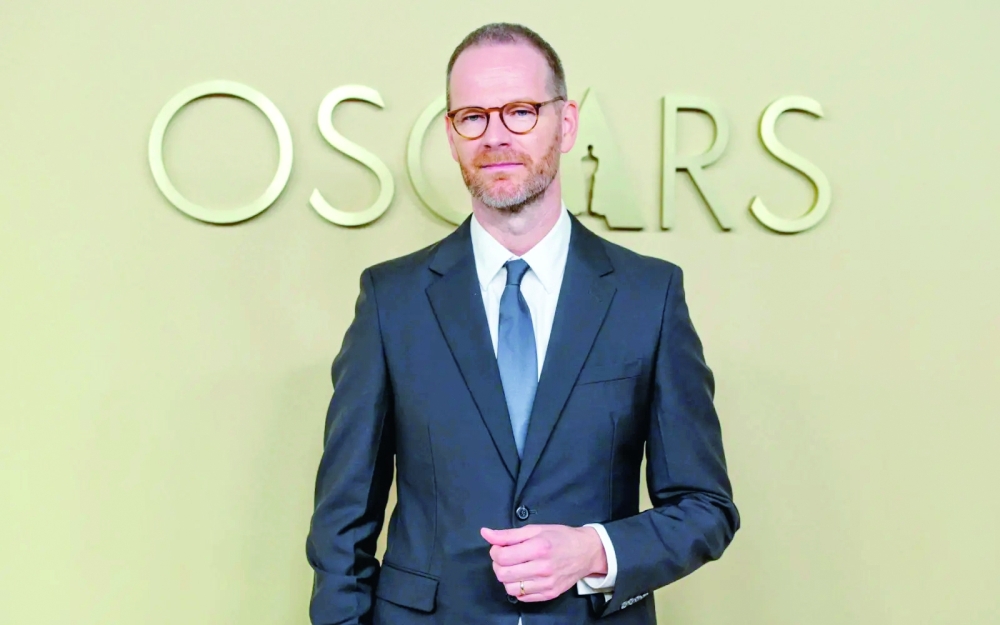





Foreign films were once considered an afterthought at the Oscars, but the directors behind this year’s nominees for best international feature say they now feel part of a broader shift on Hollywood’s biggest night.
Two of the 10 contenders for best picture — Brazil’s The Secret Agent and Norway’s Sentimental Value — are largely not in English. Both have also earned acting nominations, reflecting the growing global presence in the awards race.
For Danish-Norwegian filmmaker Joachim Trier, whose Sentimental Value has secured nine nominations including best director, the recognition itself is meaningful.
“That’s not about competition. It’s more about recognition. And I like that”, he said.
Knowing that fellow filmmakers acknowledged his work, Trier said, means a lot. He believes the growing diversity within the roughly 10,000-member Academy of Motion Picture Arts and Sciences has contributed to the shift.
But the international appeal of films like his family drama, which stars best supporting actor nominee Stellan Skarsgard, also comes from their emotional honesty.
“The whole clue is to try to get the big machine, the apparatus of cinema, to go to an intimate place”, Trier said. “That’s the kind of film I’m interested in making. And if that works for people, it’s a magnificent thing”.
Franco-Spanish director Oliver Laxe shares a similar view. His film Sirat succeeds, he said, because it comes from a place of sincerity.
“All directors have looked inward, tried to do something with their heart, with their soul. And I did it with my gut”, he said.
For Laxe, the recognition of his unconventional, contemplative film suggests audiences are ready for something different.
“It proves that people are tired of seeing the same films and that we need to trust individual sensitivity a little more”, he said, adding that the nomination itself already feels like a collective victory.
Brazilian director Kleber Mendonça Filho said he has been struck by the global response to his political thriller The Secret Agent. The film follows an academic, played by best actor nominee Wagner Moura, persecuted during Brazil’s 1970s military dictatorship.
“I made a Brazilian film... and it has had a very strong emotional and political reaction throughout the world”, he said.
Producer Emilie Lesclaux, who is also Mendonça Filho’s wife, said that when they began making films more than two decades ago, the Oscars seemed distant and dominated by American productions.
“Little by little, we saw real changes”, she said. “This year, so many incredible films are being treated the same as American films”.
One of the most politically charged nominees is It Was Just an Accident by Iranian director Jafar Panahi, filmed in secret and exploring whether victims of oppression should seek revenge or forgiveness.
Panahi, who has previously been jailed in Iran, has used the Oscars spotlight to draw attention to the country’s political situation, including the recent arrest of his collaborator Mehdi Mahmoudian.
Meanwhile, Tunisian director Kaouther Ben Hania’s The Voice of Hind Rajab focuses on Gaza, telling the story of a Palestinian girl whose family is killed by Israeli gunfire.
“My first obsession was how to make this girl’s voice resonate”, Ben Hania said.
She hoped to move Arabic-language cinema beyond a niche audience and present it to the world.
“When I made the film, that was my intention”, she said. “But its impact has exceeded my expectations”.
Oman Observer is now on the WhatsApp channel. Click here