




MUSCAT: Amid a torrent of news, social media posts and unverified information, mental health specialists warn that overexposure to distressing content can heighten anxiety, particularly among children and adolescents.
Dr Abdullah al Zaidi, consultant psychiatrist, explains that anxiety is a natural human response to uncertainty. “However, when families are continuously immersed in negative news cycles, anxiety can shift from a temporary reaction to a chronic state,” he notes. “What is needed is conscious filtering of information and designated times for news updates, instead of allowing it to dominate the entire day.” He adds that children are often more sensitive to tone and emotional cues than to factual details. “Parents’ facial expressions and voice tones communicate more than the news itself. A calm household atmosphere significantly reduces the psychological impact of external events on children.” Creating an open space for dialogue at home is therefore essential. Children may overhear fragments of conversations or media reports without fully understanding them, leading to distorted perceptions or exaggerated fears. Honest, age-appropriate explanations help prevent silent anxiety from building up.
In uncertain times, routine becomes more than a schedule — it becomes reassurance. Regular sleeping hours, shared meals, study periods and recreational activities provide a sense of continuity and control.
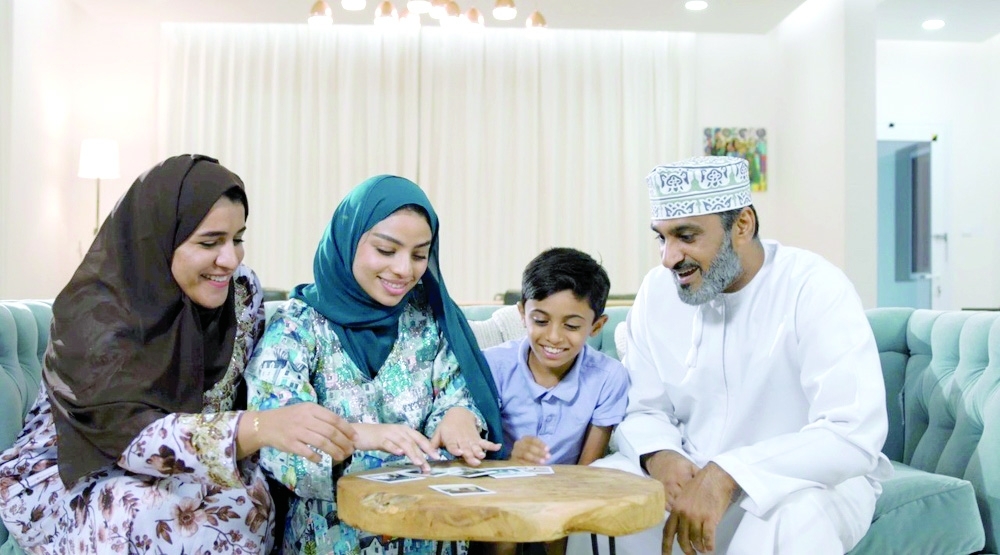
Dr Mariam al Wahaibi, a consultant in counselling, emphasises that routine functions as an indirect therapeutic tool. “When a child maintains his or her usual daily structure, it sends a powerful internal message that life remains stable,” she says. “Even small participatory tasks — such as planning a family activity or organising weekly responsibilities — enhance a child’s sense of agency rather than helplessness.” Family engagement through simple shared experiences — cooking together, exercising at home, or watching purposeful content — strengthens emotional bonds and redirects attention from external stressors to positive internal interaction.
Adults, understandably, may experience concern over economic prospects, employment stability or regional developments. However, experts caution against transferring unprocessed stress to younger family members.
Sensitive discussions among adults can be held privately, while children are reassured in language suited to their developmental stage. Demonstrating balanced reactions — focusing on what can be controlled rather than speculating about worst-case scenarios — models healthy coping strategies.
Practical stress-management techniques such as deep breathing, journaling and mindfulness practices can further reduce tension. When parents adopt these strategies, they normalise healthy emotional regulation within the household.
Social media platforms, while valuable for communication, can amplify misinformation during times of uncertainty. Rapid circulation of unverified content often fuels collective anxiety.
Encouraging critical thinking within the family — verifying sources before sharing information and relying on official communication channels — protects against unnecessary panic. Setting boundaries for screen time also restores equilibrium between digital exposure and real-life interaction.
Community initiatives, awareness campaigns and volunteer opportunities further foster a sense of shared responsibility and active participation — transforming anxiety into purposeful action.
Oman Observer is now on the WhatsApp channel. Click here