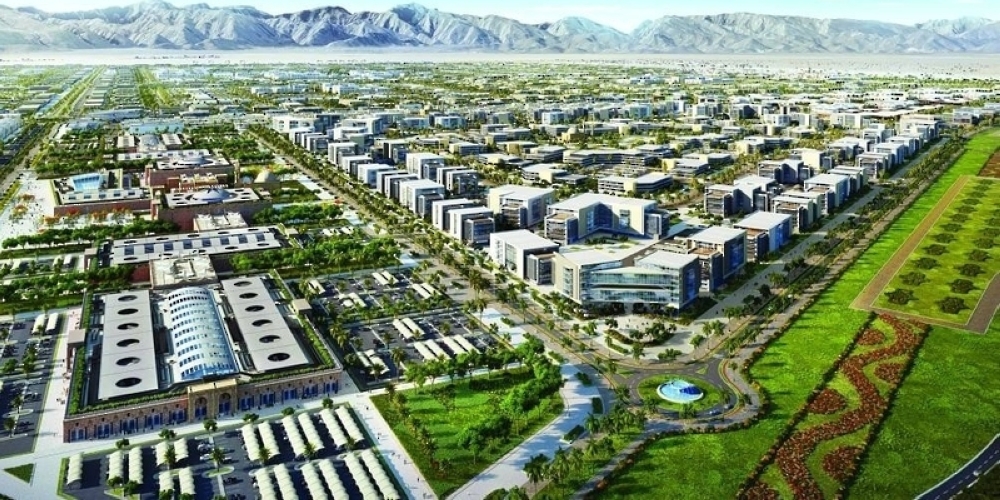
Over the past few years, signals from Oman Vision 2040 updates and labour market trends have started to point in the same direction. Oman has already done much of the heavy lifting on infrastructure, connectivity and sector expansion.
What is coming into focus now is a different question: how efficiently those systems actually work once they are in place.
This shift matters because the sources of growth are no longer the same. Non-oil activities now generate more than 70% of GDP, a clear sign that diversification has taken hold. But as logistics networks, energy systems, digital platforms and public services become more complex, results depend less on physical capacity alone.
Increasingly, performance comes down to whether there are enough people with the right skills to run, coordinate and improve these systems day to day.
FROM CAPACITY TO EXECUTION
Economies that reach this phase rarely slow because they lack assets or technology. Growth tends to slow when skills do not keep up with rising complexity.
Oman Vision 2040 clearly acknowledges this shift. Its focus on a knowledge-based economy, stronger private-sector competitiveness and more efficient institutions all assumes a workforce that can use digital systems confidently, work with data and coordinate across increasingly interconnected organisations.
Oman approaches this phase from a position of strength. More than half of the population is under 35 and the median age is still close to 30. This creates a strong foundation for long-term growth, but it also makes alignment critical.
A young workforce delivers results only when education and training keep pace with the needs of a more advanced economy.
Education capacity has expanded steadily over the past two decades. Oman is now home to more than 60 higher education institutions, while public spending on education has remained in the range of 5–6% of GDP.
Enrollment in secondary and tertiary education continues to rise and around 30% of graduates come from STEM-related fields. These indicators signal maturity in access and scale, so the next phase focuses on relevance rather than reach.
EVIDENCE FROM DIGITAL ADOPTION
Digital infrastructure already provides a strong foundation. Internet penetration exceeds 95%, nationwide mobile coverage supports advanced services and digital platforms continue to expand across public and private sectors. At the same time, ICT professionals account for only about 2-3% of the workforce.
Regional benchmarks suggest that more than 40% of jobs now require some level of digital capability. This gap reflects a familiar transition point. Infrastructure moves faster than skills and productivity gains lag until human capability catches up. The constraint shifts from availability to execution.
AN INDUSTRY PERSPECTIVE ON SCALING SYSTEMS
This pattern appears clearly at the operational level. Matvii Diadkov, a technology investor and operator with over a decade of experience building digital infrastructure platforms across logistics, e-commerce and real estate, has worked on ecosystem-level deployments in Oman and the wider region, including advisory work tied to Vision-aligned digital systems in asset-heavy sectors.
“At a certain stage, technology stops being the constraint”, he notes. “People become the limiting factor. Systems only scale when there are enough skilled operators to run them, improve them and pass that knowledge forward”.
His observation aligns with labour market dynamics. Youth unemployment remains structurally higher than overall unemployment at approximately 10-12%.
This figure does not signal a lack of opportunity, but rather the importance of aligning education pathways with private-sector operational needs. Oman Vision 2040 frames national workforce participation as a driver of competitiveness, not protection.
LONG CYCLES AND LONG HORIZONS
Talent development follows long cycles. Digital capabilities typically take eight to twelve years to mature across institutions and industries. Oman Vision 2040’s extended horizon aligns with this reality and allows incremental improvements to compound rather than rely on rapid adjustments.
“Building digital capability requires patience”, Diadkov adds. “Oman Vision 2040 works because its timeline matches how people develop, not just infrastructure”.
WHAT THIS MEANS FOR OMAN VISION 2040
As Oman advances, workforce readiness increasingly defines productivity outcomes. Skilled operators determine whether digital systems deliver efficiency gains or remain underutilised. For Omanisation, skills alignment strengthens private-sector absorption and long-term competitiveness. For businesses, talent depth determines whether growth scales through efficiency or stalls at execution limits.
Under Oman Vision 2040, education and workforce readiness do not sit alongside economic strategy. They shape the conditions under which diversification sustains momentum.
MATVII DIADKOV
The writer is a technology entrepreneur and early-stage investor, best known as the founder of Bitmedia.io and for his work in Web3, blockchain and AI.
Oman Observer is now on the WhatsApp channel. Click here