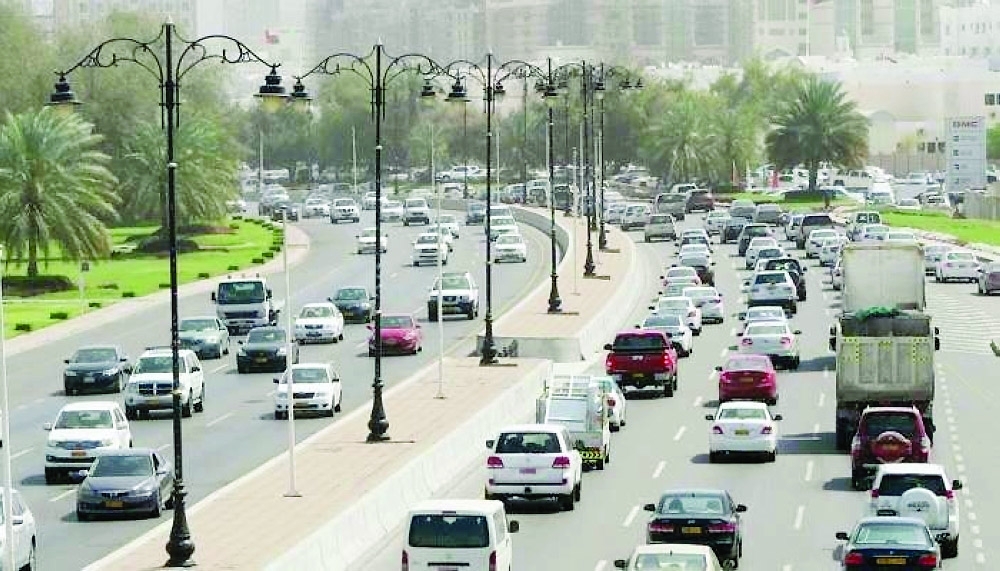





MUSCAT: The movement of heavy and long vehicles during peak hours in the holy month of Ramadhan is causing significant traffic congestion and contributing to road accidents, particularly in the hours leading up to Iftar. Despite flexible working hours adopted by some organisations, traffic remains heavy during mid-day and just before sunset, with long queues forming on major highways as residents rush home to break their fast.
The Royal Oman Police (ROP) has identified the hour before Iftar as one of the most dangerous times on the road, citing increased traffic volume, speeding, driver fatigue and dehydration as key factors behind accidents.
Congestion is especially noticeable on major routes including the Muscat Expressway, where traffic builds up significantly in the late afternoon.
To ease congestion and reduce accidents, the ROP has imposed restrictions on the movement of heavy vehicles during Ramadhan.
From Sunday to Thursday, trucks and heavy vehicles are prohibited from using major roads between 6:30 am and 9 am (or 7 am to 9:30 am), and from 12pm to 4pm. On Saturdays, restrictions apply from 6 pm to 10 pm. Heavy vehicles are also required to park at least one hour before Iftar.
The restrictions apply to key highways including Sultan Qaboos Road (from Al Qurum Intersection to Khatmat Milaha Border Post), Sultan Thuwayni bin Said Road (from Burj Al Sahwa Roundabout to Bidbid Bridge), Al Batinah Highway (from Muscat to Shinas), and all main roads within Muscat Governorate.
A senior official from the Directorate General of Traffic said the measures are aimed at minimising congestion and preventing accidents during critical pre-sunset hours. “Traffic congestion caused by heavy vehicles and high traffic volumes is a significant issue before Iftar. We have implemented restrictions to enhance road safety and reduce risks,” the official said.
In addition to truck bans, the ROP is conducting awareness campaigns to caution drivers against speeding and reckless driving. Motorists are advised to plan their journeys in advance, allow extra travel time, use alternative routes where possible, and drive patiently.
Authorities emphasise that responsible driving during Ramadhan, particularly in the final hour before Iftar, is essential to ensuring safety for all road users.
Oman Observer is now on the WhatsApp channel. Click here