Start with the numbers. By the end of the second quarter of 2025, Oman’s foreign direct investment (FDI) stock reached RO 30.279 billion, a 12.8% year‑on‑year rise, according to the National Centre for Statistics and Information.
At the same time, the country has regained investment‑grade status across the major agencies: Moody’s upgraded Oman to Baa3 in July 2025, Fitch upgraded Oman to BBB‑ in December 2025 and S&P’s BBB‑ rating remains in place. These numbers point to one message: confidence has returned.
Now add the figure that matters just as much: trust.
Global business is increasingly shaped by geoeconomic fragmentation. Supply chains are being rewired, sanctions are used more often and trade flows are pushed into rival blocs. In such an environment, the best place to do business is not always the loudest or the biggest. It is the place that is predictable, discreet and connected to everyone.
This is where Oman’s quiet superpower comes in. For decades, the Sultanate of Oman has practiced non‑aligned diplomacy. The economic value of that approach is rising, because neutrality is becoming a form of infrastructure—an “invisible port” where deals can dock safely.
Look at what happened this month. On February 6, 2026, Oman hosted indirect talks between the United States and Iran in Muscat, serving as a trusted mediator.
Whatever one thinks of the politics, the economic signal is clear: when tensions rise, Oman is still the place both sides are willing to enter without losing face.
That role cannot be copied overnight. It is built over years of steady conduct.
For investors, neutrality is not a slogan; it is risk management. When firms choose a regional base, they ask: Can we move goods smoothly? Can we route capital safely? Can we resolve disputes fairly? The more the world splits, the more these questions matter.
This is also why the Oman–India Comprehensive Economic Partnership Agreement (CEPA) is bigger than a trade deal. The agreement was signed in Muscat in December 2025 and ratified by Royal Decree in early 2026. India is widening its trade network and looking for reliable gateways.
Oman offers something rare: a trusted Arab partner with balanced regional ties and an economy modernising under Oman Vision 2040
Execution matters and here Oman has an advantage: the Indian community is often estimated at around one‑fifth of the population. That is not just a statistic; it is a working bridge of enterprise and relationships.
The timing is important. Investors are searching for “safe junctions” where capital can be parked, structured and routed with confidence.
Oman’s decision to establish the Oman Global Financial Centre (OGFC) by Royal Decree in January 2026 fits this moment.
If designed well — with clear rules, strong dispute resolution and internationally familiar standards — the OGFC can become a neutral platform for regional transactions: project finance, sukuk, cross‑border funds and complex supply‑chain contracts.
Two extra details strengthen the investment story. Official releases note that while oil and gas still hold the largest share of FDI, manufacturing and other non‑oil activities are drawing meaningful flows as well — exactly where supplier networks and new jobs grow.
CEPA is also built for execution: reporting on the deal highlighted wide tariff coverage, which should translate into real commercial traffic in foods, engineering inputs and mid‑scale manufacturing.
If the Oman Global Financial Centre is implemented with globally familiar standards and fast dispute resolution, Muscat can attract project‑finance structuring and arbitration work that often travels to faraway hubs in Europe or Asia.
Neutrality alone does not create jobs. It must connect to real economic platforms. Oman has several. Its ports — Duqm, Sohar and Salalah — sit on routes that matter even more when shipping lanes are under stress.
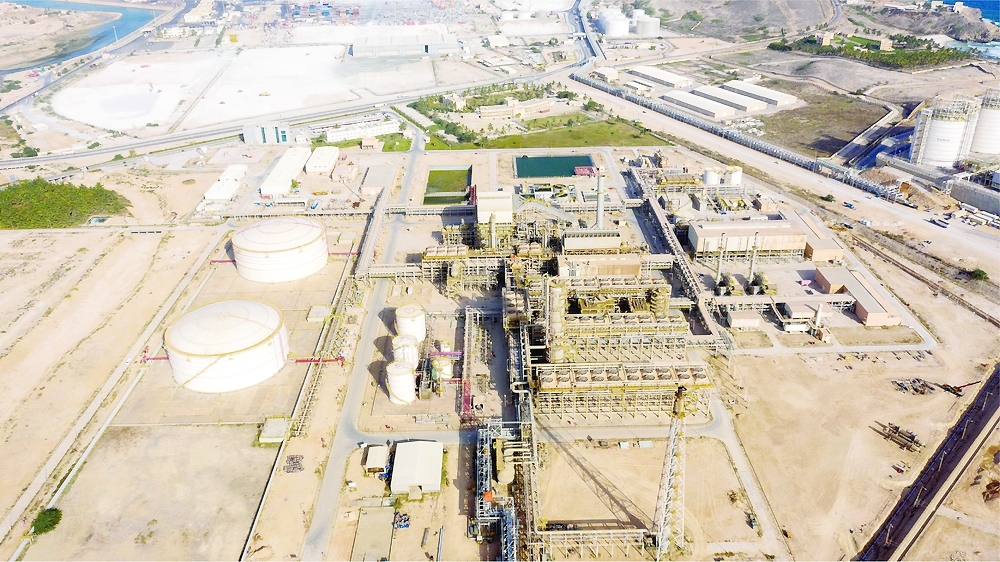
Its free zones and industrial cities give manufacturers and logistics firms a practical path to operate with modern infrastructure and competitive incentives.
The IMF’s recent consultations also noted Oman’s stronger fundamentals and resilience as reforms advance, even amidst global uncertainty.
This is the point many people miss: diplomacy becomes an economic asset only when matched by execution. Oman is increasingly doing that work — improving public finances, upgrading regulation and opening sectors for private investment.
Investment‑grade ratings are not a trophy; they help lower the cost of capital for long‑term projects. Rising FDI stock is not just a headline; it is a pipeline of factories, services and partnerships that build capabilities over time. So, what should Oman “sell” to the world right now?
Oman Observer is now on the WhatsApp channel. Click here