




The delicate textures of a Ramadhan moon — crafted from jute and red thread and crossed with roses — welcomed visitors to the ‘Floral Showcase 2026’, curated by Muscat-based floral artist Devyani Sampat.
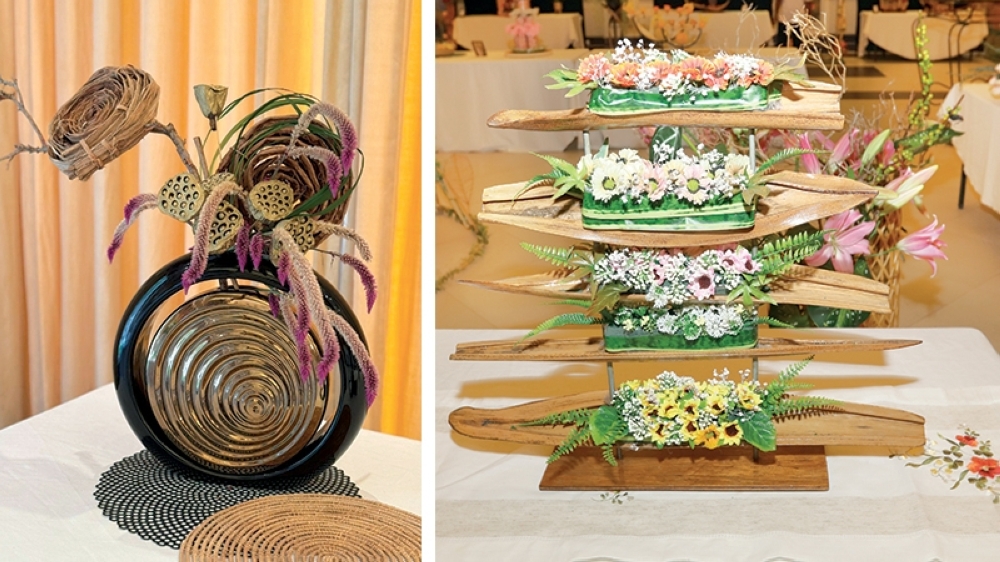
Reflecting the contemplative spirit of the holy month, the exhibition presented nearly sixty intricate arrangements transforming seeds, pods, date palm elements and dried botanicals into sculptural expressions inspired by both Japanese floral philosophy and Oman’s landscapes.
A defining feature of the showcase was its strong sense of place. Many installations were created entirely from materials found in Oman, forming what Devyani described as a ‘site-responsive’ floral language. Date seeds, red chunauti seeds, bark and desert botanicals were arranged to echo the country’s natural scenery — from the flowing curves of wadis to the resilience of arid terrain.
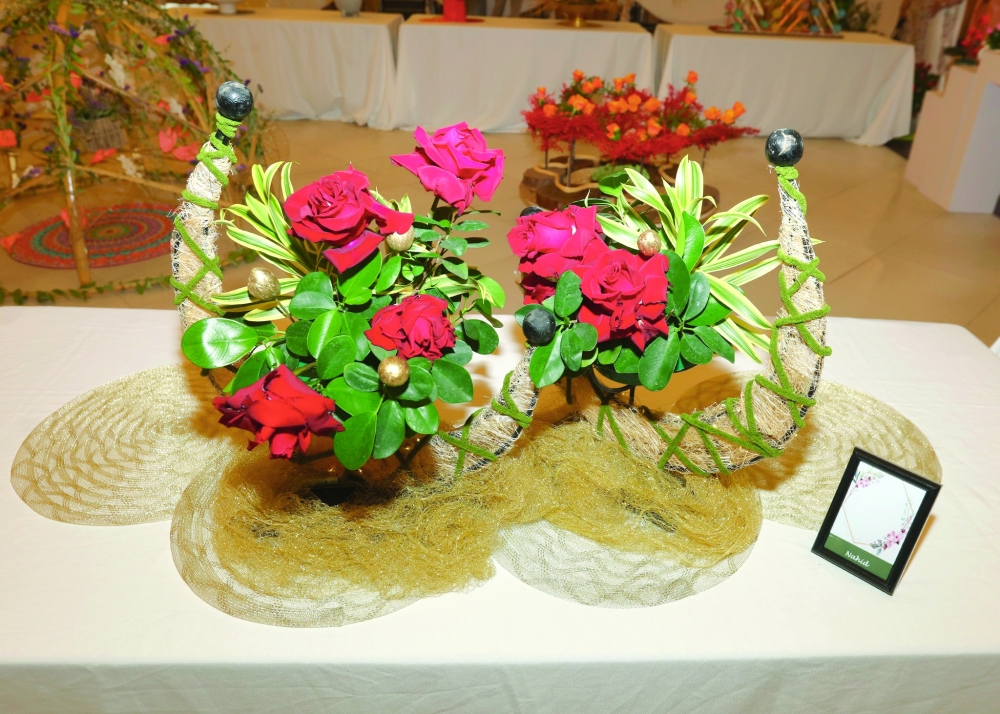
At the heart of the exhibition was a core ikebana principle: the container guides the design.
Each vessel influenced direction, colour harmony and structure, while plant materials were selected to complement the form and texture of the container. In one striking arrangement, calla lilies followed the opening curve of a vessel, creating a seamless dialogue between bloom and form.
Another piece drew inspiration from Oman’s maritime heritage, with sail-like structures evoking traditional dhows, while landscape-inspired compositions mirrored rocky wadi formations through a balance of mass and negative space.
For Devyani, the exhibition was as much about storytelling as floral design.
“Ikebana is about line, mass and rhythm, but when these elements come together they become poetry. I wanted the materials of Oman — its seeds, palms and textures — to speak through the arrangements”, she said.
Her daughter, Madhvi Mariwala Sampat, said the exhibition reflected months of preparation and collaboration. Botanical materials were sourced locally as well as from India, South Africa, Indonesia, Thailand and Japan.
“This exhibition brings together global botanical influences with Oman’s own natural elements, allowing traditional ikebana principles to meet contemporary floral design. We wanted visitors to slow down, observe closely and realise that even the simplest seeds, leaves and pods can become art when viewed through the lens of ikebana. Many of the materials people see every day were turned into something meaningful and artistic”, she added.
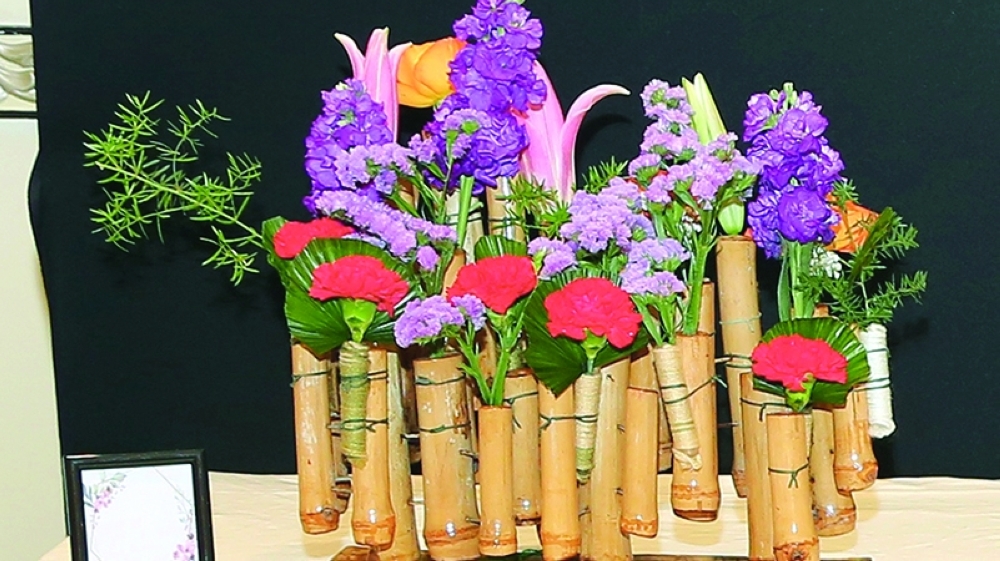
Each arrangement created by Devyani’s students and trained floral artisans, explored balance, line, mass and negative space, turning natural materials into sculptural compositions. Visitors encountered works inspired by wadi terrains, rhythmic repetitions and experimental forms using glass and dried botanicals.
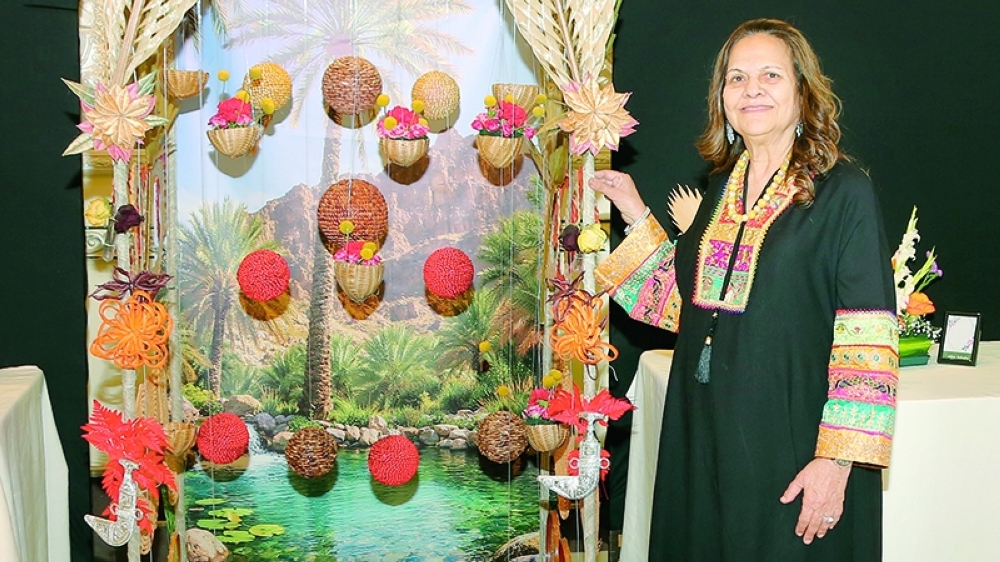
Among the most talked-about creations was ‘Sunshine in Oman’, a radiant centrepiece made entirely from locally sourced materials, including chunauti and tuver seeds — a tribute to the land and the artistic potential of everyday natural elements.
Visitors moved slowly between displays, discovering details along the way. Gita Kumar described the experience as unforgettable: “Nearly sixty creations stood on display, each with its own spirit. What seemed like simple natural elements were transformed into extraordinary works of art”.
Kiran Asher, another visitor, said the diversity of forms and textures made the exhibition especially memorable. “It was breathtaking. Each arrangement had its own personality, with colours, textures and forms coming together beautifully. It truly felt like a celebration of creativity”. Experimental techniques — leaves rolled and woven into new forms, dried botanicals paired with wood and bark; and handmade vessels, aluminium lines and glass elements — pushed the boundaries of floral presentation while remaining faithful to ikebana’s principles of restraint and harmony.
Months in the making, the exhibition reflected the dedication of Devyani and her students, transforming humble seeds, leaves and pods into art and revealing the quiet beauty hidden in nature.
Oman Observer is now on the WhatsApp channel. Click here