




As the holy month of Ramadhan started, it is not only teenagers and adults who are deepening their spiritual awareness. Across neighborhoods and schools, very young children are experiencing a different kind of awakening, one shaped by small hands packing large lessons into Ramadhan food baskets.
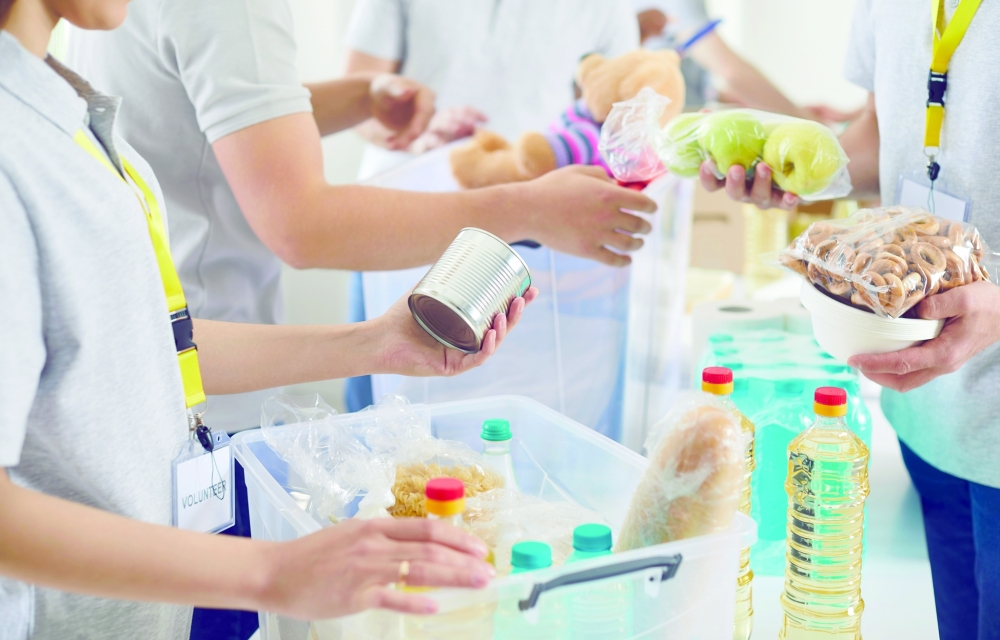
In classrooms decorated with beautiful moons and paper lanterns, pupils as young gathers around cardboard boxes, carefully placing rice bags, pasta, dates, oil, and canned goods inside. Each child brings one item from home. Alone, the contributions seem modest. Together, they transform into full baskets ready to reach families in need.
“I brought sugar,” said seven-year-old Gassan, his eyes shining with pride. “My teacher told me some families don’t have enough. I wanted them to make tea and feel happy.”
Beside him, little Bayan added softly, “When we give, Allah loves us. And the people we help will smile.”
For many parents, these moments go far beyond charity. They represent the planting of empathy at an early age. Om Alya, a mother of two primary school children, explained “We always speak to our children about gratitude, but when they physically place food into a basket, they understand it differently. They begin to ask questions, ‘Why do some families need help?’ That conversation is powerful.”
Schools have played a central role in making this impact. Rather than limiting Ramadhan activities to decorations or assemblies, teachers are integrating real-life social responsibility into their daily life. In one school, each class collectively prepares several baskets, later delivered in coordination with community volunteers.
Aisha al Sinani, a grade two teacher, believes the initiative builds character. “We are not only teaching reading and mathematics,” she said. “We are shaping hearts. When children contribute as a group, they feel responsible for one another. They learn that even small efforts matter.”
The act of collective giving also strengthens unity. Children encourage classmates who may forget to bring an item. They discuss what families might need most. They write simple notes that say, “Ramadhan Mubarak” and “We are thinking of you.”
The delivery day often becomes the most emotional lesson of all.
Asma al Rubaei, a member of the Al Balad Al Tayyib Voluntary Team in Al Khaboura , described the scene as unforgettable. “When we see young children carrying baskets that are almost bigger than them, our hearts fill with hope,” she said. “They hand them over with sincerity and innocence. This is how a compassionate society is built.”
She added that families receiving the baskets are often deeply moved knowing the donations came from children. “It creates a circle of mercy , the children feel responsible, and the recipients feel remembered.”
Observers note that such initiatives have ripple effects across the wider community. Siblings at home want to participate. Parents become more engaged in charitable efforts. Teachers feel renewed purpose. What begins as a simple classroom activity evolves into a shared social value.
In a world often dominated by digital distractions, Ramadhan offers something grounding and transformative. Through these baskets, children are not just learning about giving . In fact, they are practicing it, feeling it, and internalising it.
And in those small, steady hands placing food into a box, a more empathetic future quietly takes shape.
Oman Observer is now on the WhatsApp channel. Click here